
1983 Foot-and-Mouth Disease Outbreak Linked to Dutch Lab Leak
An outbreak of foot-and-mouth disease (FMD) that began in Nagele in late 1983 was likely caused by a laboratory leak at the Central Veterinary Institute (CDI) in Lelystad. Archive research and interviews with involved parties indicate that the Dutch government suppressed evidence of the lab origin at the time to protect national economic and agricultural interests, contradicting the official narrative that no such risks existed.
The Origins of the 1983 Outbreak
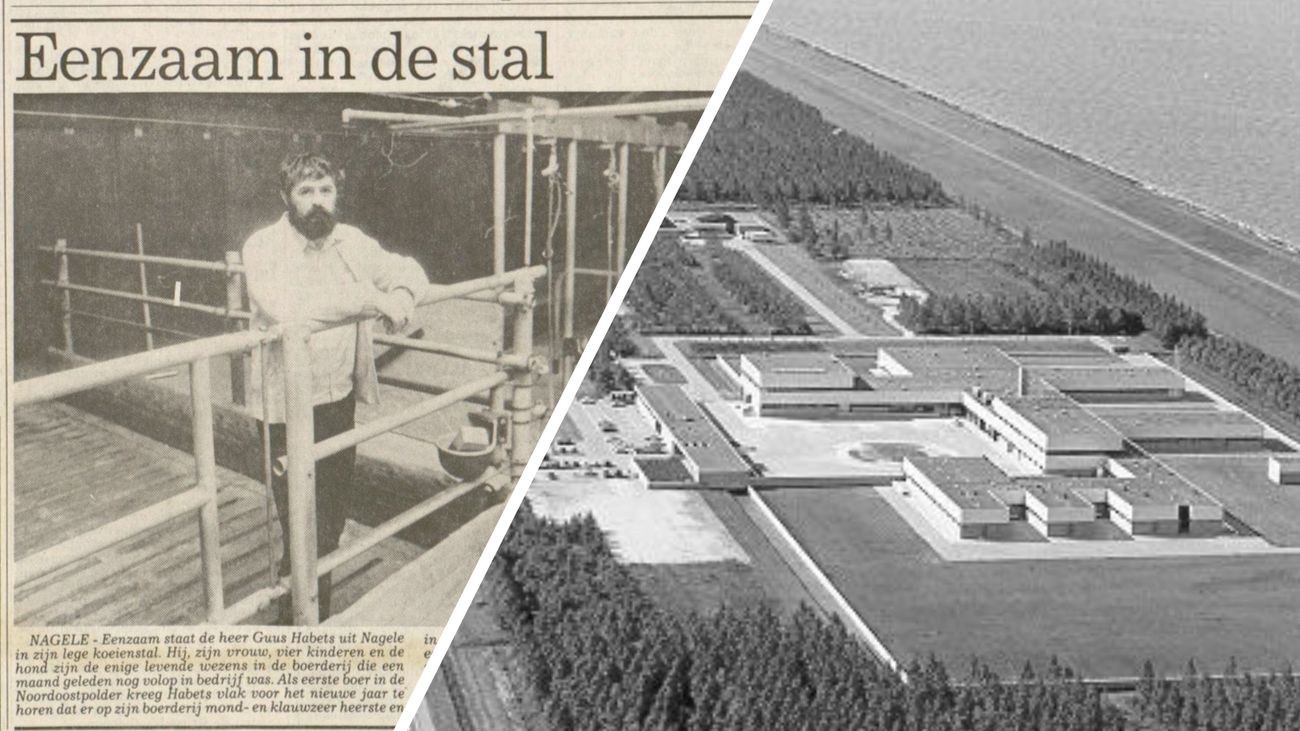
The virus likely spread from the CDI facility on Houtribweg in Lelystad across the IJsselmeer to the Domineesweg area between Urk and Nagele in early December 1983. The first animals to show symptoms were on the farm of the Renne family, though the illness was not immediately identified by their veterinarian. The outbreak subsequently spread to the farm of Guus Habets, who recalled seeing white flakes coming from the mouths of his young cattle on Boxing Day 1983.
Following the initial cases at the Renne and Habets farms, the disease affected four other farms in the Noordoostpolder and two in Noord-Holland. Internal reports and witness accounts suggest that the virus type found in the Nagele cattle matched the specific strain being researched at the CDI laboratory.
The 1985 final report on the FMD outbreak omitted critical risks and safety concerns that were present in earlier drafts. Annotations in a 1983 concept report, currently held at the National Archive, show that officials specifically questioned whether to include references to an “imprudent” animal caretaker, ultimately choosing to remove or alter sections to minimize the appearance of a lab leak.
Economic Interests and Institutional Secrecy
Evidence of an internal leak at the CDI was identified by a researcher at the time, leading to the culling of the institute’s own pigs before the virus reached the Nagele farms. Despite this, the possibility of a “lab leak” was discussed in emergency meetings but was not acknowledged in official government communications. Observers and researchers attribute this silence to the significant negative impact such an admission would have had on Dutch agricultural exports and economic interests.

Samantha Carter notes that the suppression of the CDI lab leak highlights the inherent tension between public health transparency and the protection of national industrial interests. By prioritizing the reputation of the agricultural sector, the government likely compromised the scientific integrity of the investigation, a common theme in historical outbreaks where economic stakes are high.
Safety Standards and Future Implications
The CDI facility underwent major renovations and implemented stricter security protocols one year after the Nagele outbreak. While the institute, now known as Wageningen Veterinary Research, stated that a similar event is considered “highly unlikely” today due to modern technology and rigorous safety measures, the ministry has provided limited comment on the historical events.
Future audits of biosecurity facilities may face increased scrutiny as archives become public. It is possible that further examination of historical documents could lead to additional disclosures regarding safety lapses in 20th-century veterinary research. Analysts expect that public interest in the transparency of such institutions will remain high as long as historical discrepancies continue to surface from government files.
Frequently Asked Questions
What was the primary cause of the 1983 foot-and-mouth disease outbreak?
Research indicates the outbreak was likely caused by a laboratory leak at the Central Veterinary Institute (CDI) in Lelystad, where the same virus type was being studied.

Why was the true cause not reported at the time?
According to archive findings, economic and agricultural interests led officials to suppress information about the lab leak to avoid the negative consequences of a public scandal.
What is the current status of the research facility involved?
The facility is now known as Wageningen Veterinary Research. The institute maintains that current safety measures and technical standards make a similar outbreak highly unlikely.
How should governments balance the need for economic stability with the necessity of transparent scientific reporting during public health crises?