
2026 World Cup Controversy: VAR Official’s Mysterious Gesture and FIFA Commercialization Spark Debate
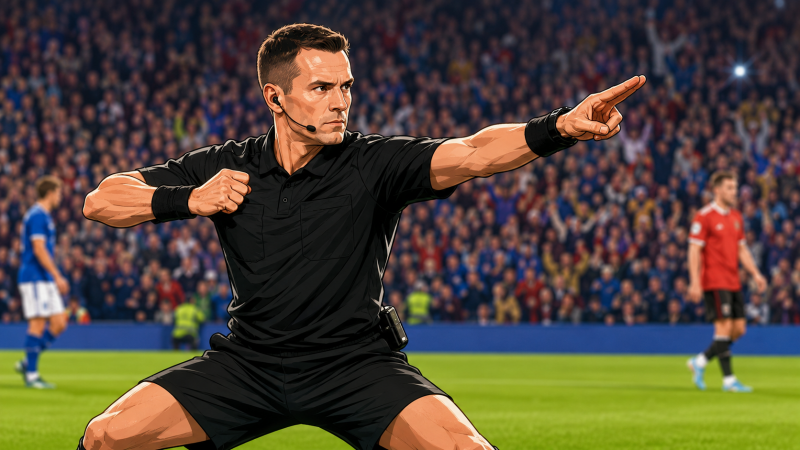
Australian VAR official Shaun Evans is facing public scrutiny following a broadcast incident at the 2026 World Cup FIFA control center in Dallas. During a pre-match segment featuring the VAR team, Evans was observed holding a hand gesture—forming a circle with his thumb and index finger while extending his remaining three fingers—for approximately eight seconds. The footage, which captured Evans smiling, has circulated widely on social media, prompting speculation regarding the gesture’s potential association with extremist groups or its interpretation as a common “OK” signal among youth.
Did You Know? The 2026 World Cup schedule includes 104 matches, and with FIFA’s implementation of two three-minute cooling breaks per game, the tournament will feature 624 minutes of additional airtime, which some media analysts estimate could hold billions of dollars in commercial value.
Controversy Over Cooling Breaks and Commercialization
FIFA’s decision to introduce two three-minute cooling breaks per match has drawn criticism from prominent national team managers. While the policy was initially supported by medical experts as a necessary measure to prevent heatstroke for players in North American summer conditions, concerns have shifted toward the commercial use of these stoppages. According to reports, FIFA utilizes these intervals to broadcast sponsor advertisements, a practice that critics argue prioritizes profit over the integrity of the sport.
Managers including Mauricio Pochettino of the United States, France’s Didier Deschamps, and Portugal’s Roberto Martinez have publicly questioned the necessity of these long pauses. Deschamps noted that frequent, extended breaks disrupt the flow of the game and alter the fundamental nature of modern football. Analysts suggest that the ongoing debate highlights a tension between player welfare and the professional value of the tournament.
Expert Insight: The inclusion of mandatory cooling breaks during the 2026 World Cup reflects a significant shift in FIFA’s operational approach. While the medical justification remains a stated priority, the substantial increase in broadcast time for advertising suggests a complex trade-off where logistical necessities are being leveraged for commercial gain, a strategy that continues to face pushback from tactical leaders within the sport.
Sweden’s Unexpected Rise in Group F
Amidst the broader tournament controversies, the Swedish national team has emerged as a significant narrative after defeating Tunisia 5-1. This performance is notable given Sweden’s qualification path; the team failed to win a single match during the European qualifiers, finishing at the bottom of their group. They eventually secured their spot in the 2026 tournament through a UEFA Nations League special playoff, defeating both Ukraine and Poland.

The 5-1 victory over Tunisia is particularly striking because the Tunisian squad had previously maintained a defensive record of not conceding a single goal across 10 qualification matches for the Africa Cup of Nations. Sweden’s current form has led observers to compare the team’s resilience to the historical figure Liao Hua, who survived numerous conflicts during the Three Kingdoms period. If Sweden maintains this momentum, they are likely to remain a primary contender in Group F.
What Happens Next
Regarding the VAR incident involving Shaun Evans, FIFA has not released an official statement. Future developments may depend on whether the governing body chooses to address the social media reaction or dismiss the hand gesture as a non-professional act. In the case of the cooling breaks, the continued public criticism from high-profile managers could force FIFA to reassess how these intervals are managed during the remainder of the 104-match tournament.
Frequently Asked Questions
Why is Shaun Evans being discussed on social media?
Evans, a VAR official, was filmed making a specific hand gesture for eight seconds while at the FIFA control center in Dallas. Some viewers associated the gesture with extremist symbols, while others argued it was a common “OK” sign or a prank.
What is the primary criticism regarding the new cooling break policy?
While the breaks are intended to protect players from heat-related health risks, critics argue that FIFA is using the three-minute intervals primarily to broadcast advertisements, potentially prioritizing commercial gain over the game’s flow.
How did Sweden qualify for the 2026 World Cup?
After failing to win a game in the standard European qualifiers, Sweden utilized a special playoff berth from the UEFA Nations League to defeat Ukraine and Poland, ultimately securing their place in the tournament.
How do you believe the integration of commercial breaks into match-stoppage periods changes the viewing experience of the World Cup?