

32,000 People Displaced by the Philippine Earthquake that Killed at Least 37
A 7.8 magnitude earthquake in Mindanao, one of the strongest to hit the Philippines in nearly 50 years, killed at least 37 people and displaced more than 32,000, according to the Office of Civil Defense. The disaster, centered off the coast of Sarangani province, caused the collapse of thousands of homes and government buildings, triggering an urgent re-evaluation of seismic resilience in the region.
Why is seismic retrofitting becoming a priority for Philippine cities?
The collapse of buildings in General Santos, the country’s tuna capital, demonstrates a critical vulnerability in urban infrastructure. At least 13 people died in that city alone due to falling debris and structural failure. According to the Office of Civil Defense, these events highlight the need for rigorous inspections of existing structures to prevent casualties during aftershocks.
Public education facilities face the highest risk. About 6,000 public school buildings in the affected provinces require safety assessments before students can return. Rafaelito Alejandro of the Office of Civil Defense stated that schools cannot reopen until the integrity of the buildings is ensured, especially since many injuries occurred during morning flag-raising ceremonies on the first day of classes.
How will the 1976 earthquake data shape future tsunami defenses?
Teresito Bacolcol, director of the Philippine Institute of Volcanology and Seismology (PHIVOLCS), noted that the recent quake was triggered by the Cotabato Trench. This is the same undersea depression that caused an 8.1-magnitude earthquake on Aug. 17, 1976. Comparing the two events reveals a stark difference in devastation.
| Metric | 1976 Earthquake | Recent Earthquake |
|---|---|---|
| Magnitude | 8.1 | 7.8 |
| Tsunami Wave Height | 8 to 10 meters | 1.4 meters |
| Estimated Deaths | ~8,000 | 37+ |
Bacolcol stated that PHIVOLCS plans to install markers in vulnerable towns to remind residents of the need for constant vigilance. This shift toward visual, permanent warnings aims to reduce panic and improve evacuation speed during future tsunami threats.
What happens to disaster response when regional hubs are disabled?
The closure of the international airport in General Santos for two consecutive days disrupted critical logistics. This shutdown forced the cancellation of 63 domestic flights, leaving only humanitarian missions active. When a primary transport hub fails, the distribution of food packs and construction materials slows significantly.
President Ferdinand Marcos Jr. responded by deploying top defense-mitigation officials from Manila to oversee the distribution of supplies and assess damage to bridges and roads. This centralized deployment highlights a trend toward integrating national military assets with local disaster response to bridge the gap when regional infrastructure collapses.
How does international support influence local recovery trends?
The United States, France, Japan, and New Zealand have all expressed readiness to support Philippine response efforts. Japan, in particular, provides significant expertise in seismic engineering and early warning systems. The trend is moving toward “multilateral resilience,” where treaty allies provide not just immediate aid, but long-term technical data to update building codes.
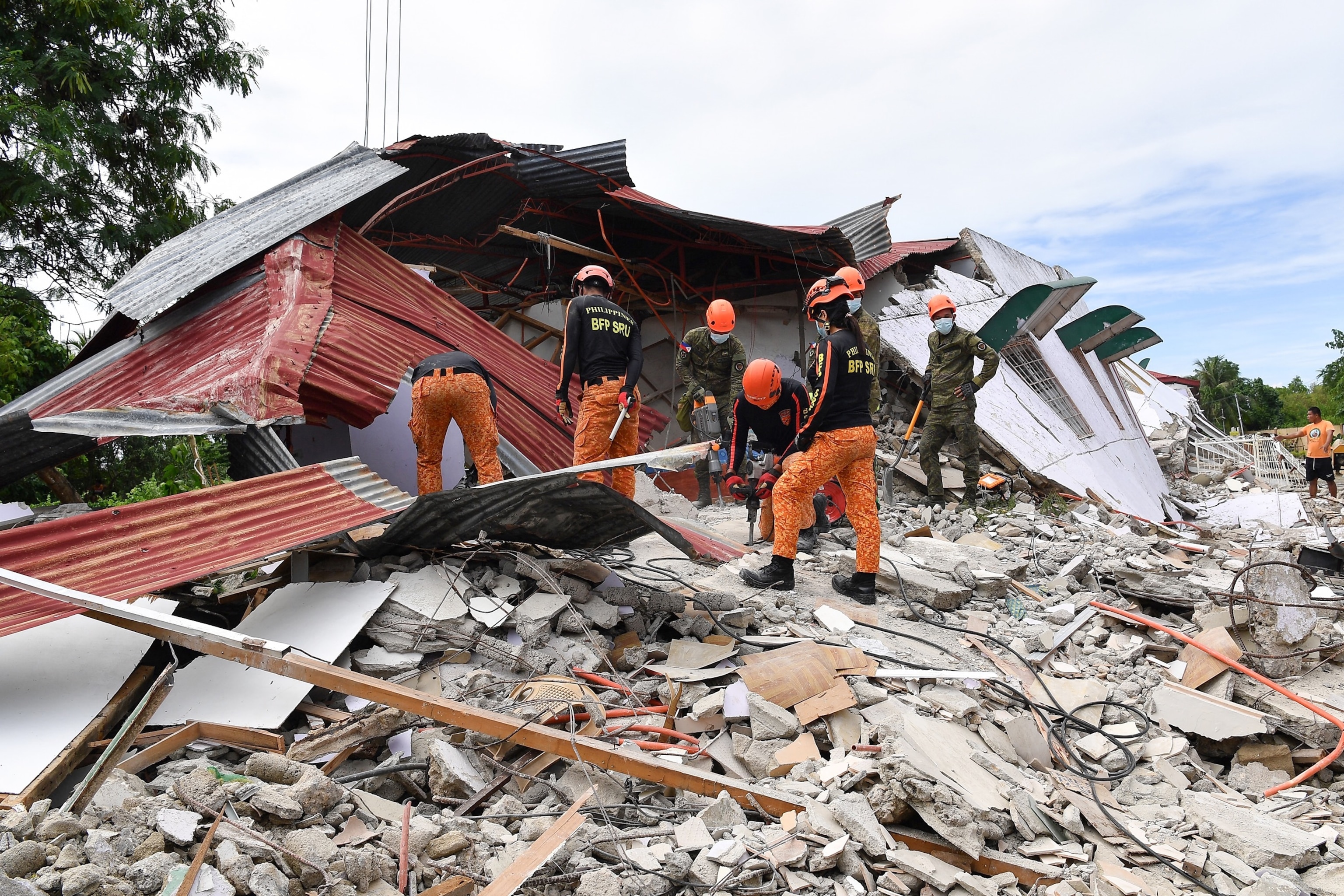
The focus is shifting from reactive aid to proactive mitigation. By analyzing the landslide that buried houses in Glan, Sarangani—where 18 people died—engineers are looking at how to restrict residential construction on unstable mountainsides in the southern provinces.
Frequently Asked Questions
What is the “Ring of Fire”?
It is an arc of seismic faults around the Pacific Ocean where the majority of the world’s earthquakes and volcanic eruptions occur.
Why did the 1976 quake kill so many more people than the recent one?
According to Teresito Bacolcol, the 1976 event produced tsunami waves up to 10 meters high, whereas the recent quake produced waves of only 1.4 meters.
Which areas were hardest hit in the recent earthquake?
The most significant casualties occurred in General Santos City and Sarangani province, specifically the town of Glan.
Join the conversation: Do you believe current building codes in coastal cities are sufficient for magnitude 7+ events? Share your thoughts in the comments or subscribe to our newsletter for more updates on global disaster resilience.