
4 Chair Exercises to Restore Leg Strength and Walking Confidence After 60
Personal trainer Tyler Read, BSc, CPT, recommends four specific chair-based exercises to restore leg strength and walking confidence for adults over 60. According to Read, these movements strengthen the quads, glutes, calves, and stabilizing muscles, offering a practical alternative to gym machines by utilizing natural movement patterns and providing necessary stability.
Lower-body strength determines how the body moves after age 60. Read states that strong legs support balance, protect the hips and knees, and improve walking endurance. These muscles are essential for daily tasks, including climbing stairs, carrying groceries, getting in and out of a car, and standing up from a chair.
Why are chair exercises preferred over gym machines?
Many adults use gym machines to rebuild strength, but Read notes that these machines often isolate muscles in rigid positions. This isolation can fail to improve real-world movement. Chair exercises provide a more approachable solution by mimicking natural movement patterns while offering stability.
This combination allows adults over 60 to train consistently without the risk of heavy joint strain or balance problems. Read suggests that consistent practice generally yields better results than occasional, intense workouts.
How do these four chair exercises work?
Read outlines four movements designed to improve coordination and lower-body control while remaining gentle enough for regular use.

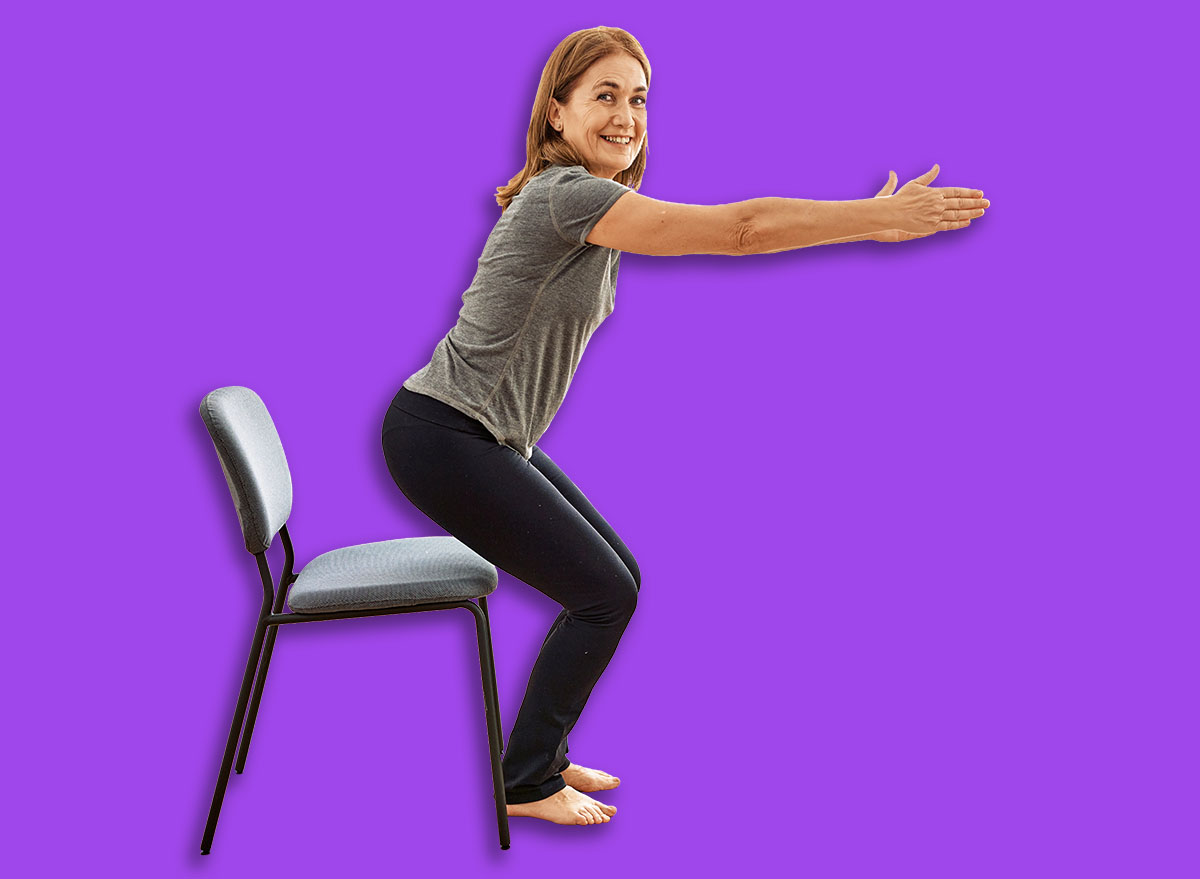
Sit-to-Stand Squats
This exercise trains the quads, glutes, hips, and core. Read states it restores controlled leg power and improves posture during movement transitions. The chair acts as a safe depth target to encourage proper mechanics.
- Sit near the front of a sturdy chair
- Place feet shoulder-width apart
- Lean slightly forward and press through the heels
- Stand up smoothly and fully straighten the hips
- Lower slowly back into the chair
- Perform 10 to 15 repetitions
Seated Leg Extensions
Targeting the front of the thighs, these extensions improve knee control and muscular endurance. Read observes that adults often lose quad strength after 60 due to reduced activity and prolonged sitting. This movement removes balance demands so the user can focus on the strengthening effort.
- Sit tall in a sturdy chair with feet flat
- Slowly straighten one leg forward
- Tighten thigh muscles at the top and pause briefly
- Lower with control and alternate sides
- Complete 10 to 12 repetitions per leg
Chair Marches
These marches strengthen the core, thighs, and hips. According to Read, this movement teaches the body to stabilize during alternating leg motion and increases circulation. Unlike machines that isolate one muscle, marches train the lower body as a coordinated system.
- Sit upright near the front of the chair with chest lifted
- Tighten the core slightly
- Lift one knee upward and lower slowly
- Alternate sides continuously without leaning backward
- Perform 20 total marches
Seated Heel Raises
Calf strength is vital for walking speed and lower-leg stability. Read explains that weak calves reduce push-off power and increase stress on the hips and knees. These raises improve ankle strength and foot stability.
- Sit tall with feet flat and knees at 90 degrees
- Press through the balls of the feet
- Lift heels upward slowly and pause at the top
- Lower with control while maintaining steady posture
- Perform 15 to 20 repetitions
What may happen with consistent practice?
Regularly performing these movements could lead to more powerful and controlled standing movements. According to Read, consistent repetition is likely to create noticeable improvements in lower-body stability and endurance.
Adults who stick with these exercises may find their legs feel steadier and more capable during everyday activities. This increased strength could potentially lead to smoother walking mechanics and greater overall confidence in movement.
Frequently Asked Questions
What muscles do sit-to-stand squats target?
They strengthen the quads, glutes, hips, and core together.
Why are chair exercises better for some seniors than gym machines?
They use natural movement patterns and provide stability, which allows for more consistency without worrying about balance problems or heavy joint strain.
How do seated heel raises affect walking?
They strengthen the calves and ankles, which improves push-off power, balance, and walking speed.
Do you prefer using gym equipment or home-based exercises for your fitness routine?