
5 Bed Exercises to Restore Hip Strength and Balance After 60
Maintaining physical independence after 60 often depends on a factor that is frequently overlooked: hip strength. While many associate fitness with heavy weightlifting or bodybuilding, the stability of the hips is what actually enables essential daily movements like climbing stairs, standing upright, and getting out of a chair.
As the body ages, it naturally experiences a decline in muscle mass known as sarcopenia. This process can cause the hips to weaken more rapidly than many realize, potentially triggering a negative chain reaction across the entire body.
The Consequences of Hip Weakness
Weakness in the hip muscles can lead to a variety of functional issues. These include reduced walking speed, poor posture, and increased discomfort in the knees.
More critically, hip instability is strongly associated with an increased risk of falls. Research published in PLOS One indicates that lower body weakness, particularly around the hips, is closely linked to functional decline and reduced mobility in older adults.
Restoring Strength Through Bed Exercises
To combat this decline, James Brady, CPT, a certified personal trainer at OriGym, recommends specific bed exercises. These movements are designed to activate the glutes and hip stabilizers while reducing pressure on the joints.
Low-impact resistance training can improve mobility and balance without causing undue strain. The following five exercises are designed specifically to rebuild strength after age 60.
1. Glute Bridges
These target the glutes and hip stabilizers, which are essential for pelvic stability and walking power. This exercise provides a way to build strength without placing excessive stress on the joints.
- Lie on your back with knees bent and feet flat on the bed, hip-width apart.
- Engage your core and press through your heels to lift your hips.
- Raise your hips until your body forms a straight line from shoulders to knees.
- Squeeze your glutes for one to two seconds at the top, then lower slowly.
- Perform two to three sets of 12 to 15 reps, resting 45 to 60 seconds between sets.
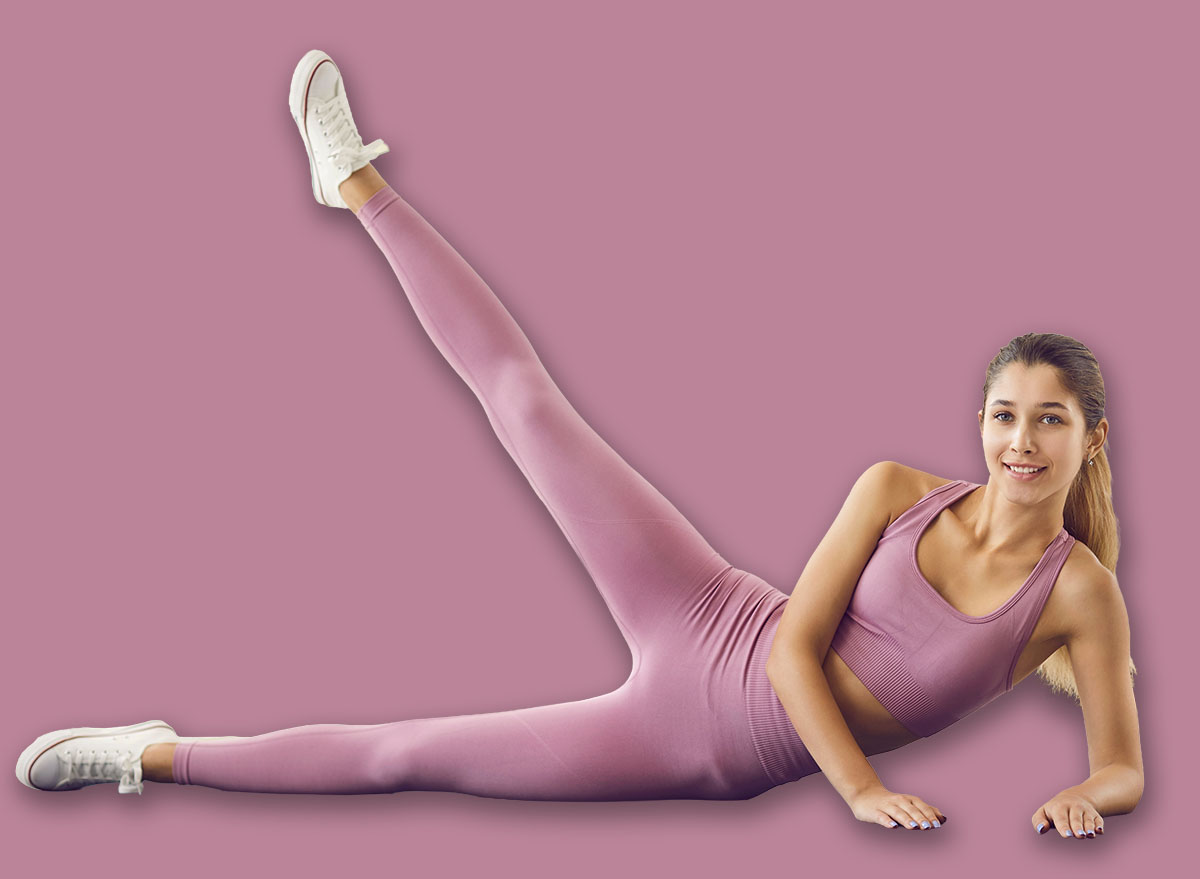
2. Side-Lying Leg Raises
This movement focuses on the hip abductors, which stabilize the pelvis during standing and walking. Strengthening these muscles may help reduce the risk of falls and improve overall balance.
- Lie on one side with legs stacked and your head resting on a pillow or lower arm.
- Keep the top leg straight and hips stacked vertically while bracing your core.
- Slowly lift the top leg upward without rolling the hips backward.
- Lower the leg with control.
- Perform two to three sets of 12 to 15 reps per leg, resting 45 to 60 seconds between sets.
3. Clamshells
Clamshells are used to activate the smaller stabilizing muscles around the hips. These muscles are critical for maintaining proper alignment during physical movement.
- Lie on your side with knees bent and feet together.
- Stack your hips and shoulders vertically.
- Lift the top knee upward while keeping your feet touching.
- Pause for one to two seconds at the top, then lower slowly.
- Complete two to three sets of 10 to 15 reps per side, resting 45 to 60 seconds between sets.
4. Straight Leg Raises
This exercise targets the quads and hip flexors, muscles that are heavily involved in climbing stairs and maintaining general mobility.
- Lie flat on your back with one knee bent and the other leg straight.
- Engage your core to keep the lower back stable.
- Raise the straight leg until it reaches the height of the opposite knee.
- Pause for one to two seconds, then lower the leg with steady control.
- Perform two to three sets of 10 to 12 reps per leg, resting 45 to 60 seconds between sets.
5. Hip Marches
Hip marches mimic the mechanics of walking, which helps restore mobility while strengthening both the hips and the core.
- Lie on your back with knees bent and feet flat, hip-width apart.
- Engage your core and slowly lift one knee toward your chest.
- Keep the pelvis stable as you lower the foot back down.
- Repeat the movement by alternating sides in a smooth rhythm.
- Perform two to three sets of 15 to 20 reps per leg, resting 45 to 60 seconds between sets.
Future Outlook for Mobility
Incorporating these targeted movements into a daily routine could lead to improved functional independence. By addressing sarcopenia through low-impact resistance, individuals may see a reduction in joint discomfort and a stabilization of their walking speed.
A possible next step for those seeking comprehensive strength may be to pair these hip movements with other targeted routines, such as those designed for arm strength, to ensure full-body stability.
Frequently Asked Questions
What is sarcopenia and how does it affect the hips?
Sarcopenia is the natural decline of muscle mass that occurs with age. In the hips, this can lead to weakness that contributes to instability, poor posture, and a higher risk of falls.
Why are bed exercises recommended for people over 60?
Bed exercises are recommended because they allow for the targeted activation of glutes and hip stabilizers while reducing pressure on the joints compared to high-impact exercises.
Which muscles are targeted by clamshell exercises?
Clamshells specifically target the smaller stabilizing muscles around the hips, which are essential for maintaining proper hip alignment during movement.
How do you currently incorporate balance and strength exercises into your morning routine?