
6 Best Standing Exercises to Firm Up Bat Wings After 60
Adults over 60 often experience “bat wings,” or upper arm laxity, due to biomolecular shifts, reduced skin elasticity, and declining muscle mass. According to David Zhong of Fitness Refined, targeting the triceps—which comprise two-thirds of upper arm muscle volume—through specific standing exercises can help firm the underarm area.
Why does arm jiggle occur after 60?
A Stanford Medicine study found that adults undergo biomolecular shifts during their 40s and again in their 60s. This process contributes to “upper arm laxity,” which results from a combination of extra fat, decreased skin elasticity, and a loss of lean muscle mass.

David Zhong, a Registered Kinesiologist and Certified Personal Trainer, states the body loses between 3% and 8% of muscle mass per decade after age 40. This rate of loss increases once a person passes 60.
How do standing exercises target upper arm laxity?
The tricep is the primary muscle affected by age-related decline because it accounts for two-thirds of the total muscle volume in the upper arm. As these fibers thin, the overlying skin loses the firm support it once had, leading to loose skin.
Zhong suggests that certain standing movements can firm underarms more quickly than traditional weight training for those over 60. These moves focus on deep muscle fiber recruitment and joint safety.
Which exercises are most effective for toning arms?
Zhong recommends six specific standing exercises to address underarm jiggle. He emphasizes using control during every movement to ensure effectiveness.

Tricep-Focused Movements
- Standing Overhead Tricep Extension: Hold a dumbbell with both hands and lower it toward the back of the head. Zhong notes this overhead position is the only way to fully activate the long head of the tricep through a stretch loaded contraction.
- Standing Resistance Band Pushdown: Pull a secured band down until arms are fully stretched. Zhong explains that bands provide constant tension and lower resistance, which may build muscle without the excessive elbow joint stress associated with free weights.
- Standing Dumbbell Kickbacks: Hinge forward with a flat back and extend dumbbells behind the body. This move maintains tension through the full range of motion, including the final contraction.
Compound and Support Movements
- Standing Overhead Presses: Press dumbbells from shoulder level to overhead. Zhong points out that training the tricep, shoulder, and upper back simultaneously is more efficient for adults over 60 than isolating each muscle.
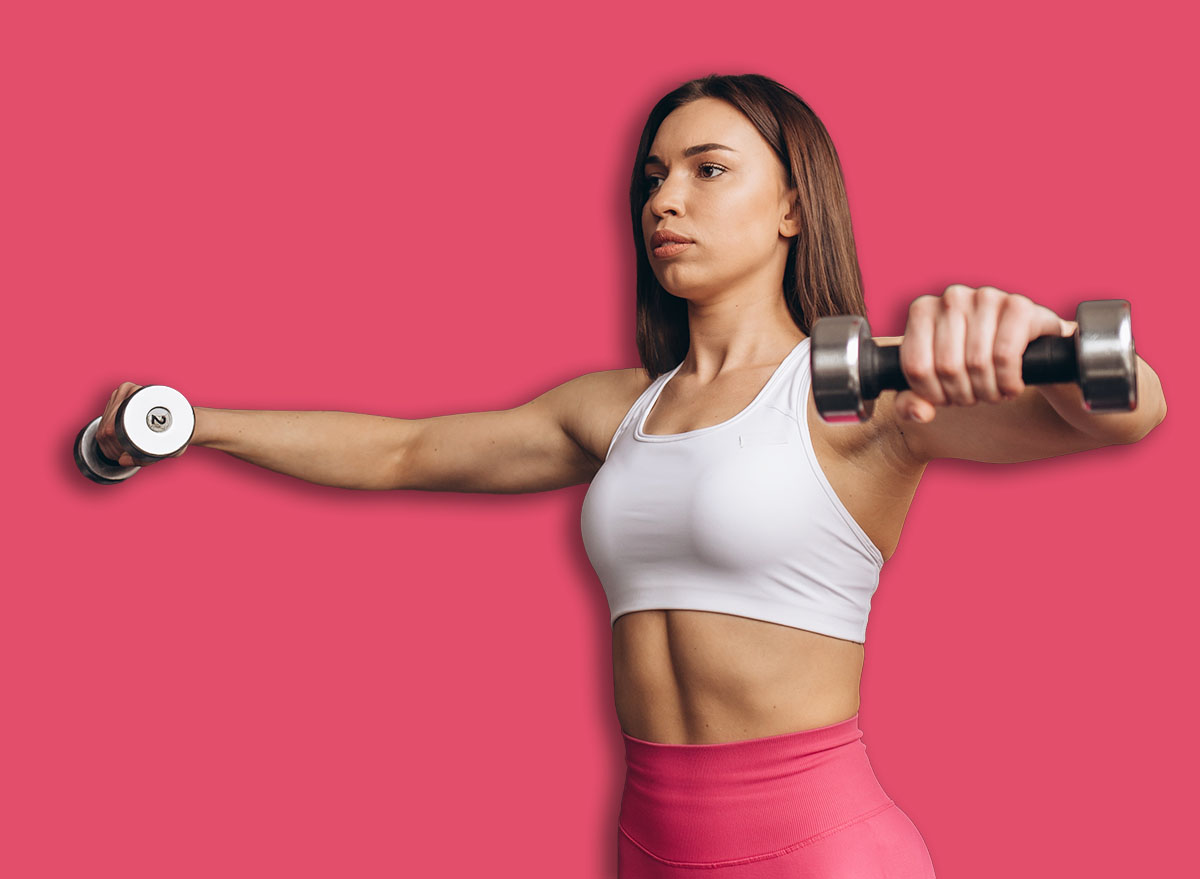
- Lateral Raises: Raise dumbbells to shoulder height with slightly bent elbows. This targets the medial deltoid, which Zhong says makes the arm look firmer from all angles.
- Wall Pushups: Lower the chest toward a wall and press back up. Because of the decreased joint stress, Zhong suggests this exercise can be performed daily.
What are the likely results of this routine?
Consistent integration of these movements may lead to increased muscle fiber recruitment in the triceps. By strengthening the medial deltoid and the long head of the tricep, the overall appearance of the upper arm could become firmer.

Using resistance bands instead of free weights may reduce the risk of elbow joint strain. Individuals who perform wall pushups daily might see improvements in both the chest and triceps without breaking down the body over time.
Frequently Asked Questions
What causes “bat wings” in adults over 60?
According to the provided text, this condition is caused by declining lean muscle mass, extra fat in the upper arms, and reduced skin elasticity.
How much muscle mass does the body lose after 40?
David Zhong states that the body loses between 3% and 8% of muscle mass per decade after age 40, with the rate increasing after age 60.
Why are resistance bands recommended for seniors?
Zhong explains that bands provide constant tension throughout the range of motion and offer a lower resistance that builds muscle without putting excessive stress on the elbow joints.
How do you currently incorporate strength training into your weekly routine?