
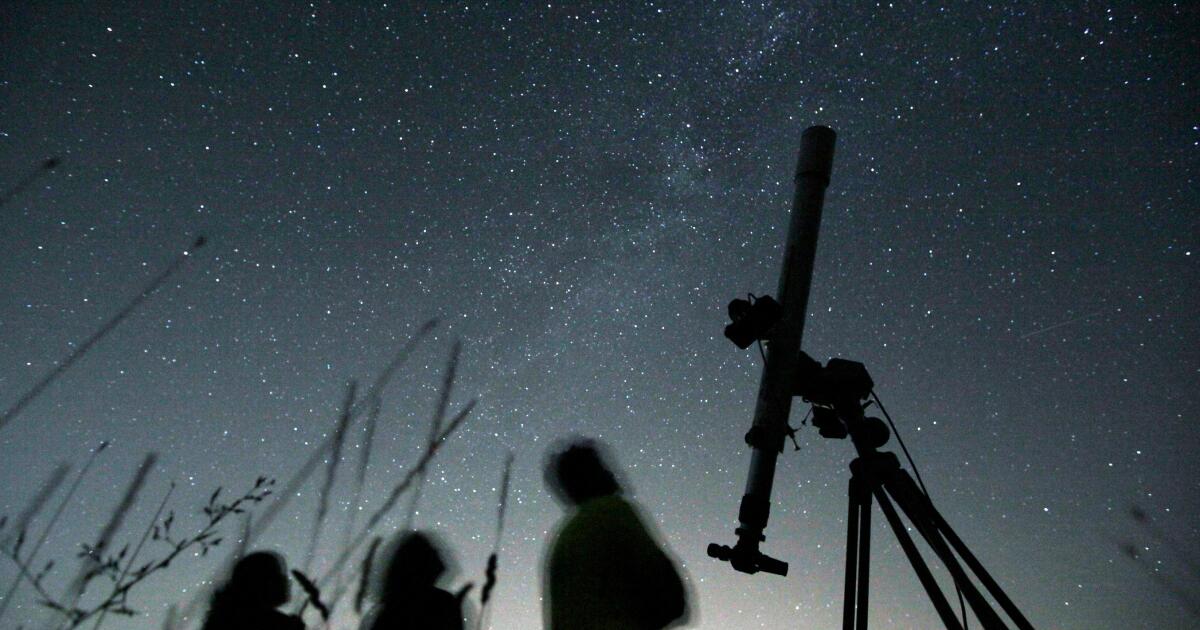
6 planets will parade across the night sky this weekend
Six Planets Align: A Celestial Spectacle and the Future of Skywatching
At the end of February 2026, six planets will appear close together in the night sky, creating a “planetary parade” visible to the naked eye. This rare alignment offers a unique opportunity for stargazers and a glimpse into how ancient astronomers understood the cosmos.
What is a Planetary Parade?
A planetary parade isn’t a perfect line-up, but rather a grouping of planets appearing close to each other from our perspective on Earth. They aren’t physically aligned, but appear so because they are relatively close together on one side of the sun. While two or three planets are often visible after sunset, gatherings of four or five are less common, occurring every few years. Last year saw lineups of six and even all seven planets.
When and Where to Look
On Saturday, February 28th, Mercury, Venus, Jupiter and Saturn will be visible without assistance, provided skies are clear. Uranus and Neptune will require binoculars or a telescope to spot. The optimal viewing time is about an hour after sunset. Look towards the western sky, starting with Mercury, Venus, and Saturn near the horizon. Jupiter will be positioned higher, along with Uranus and Neptune.
Distinguishing Planets from Stars
A simple trick to identify planets is to observe their twinkling. “If it’s twinkling, it’s a star. If it is not twinkling, it’s a planet,” explains Sara Mazrouei, a planetary scientist with Humber Polytechnic in Canada. This is because planets are closer and appear as steadier points of light.
The Historical Significance of Planetary Alignments
Observing these alignments connects us to astronomers of the past. Ancient civilizations relied on observing the stars and planets to make sense of the universe. Emily Elizondo, a planetary scientist with Michigan State University, notes that simply looking up at the sky is something One can still do today to appreciate the cosmos as they did.
The Future of Amateur Astronomy
The increasing accessibility of technology is transforming amateur astronomy. While once limited by the availability of telescopes and knowledge, today’s enthusiasts have a wealth of resources at their fingertips. Smartphone apps can identify constellations and planets, while affordable telescopes offer stunning views of the night sky. This democratization of astronomy is fostering a new generation of skywatchers.
Light Pollution and Dark Sky Preservation
Despite the advancements in technology, light pollution remains a significant challenge for astronomers. Artificial light obscures the view of the night sky, making it difficult to observe faint objects. Organizations like the International Dark-Sky Association are working to preserve dark skies by advocating for responsible lighting practices. Protecting these dark areas is crucial for both astronomical research and the enjoyment of the night sky for everyone.
The Role of Space-Based Telescopes
While ground-based observations are valuable, space-based telescopes like the James Webb Space Telescope offer unparalleled views of the universe. These telescopes are not affected by atmospheric distortion and can observe wavelengths of light that are invisible from the ground. The data collected by these telescopes is revolutionizing our understanding of the cosmos.
Citizen Science and Planetary Research
Citizen science projects are playing an increasingly important role in planetary research. Volunteers can contribute to scientific discoveries by analysing data, classifying images, and making observations. These projects provide valuable data for scientists and engage the public in the scientific process.
Did you know?
At least one bright planet is visible on most nights, according to NASA.
FAQ
Q: What exactly is a planetary parade?
A: It’s when multiple planets appear close together in the sky from our perspective on Earth.
Q: Do I need special equipment to see the parade?
A: Mercury, Venus, Jupiter, and Saturn are visible to the naked eye. Uranus and Neptune require binoculars or a telescope.
Q: How can I tell the difference between a planet and a star?
A: Planets generally don’t twinkle, while stars do.
Q: Will this alignment happen again soon?
A: Planetary alignments are complex and don’t occur on a predictable schedule. However, similar events will happen again in the future.
Q: Where can I find more information about skywatching?
A: Visit the NASA Science website or the International Dark-Sky Association website.
Pro Tip: Venture away from city lights for the best viewing experience. The darker the sky, the more planets and stars you’ll be able to see.
Share your photos of the planetary parade with us on social media! What are your favourite planets to observe and why?