
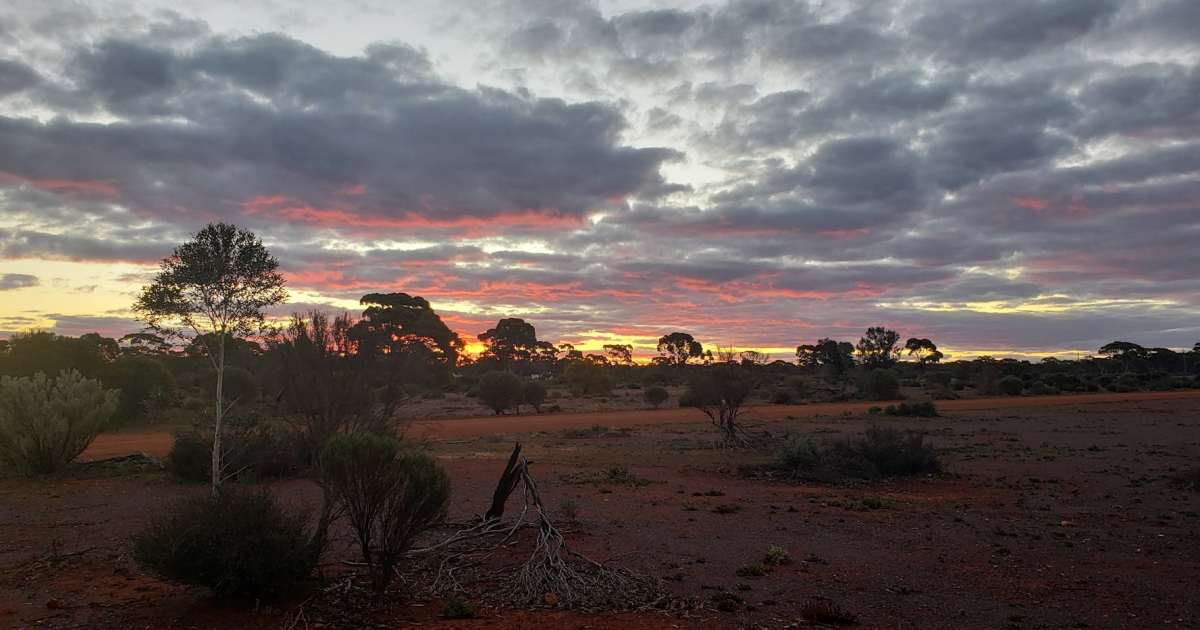
A meteorite impact may have once rained gold on Western Australia
A 4km-diameter meteorite impact crater has been discovered in Western Australia’s Eastern Goldfields near the town of Ora Banda. According to a study published in Meteoritics and Planetary Science, researchers Aaron J. Cavosie and Raiza R. Quintero identified the site through diagnostic shock evidence and gold-bearing impact breccias found during mineral exploration.
How was the Ora Banda impact crater discovered?
Mining companies didn’t find the crater by looking for space rocks; they were drilling for gold. The site, located about 50km north of Kalgoorlie, was identified when exploration drill cores revealed “shatter cones.” These conical rock features only form when a high-pressure shock wave from a meteorite impact rips through the ground.
Aaron J. Cavosie, a senior lecturer at Curtin University, stated that shatter cones served as the “smoking gun” for the discovery. These features appeared both in the rubbly surface outcrops and deep within the cylindrical drill cores extracted from the earth.
What makes the Ora Banda site geologically unique?
Most impact craters hit common crustal rocks, but Ora Banda hit ancient greenstones. These are metamorphosed volcanic rocks, like basalt, that are economically vital to Australia because they often host gold deposits.

The most unusual find was the presence of small gold nuggets within the impact breccias. According to the study, the force of the impact threw shocked rock fragments and molten glass into the atmosphere. As this material rained back down into the newly formed crater, it carried gold particles with it.
This “raining gold” phenomenon isn’t typical for most impact sites. It creates a rare geologic intersection where extraterrestrial energy redistributed terrestrial precious metals.
How do scientists prove a site is an impact crater?
To move from a hypothesis to a confirmed discovery, researchers look for diagnostic evidence that doesn’t occur through any other natural process. Cavosie and Quintero identified three primary markers at the Ora Banda site:
- Shocked Quartz: Microscopic quartz grains deformed by extreme pressure, a signature unique to meteorite impacts.
- Suevite: A type of polymict breccia containing glassy melt particles. This glass forms when rock melts during impact, flies into the air, and cools rapidly before landing.
- Meteorite Residue: The researchers found traces of the original meteorite that had vaporized and dissolved into the glassy melt particles.
Where does this fit into Australia’s impact history?
Australia now has 34 confirmed meteorite impact craters. These sites show a massive range in age and preservation. On one end is the Yarrabubba structure, which dates back 2.2 billion years. On the other are youthful sites like the Wolfe Creek (Kandimalal) crater, which remains well-preserved and visually striking.
Ora Banda differs from Wolfe Creek because it’s an “eroded” structure. While Wolfe Creek is a tourist destination due to its clear bowl shape, Ora Banda’s evidence is hidden in the subsurface, requiring deep drilling to uncover.
Comparison of Notable Australian Impact Sites
| Site Name | Key Characteristic | Visibility |
|---|---|---|
| Ora Banda | Gold-bearing greenstones | Subsurface/Eroded |
| Wolfe Creek | Youthful preservation | Highly Visible |
| Yarrabubba | Ancient (2.2 billion years) | Eroded |
Frequently Asked Questions
What is an impact breccia?
It’s a rock composed of broken fragments of older rocks “glued” together by a matrix of smaller particles, formed by the high-energy shock waves of a meteorite hit.

Can meteorite impacts create gold?
No. In the case of Ora Banda, the impact didn’t create gold; it redistributed existing gold from the target greenstones, raining it back down into the crater deposits.
Why is the site being renamed?
Researchers are working with the Goldfields Aboriginal Language Centre to establish an Indigenous name for the site to honor the region’s First Nations culture.
Want to learn more about Earth’s violent history? Leave a comment below with your thoughts on the Ora Banda discovery or subscribe to our newsletter for more geological breakthroughs.