
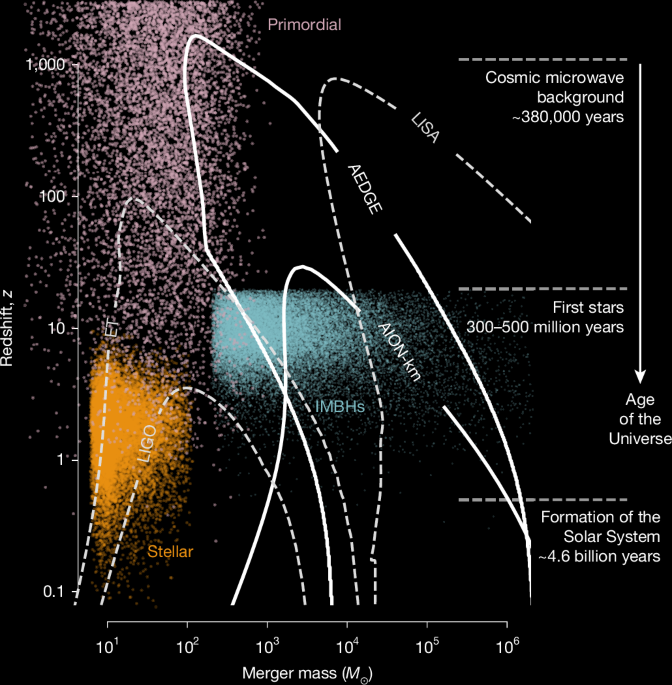
A prototype differential atom interferometer for fundamental physics
Researchers have successfully demonstrated a differential atom interferometer using strontium-87 atoms, a breakthrough that significantly suppresses laser phase noise to reach the Standard Quantum Limit (SQL). According to experimental results published in Nature, this dual-trap architecture allows for precise measurements even when individual interferometer fringes are obscured by environmental noise, paving the way for next-generation long-baseline gravitational-wave and dark matter detectors.
How does differential atom interferometry work?
Differential atom interferometry uses two spatially separated clouds of cold atoms to cancel out common-mode noise, such as laser frequency fluctuations. By simultaneously probing two traps—one positioned above the other—the system measures the relative phase difference between them. According to the experimental data, this configuration remains effective even in the presence of “High Laser Noise” (HLN) conditions, where individual fringe patterns are fully randomized. The system utilizes a unified unbinned maximum-likelihood analysis to extract the differential phase, ensuring that the measurement of the relative signal remains robust despite the loss of absolute phase information in each individual trap.
The researchers used a 488-nm “transparency beam” to protect the trapped atoms from scattered light, a critical step that allowed them to load and manipulate the two dipole traps without losing the cold atom samples to interference.
What is the significance of the Standard Quantum Limit?
The Standard Quantum Limit (SQL) represents the fundamental precision boundary imposed by quantum mechanics on measurements involving a finite number of particles. In this experiment, the team achieved an uncertainty level consistent with the SQL, calculated using the Cramer–Rao bound. According to the report, the measured differential phase uncertainty reached approximately 260 micro-radians over the total dataset. This milestone is essential for future kilometre-scale detectors, which require extreme sensitivity to detect the minute spacetime distortions caused by gravitational waves or the influence of ultralight dark matter.
Why is laser noise a challenge for long-baseline sensors?
Laser phase noise scales with the interrogation time and the length of the detector baseline, often overwhelming the faint signals scientists hope to detect. As noted in the Nature study, a kilometre-scale interferometer could face phase excursions of many radians, far exceeding the target resolution of 105 rad/√Hz. By applying large, uncorrelated phase jumps to the atoms during the experiment, the researchers simulated these extreme noise environments. The success of the differential measurement technique demonstrates that laser noise cancellation is not only possible but scalable for future large-scale research facilities.
Pro Tips for Precision Measurement
- Phase Randomization: Use deterministic scan-order randomization to prevent 50-Hz power line noise from aliasing into your data as false signals.
- Maximum-Likelihood Inference: Implement unbinned likelihood analysis to marginalize nuisance parameters, which helps maintain signal integrity even when raw data appears noisy.
- Velocity Selection: Employ a pulse-based velocity selection procedure to remove hotter atoms from the transition, significantly increasing the fidelity of Rabi pulses.
Frequently Asked Questions
What atoms are used in these high-precision interferometers?
The system uses strontium-87 (87Sr), an alkaline-earth metal chosen for its narrow-line optical clock transition, which provides the stability necessary for long interrogation times.
How does the system handle “dead time” between measurements?
The experimental control platform, built on the ARTIQ field-programmable gate array (FPGA) architecture, manages the sequence timing. While dead time is unavoidable, the team uses a unified analysis framework to ensure that the statistical power of the detector is preserved across hour-to-day records.
Is this technology limited to gravity sensing?
No. While this prototype focuses on differential phase stability, the same framework for signal analysis is designed to detect oscillations caused by ultralight dark matter or gravitational waves, making it a versatile tool for fundamental physics research.
Are you interested in the future of quantum sensing? Leave a comment below with your thoughts on how atom interferometry might change our understanding of dark matter, or subscribe to our newsletter for the latest updates on precision physics research.