
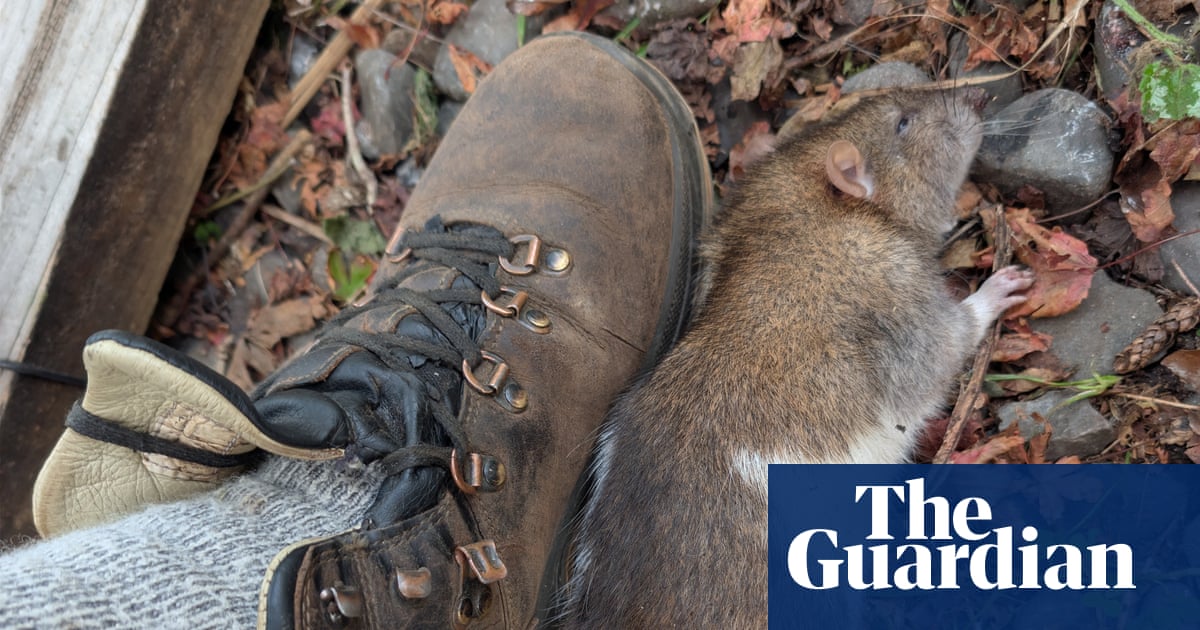
A rat sighting in New Zealand can trigger an urgent response. Meet the ‘ghostbusters’ hunting them down | New Zealand
New Zealand aims to eradicate introduced predators like rats, stoats, and possums by 2050 to save its unique wildlife from decimation. According to the Department of Conservation, these predators kill an estimated 25 million native birds annually and have already driven 50 bird species to extinction. Organizations like Predator Free Wellington now employ community “hotlines,” detector dogs, and genomic sequencing to eliminate individual pests before they can re-establish populations.
How does New Zealand hunt single rats in urban areas?
Predator Free Wellington treats single pest sightings as urgent emergencies to prevent population rebounds. Project director James Willcocks compares the operation to “Ghostbusters,” where the team responds immediately to public intel. The process begins with a tip-off via the 0800 NO RATS hotline.
Technical officer Philip Wisker notes that the team first verifies the pest. This often involves distinguishing rat droppings from those of the wētā, an endemic insect; Wisker explains that wētā droppings smell like “nutmeg, spicy,” while rat droppings smell “quite pooey.”
Once confirmed, a dog detector team identifies the rat’s location. A capture team then deploys cameras, traps, and bait. After a rat is caught, it undergoes genomic sequencing. This allows the team to determine if the animal is a local survivor or an interloper from another region.
What is the impact of predator-free zones on native birds?
The removal of introduced mammals has led to a measurable surge in native bird populations. On the Miramar peninsula, where Predator Free Wellington has spent 10 years eradicating rats, native bird populations have increased by 500%.
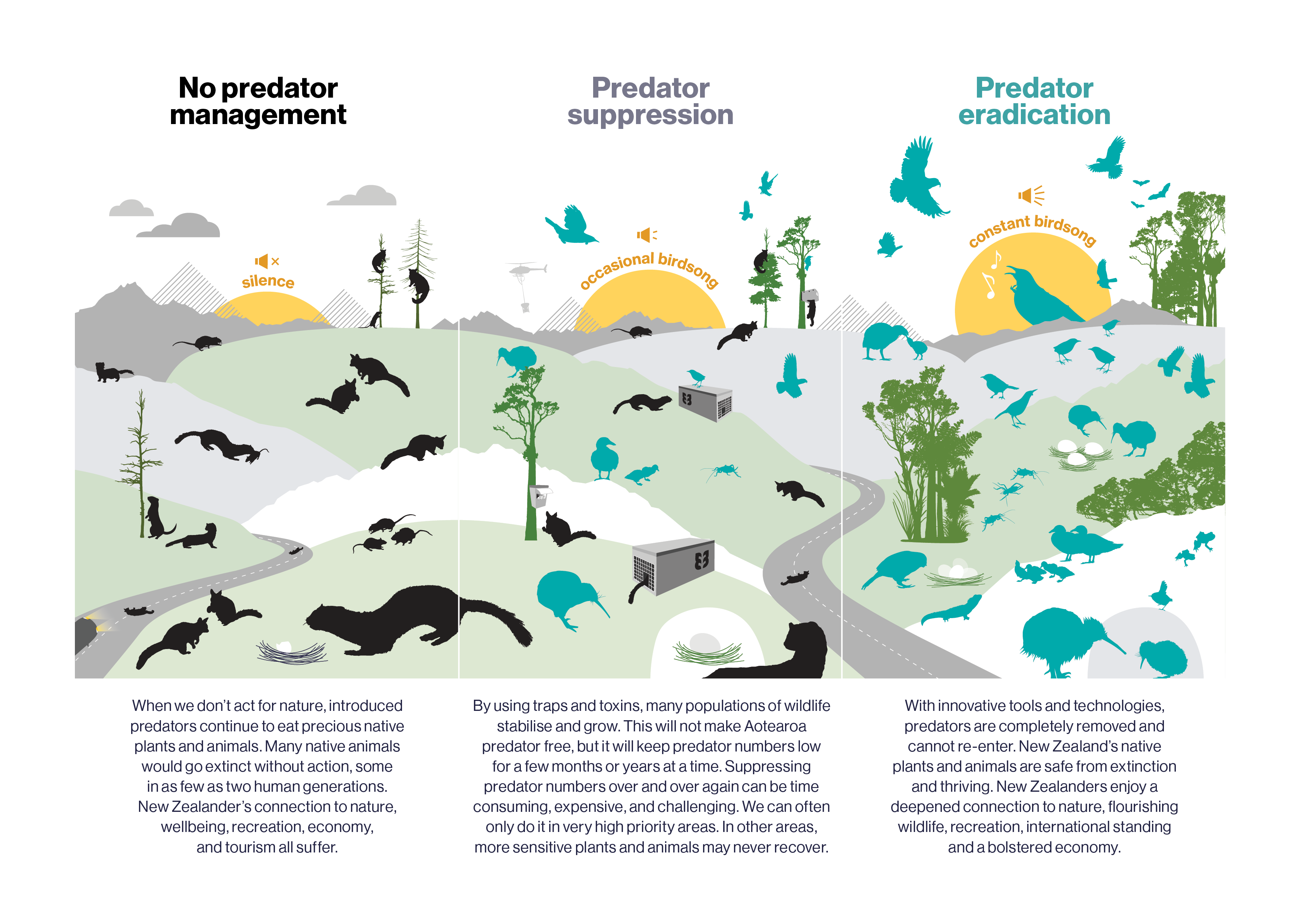
Similar success is seen on Waiheke Island in Auckland’s Hauraki gulf, where populations have risen by 99% since 2020. Resident Davin Hall reports that the absence of rats has allowed kererū and kākā to return to his neighborhood, noting that these birds now inhabit powerlines and local gardens.
Population Recovery Comparison
| Location | Bird Population Increase | Primary Target |
|---|---|---|
| Miramar Peninsula | 500% | Rats |
| Waiheke Island | 99% (since 2020) | Stoats/Rats |
Why is community involvement critical for eradication?
The scale of urban environments makes professional trapping alone insufficient. Willcocks argues that activating the “eyes and ears” of the community—such as the 212,000 residents of Wellington city—creates the most sensitive detection network in the world.
This community-led model is already active on Waiheke Island for stoats, and in Akaroa and the Otago Peninsula for possums. Residents act as the first line of defense, reporting suspected sightings to local hotlines to trigger rapid-response teams.
What challenges do urban rat-catchers face?
Urban terrain provides numerous hiding spots that complicate eradication. Expert dog handler Sally Bain, who works with dogs Kimi and Rapu, notes that rats frequently hide in cars, cabins, and construction materials.
The biological resilience of rats adds further pressure. Because they can breed multiple times a year, a single “interloper” can quickly re-establish a population if not caught early. This necessitates the daily, grueling work of traversing hilly terrain and construction sites to ensure no pest remains.
Frequently Asked Questions
What is the goal of the Predator Free 2050 project?
The goal is to eradicate introduced predators, specifically rats, stoats, and possums, across New Zealand by 2050 to protect endemic wildlife.
Why are New Zealand birds more vulnerable to predators?
Because New Zealand’s only endemic mammals are bats and marine mammals, its birds evolved without land-based predators, leaving many species flightless and defenseless.
How is genomic sequencing used in pest control?
It is used to analyze the DNA of captured rats to determine if they are part of a local population or have migrated into a previously cleared region.
Do you live in an area struggling with invasive species? Share your experience in the comments or subscribe to our newsletter for more updates on global conservation efforts.