
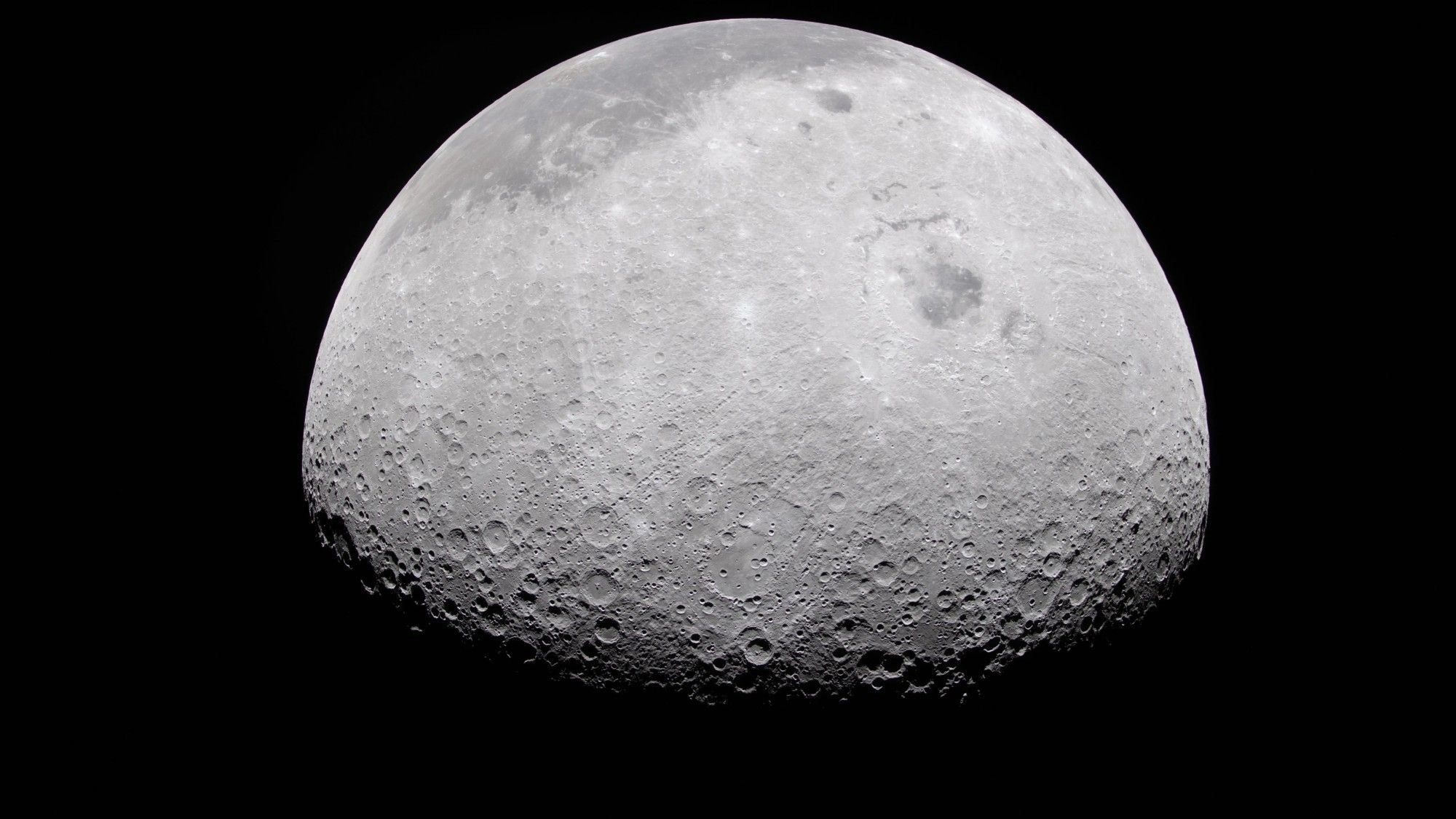
A SpaceX rocket will slam into the moon this August. Will we be able to see it?
A spent SpaceX Falcon 9 upper stage is projected to impact the moon on August 5, 2026, according to orbital calculations from Bill Gray of Project Pluto. The roughly four-metric-ton rocket body will strike at speeds exceeding two kilometers per second, potentially creating a visible flash and dust plume near the moon’s western limb.
Why is a SpaceX rocket hitting the moon?
The debris is a leftover component from a January 15, 2025, launch under NASA’s Commercial Lunar Payload Services (CLPS) initiative. That specific mission delivered Firefly’s Blue Ghost-1 lander and the Japanese company ispace’s Hakuto-R “Resilience” robotic lander to the lunar surface.

Once the payloads were deployed, the Falcon 9 upper stage remained in space. Orbital tracking eventually confirmed the hardware was on a collision course with the moon. This event highlights a growing trend of “anthropogenic” impacts—human-made objects striking celestial bodies—as lunar traffic increases.
Will the Falcon 9 impact be visible from Earth?
Experts are divided on whether the event will be visible to the naked eye or amateur telescopes. Bill Gray, creator of the Project Pluto tracking application, stated his confidence has shifted from “probably” to “probably not,” and finally to “maybe.”

William Cooke, program manager of NASA’s Meteoroid Environment Office, believes the initial impact flash will be “very subtle” and “very, very hard to see.” However, Cooke notes that the impact will excavate lunar regolith—the powdery dust covering the moon.
This excavation could create a plume of material illuminated by the sun. If the strike occurs near the moon’s limb (the edge), this plume might be visible even if the flash isn’t. Gray agreed with this assessment, noting that observers “should look and see if we can observe it.”
How do astronomers track lunar impacts?
Tracking these events requires a combination of high-precision software and global observation. Bill Gray’s Project Pluto software analyzed observations in September 2025 to project the August 2026 date. Despite this, Gray admits the exact timing and location remain “fuzzy by minutes and dozens of kilometers.”
Because impact flashes are brief, they can be mistaken for cosmic ray interference on a camera sensor. Brian Day, SSERVI’s lead for citizen science, explains that having multiple observers in different geographic locations is the only way to verify a “coincidence of events.”
What happens to the lunar surface after a rocket strike?
The impact will likely occur near Einstein Crater on the western limb or Bell Crater on the far side. According to William Cooke, the strike will kick up huge amounts of regolith, though the duration of the resulting plume is unknown due to the moon’s one-sixth gravity.
NASA is using the Lunar Reconnaissance Orbiter (LRO) to document the results. Brent Garry, LRO project scientist, stated the orbiter will pass over the projected crash site approximately seven days before and seven days after the impact.
Garry noted that post-impact imaging will allow NASA to refine the exact location of the strike. This process provides a real-world case study in how human debris alters the lunar environment, which Brian Day describes as a “dynamic environment” that is constantly being “whacked” and changed.
Comparison: Natural vs. Human-Made Impacts
While the moon is naturally pelted by asteroids, anthropogenic impacts like the Falcon 9 stage provide a controlled variable for scientists. Unlike random asteroids, the mass, velocity, and approximate arrival time of a rocket stage are known.
| Feature | Natural Asteroid | Falcon 9 Upper Stage |
|---|---|---|
| Predictability | Low/Variable | High (via orbital tracking) |
| Composition | Rock/Metal/Ice | Aerospace alloys/Composite |
| Observation | Chance discovery | Planned monitoring (LRO) |
Frequently Asked Questions
When will the SpaceX rocket hit the moon?
According to Project Pluto, the impact is expected on August 5, 2026.
Where is the impact likely to occur?
Current projections point to Einstein Crater near the western limb or Bell Crater on the moon’s far side.
Can I see the impact with a home telescope?
It’s possible but unlikely. Experts suggest looking for a “plume” of dust rising from the limb rather than a bright flash.
Who is tracking the debris?
The event is being monitored by Bill Gray (Project Pluto), William Cooke (NASA Meteoroid Environment Office), and the LRO team led by Brent Garry.
Want to stay updated on lunar missions and space debris? Leave a comment below with your thoughts on lunar sustainability or subscribe to our newsletter for more deep-space reporting.