
A violent volcanic eruption may have revealed a new weapon to tackle a potent planet-heating gas
Nature’s Accidental Cleanup: Could Volcanoes Hold the Secret to Reversing Global Warming?
When the Hunga Tonga-Hunga Ha’apai volcano erupted in 2022, the sheer scale of the event—a sonic boom that circled the globe twice—dominated headlines. But while the world watched the devastation, a team of atmospheric scientists was busy tracking something much quieter: a chemical reaction in the stratosphere that could change how we approach the climate crisis.
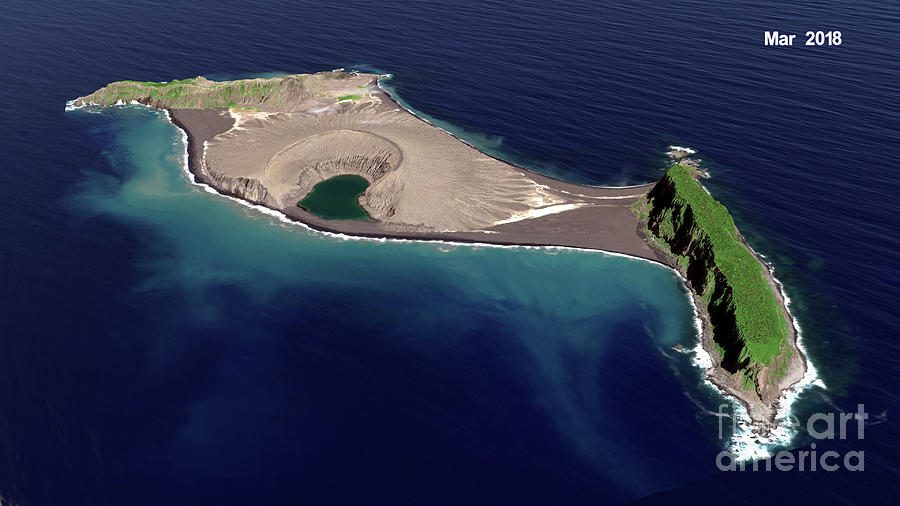
Data from the eruption revealed a massive cloud of formaldehyde, a byproduct of methane destruction. Essentially, the volcano was not just spewing greenhouse gases; it was actively scrubbing them from the atmosphere. This discovery has sparked a fierce debate about whether we can replicate this natural phenomenon to combat rapid global heating.
The Chemistry Behind the “Volcanic Scrub”
The secret lies in a complex interaction between sunlight, salt, and iron. Researchers believe that the eruption blasted massive amounts of salty water vapor and ash into the high atmosphere. When sunlight struck these iron-rich volcanic particles, it triggered the release of chlorine atoms.
These chlorine atoms act as a chemical “broom,” reacting with methane to break it down into harmless components. This process isn’t entirely new—scientists have observed similar reactions occurring naturally when Saharan dust blows over the Atlantic Ocean—but seeing it happen on such a massive scale in the stratosphere was a scientific first.
From Theory to Geoengineering
The potential for human intervention is clear: if we can mimic this chemical process, could we artificially remove methane from the atmosphere? Some experts suggest that injecting iron-based particles into the atmosphere could theoretically jumpstart this reaction, providing a rapid-response tool to cool the planet.
However, the transition from theory to practise is fraught with challenges. Atmospheric chemists warn that while the chemistry works in a vacuum, the real-world application in the lower atmosphere (the troposphere) is far more complex. The risk of unintended consequences—such as altering local weather patterns or negatively impacting air quality—remains a major hurdle.
The Future of Climate Tech: Balancing Innovation and Caution
The Hunga Tonga eruption has provided a “natural laboratory” that will influence climate models for years to come. By studying the satellite data from the formaldehyde cloud, researchers are creating more accurate simulations of how the atmosphere handles pollutants.

While industry leaders are eager to explore whether this can be scaled, the scientific community is taking a measured approach. Thorough testing in controlled atmospheric models is the next critical step. As we face a warming world, finding new ways to manage atmospheric chemistry is essential, but it must be done with rigorous safety standards to avoid “fixing” one problem while creating another.
Frequently Asked Questions
Q: Is methane more dangerous than carbon dioxide?
A: In the short term, yes. Methane traps heat about 80 times more effectively than CO2 over a 20-year window, making it a primary driver of near-term global temperature spikes.
Q: What is geoengineering?
A: Geoengineering refers to large-scale, deliberate interventions in the Earth’s natural systems to counteract climate change, such as reflecting sunlight or removing greenhouse gases from the air.
Q: Could we start using volcanic-style methane removal tomorrow?
A: No. Scientists emphasize that the process is still theoretical and requires extensive safety testing. We do not yet understand the full impact such a process would have on the ecosystem or global weather patterns.
What are your thoughts on using atmospheric chemistry to combat climate change? Is it a brilliant solution or a dangerous gamble? Join the conversation in the comments below, or subscribe to our weekly newsletter for the latest updates on climate science and sustainability.