

Accelerating Black Hole Simulations With OpenAI Codex
AI-driven coding tools are accelerating astrophysics research by solving previously “unsolvable” computational problems. According to OpenAI, researcher CK utilized Codex to discover new numerical algorithms and coordinate transformations for black hole plasma simulations, increasing calculation speeds by a factor of 1,000 and enabling simulations previously deemed computationally impossible.
Why is simulating black hole plasma so difficult?
Black holes are too distant for direct physical sampling. Scientists instead measure the plasma falling into them. According to CK, standard simulations hit a wall because the plasma surrounding black holes has an extremely low density. This means researchers can’t treat the plasma as a fluid, which is the traditional shortcut for these calculations.
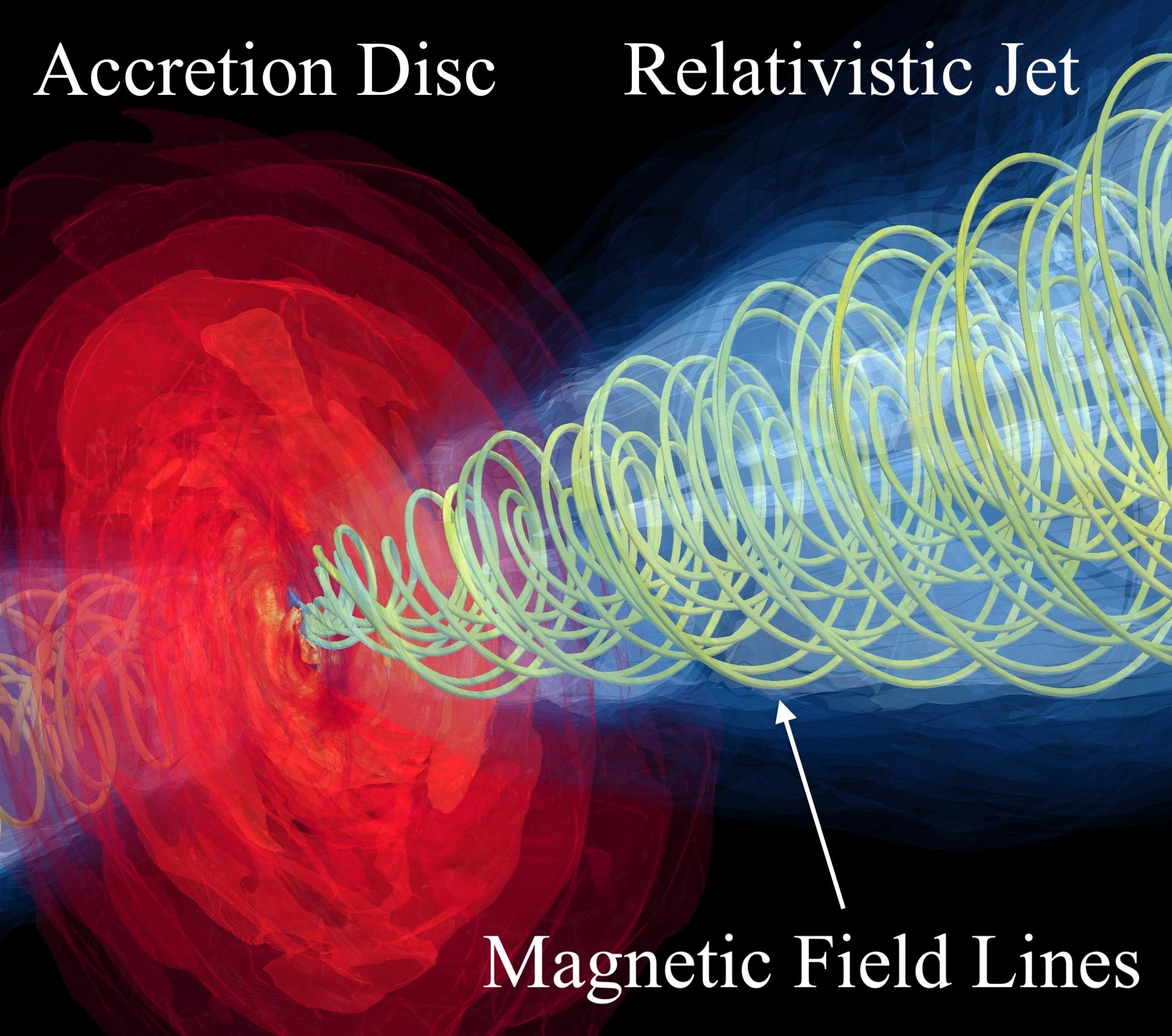
The only accurate alternative is tracking every single electron and ion. CK describes this approach as a “computationally simply unsolvable problem” due to the sheer volume of data and processing power required to follow individual particles in real-time.
How does OpenAI Codex accelerate astrophysics?
CK implemented a custom agent capability within Codex to hunt for more efficient numerical algorithms. Instead of manually deriving every mathematical transformation, the researcher used the AI to discover new coordinate transformations that streamline how the computer processes plasma movement.
This AI-assisted discovery process allows for the creation of simulations that were previously impossible. By optimizing the underlying math, Codex removes the bottleneck that forced researchers to choose between inaccurate fluid models and impossibly slow particle tracking.
For more technical details on the intersection of AI and space science, you can explore the original research documentation from OpenAI.
What happens to the researcher’s role in AI-driven science?
The AI doesn’t operate autonomously. CK still must manually implement and verify every approximation Codex generates. The AI suggests the path, but the human scientist validates the physics. This shift changes the workflow from manual derivation to high-level verification.
By offloading the algorithmic search to Codex, CK reports a significant increase in available research time. The human element moves away from the “grunt work” of numerical optimization and toward the actual analysis of the black hole data.
Comparison: Simulation Methods for Black Hole Plasma
| Method | Accuracy | Computational Speed |
|---|---|---|
| Fluid Approximation | Low (fails at low density) | Fast |
| Individual Particle Tracking | High | Impossible/Too Slow |
| Codex-Optimized Algorithms | High | 1,000x Faster than tracking |
Frequently Asked Questions
Can AI replace astrophysicists?
No. According to the current workflow used by CK, AI generates approximations that a human expert must still verify and implement to ensure scientific accuracy.

What is Codex?
Codex is an AI model developed by OpenAI that can understand and generate code, used in this case to find new mathematical algorithms for physics simulations.
Why does plasma density matter in black hole research?
Low-density plasma doesn’t behave like a continuous liquid. If researchers use fluid equations for low-density environments, the simulation results become inaccurate.
What do you think about the role of AI in theoretical physics? Should we trust AI-discovered algorithms without human oversight? Let us know in the comments below or subscribe to our newsletter for more updates on the frontier of science.