

ACOG Makes Vaccine Recommendations for the First Time
The American College of Obstetricians & Gynecologists (ACOG) released a new immunization schedule on Wednesday for pregnant, postpartum, and breastfeeding women. The guidance differs from current U.S. government advice, specifically regarding COVID-19 vaccines, to provide evidence-based guidance amid rising vaccine misinformation, according to ACOG.
How does the ACOG vaccine schedule differ from government advice?
The primary discrepancy involves the COVID-19 vaccine. Last May, Health Secretary Robert F. Kennedy Jr. announced that COVID-19 vaccines are no longer recommended for healthy pregnant women and children.
ACOG’s new schedule aligns with prior CDC recommendations from before changes were implemented under the Trump administration and Kennedy. This disagreement led ACOG to withdraw from a CDC advisory committee on vaccines earlier this year, a move that has sparked legal challenges.
Which vaccines does ACOG recommend during pregnancy?
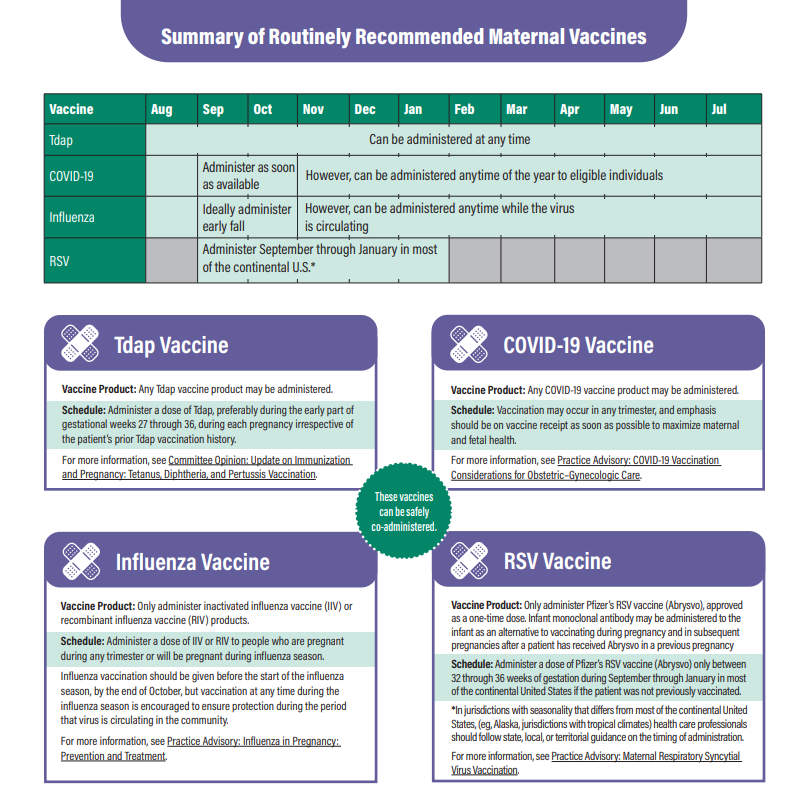
ACOG routinely recommends four immunizations during pregnancy. These include the flu vaccine and the COVID-19 shot, both of which can be taken during any trimester at any time of year.

The group also advises a tetanus, diphtheria, and pertussis shot, preferably between 27 and 36 weeks. For first-time pregnancies, the respiratory syncytial virus (RSV) vaccine is recommended between 32 and 36 weeks from September through January in most U.S. regions.
Women who received the RSV vaccine in a previous pregnancy do not need it again, though ACOG states the baby should receive an antibody shot after birth. Other vaccines for hepatitis A, hepatitis B, meningococcal, and pneumococcal may be necessary based on specific risk factors.
Why is ACOG releasing its own guidelines now?
Christopher Zahn, MD, ACOG’s chief of clinical practice, stated the group is formally releasing the schedule to communicate evidence-based guidance and address circulating vaccine misinformation.
Healthcare providers report significant pushback from patients. Carol Hayes, MPH, of the American College of Nurse Midwives, said vaccine hesitancy is “huge” and that patients often rely on non-scientific research.
Sarah Vaillancourt, DNP, RN, of the National Association of Nurse Practitioners in Women’s Health, added that social media fuels this confusion. She described ACOG’s independent guidance as “really useful” for providing accurate information to patients.
What may happen next for vaccine guidance?
The new ACOG schedule has already been endorsed by 13 other professional and medical societies. Other organizations, including the American Academy of Pediatrics, have also issued schedules this year that differ from the CDC’s.

This trend could lead to a broader shift where medical societies establish independent standards if federal guidelines continue to diverge from their evidence-based practices. Legal challenges stemming from ACOG’s withdrawal from the CDC committee may also influence how future vaccine policies are developed.
Frequently Asked Questions
When should the RSV vaccine be administered according to ACOG?
It is recommended between 32 and 36 weeks of a first pregnancy, typically between September and January in most parts of the U.S.
What is the main point of contention between ACOG and the U.S. government?
The biggest difference is the recommendation for the COVID-19 vaccine, which Health Secretary Robert F. Kennedy Jr. announced is no longer recommended for healthy pregnant women and children.
Which vaccines are recommended before pregnancy or after birth?
ACOG recommends vaccines protecting against chickenpox, measles, mumps, rubella, and human papillomavirus during these periods.
How do you feel about receiving health guidance from professional medical societies versus government agencies?