
Add-on Pramipexole for Anhedonic Depression: A Randomized Controlled Trial
Researchers in Lund, Sweden, have implemented a clinical trial to evaluate whether add-on pramipexole can treat anhedonia in patients with major depressive disorder, dysthymia, or bipolar disorder. The trial, sponsored by the Department of Psychiatry at Skåne University Hospital, utilizes a randomized placebo-controlled design to measure changes in reward processing and physical activity.
How was the pramipexole trial for anhedonia structured?
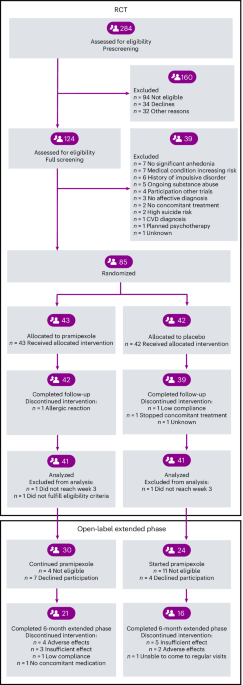
The academic single-center trial randomized patients to receive either a flexible dose of extended-release pramipexole from STADA Nordic or an identical placebo from Ardena for nine weeks. According to the study protocol, this phase was followed by a six-month open-label extension.
To maintain blinding, a separate team of physicians and nurses conducted the open-label phase. This ensured that the clinicians assessing the initial randomized phase remained unaware of side effects or efficacy signals.
Dosing followed a tailored titration schedule based on Parkinson’s disease strategies, adjusted for individual efficacy and side effects. Dose escalation stopped if patients reached a Clinical Global Impression (CGI) Severity score of ≤2.
Who was eligible to participate in the study?
Participants were adults aged 18 to 75 with a diagnosis of major depressive disorder (MDD), dysthymia, or bipolar disorder with a depressive episode. Eligibility required ongoing treatment with at least one antidepressant or mood-stabilizer for four weeks or more.
According to the protocol, all participants must have a history of at least one adequate antidepressant trial that did not result in remission. They were also required to show clinically significant anhedonia, defined as scores of 3 or 4 on at least three items of the SHAPS scale.
Researchers excluded individuals with high suicide risk, current psychotic disorders, or cognitive impairments that affected informed consent. Medical exclusions included renal impairment, symptomatic cardiovascular disease, and Parkinson’s disease.
What metrics did researchers use to track patient progress?
The primary outcome measure was the absolute change in the SHAPS total score between baseline and week nine. This self-rating scale specifically targets the consummatory phase of anhedonia.
Secondary assessments included the HDRS-6 for core depression items and the DARS to separate motivational and consummatory anhedonia. Researchers also used the GAD-7 for anxiety, the ISI for insomnia, and the BBQ for quality of life.
Physical activity was tracked using ActiGraph GT3X-BT accelerometers worn on the non-dominant wrist. A subset of participants underwent 7-Tesla fMRI scans to assess ventral striatal activity during reward anticipation.
Why does this research on reward circuits matter?
The recruitment strategy reflects a theory that anhedonia is a cross-diagnostic symptom. According to the researchers, this suggests a shared pathophysiology involving reduced dopaminergic activity and dysfunction in the brain’s reward circuits.

By using 7-Tesla fMRI and measuring dopamine metabolites like HVA and DOPAC in blood and CSF, the study aims to link clinical improvements in pleasure and motivation to biological changes in the ventral striatum.
What may happen next in this research?
If the trial shows a significant reduction in SHAPS scores, researchers may further analyze the correlation between ventral striatal activation and clinical recovery. This could provide a biological marker for treatment response.
A possible next step involves analyzing the long-term tolerability data from the six-month open-label extension. This may help determine if the flexible dosing schedule used in the trial is sustainable for patients with chronic depressive disorders.
Frequently Asked Questions
What was the primary goal of the study?
The primary goal was to measure the absolute change in the SHAPS total score between baseline and week nine to evaluate the efficacy of add-on pramipexole in treating anhedonia.
How was the “blinding” process managed?
Patients, research physicians, and nurses were blinded to treatment allocation. A separate team of clinicians handled the open-label extension to ensure the RCT assessors remained unaware of efficacy signals.
What specific brain region was monitored via fMRI?
Researchers used a 7-Tesla scanner to monitor activity in the ventral striatum, specifically focusing on the accumbens region to assess reward anticipation.
Do you believe biological markers like fMRI scans should be standard in treating depression?