
Adjuvanted inactivated rabies virus-vectored Lassa virus vaccine in healthy adults: a phase 1 trial
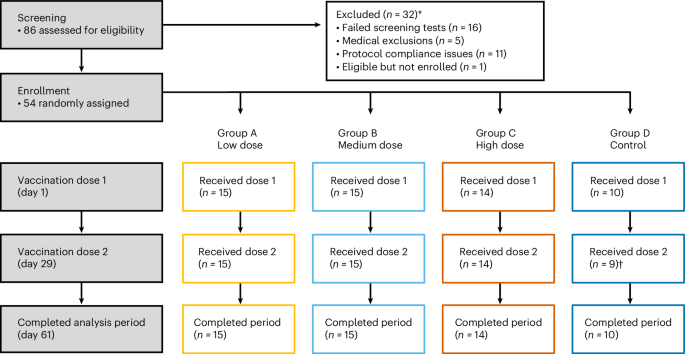
Researchers at the University of Maryland School of Medicine’s Center for Vaccine Development and Global Health have launched a clinical trial to evaluate the safety and immune response of LASSARAB, an experimental vaccine designed to protect against Lassa fever. The study, which involves 55 healthy adults aged 18 to 50, utilizes a rabies-vectored platform to deliver the Lassa virus glycoprotein.
Did You Know? The investigational vaccine, LASSARAB, uses a rabies virus backbone that has been genetically modified to include an arginine-to-glutamate substitution at amino acid position 333, a specific change intended to reduce the virus’s ability to infect the nervous system.
How the Study is Conducted
Participants were recruited from the Baltimore/Washington DC area and assigned to one of four study groups through block randomization. Three groups received different doses of the LASSARAB vaccine combined with an adjuvant, while a control group received the licensed Imovax Rabies vaccine. To maintain the study’s blind, researchers used blue tape to mask the appearance of the syringes, as the investigational vaccine appears cloudy white while the comparator vaccine is reddish-pink after reconstitution.

The trial follows a two-dose schedule, with vaccinations administered on day 1 and day 29. Safety oversight is managed by a Study Review Committee (SRC) and an independent Safety Monitor (ISM), who conduct periodic reviews of participant data to ensure adherence to safety protocols. Follow-up assessments are scheduled to continue through day 394.
Monitoring for Safety and Reactogenicity
The primary focus of the trial is to document local and systemic reactions, such as pain, swelling, feverishness, or malaise, for seven days following each injection. Because of theoretical risks associated with Lassa fever vaccines, researchers have designated sensorineural hearing loss as an adverse event of special interest. Participants undergo regular hearing threshold evaluations using a tablet-based audiometer to detect any potential changes.
Expert Insight: The inclusion of rigorous audiometric monitoring highlights the specific safety concerns surrounding Lassa-related immunizations. By using tablet-based testing and confirming findings through formal diagnostic sound booths, the team is establishing a high bar for safety oversight in early-phase vaccine development.
What May Happen Next
The trial is currently in an exploratory phase, meaning the data collected will be used to determine the vaccine’s safety profile and ability to generate antibodies against both Lassa and rabies viruses. Depending on the findings from the interim analysis of data collected through day 61, researchers could move toward larger-scale efficacy trials if the current results meet safety and immunogenicity benchmarks. Future research may also involve additional exploratory analyses of the biological specimens collected during the study.
Frequently Asked Questions
Who is eligible to participate in this study?
Eligible participants must be healthy adults between 18 and 50 years old who meet specific criteria, including a negative test for HIV, hepatitis B and C, and a negative baseline rabies neutralizing antibody test.
What is the role of the rabies-vectored platform?
The LASSARAB vaccine uses a recombinant rabies virus backbone, specifically the SAD B19 strain, which is engineered to express the Lassa virus glycoprotein. This approach is intended to trigger an immune response without causing the diseases the vectors are derived from.
How are the immune responses measured?
Researchers are evaluating immune responses by measuring IgG titers and seroconversion rates for both Lassa and rabies viruses using ELISA, as well as testing rabies neutralizing antibody titers through Rapid Fluorescent Focus Inhibition Tests (RFFIT).
Would you consider participating in a clinical trial for an experimental vaccine if you met all the health requirements?