
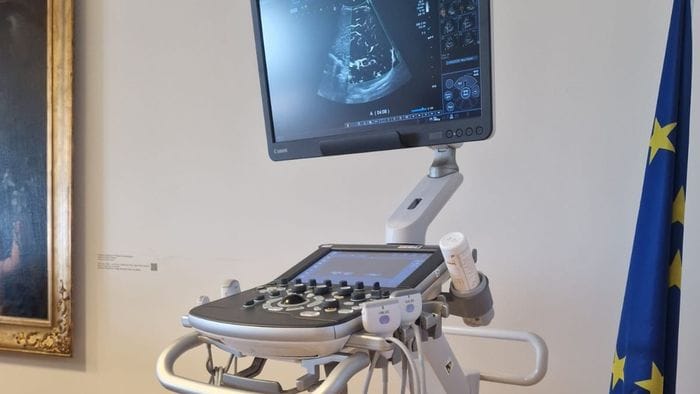
Advanced Echography Donated by 3 Associations to Bergamo’s Papa Giovanni XXIII Hospital for Research and Care of Newborns
In a significant development at the Papa Giovanni XXIII Hospital in Bergamo, an advanced ultrasound device valued at 99,000 euros was donated by three organizations—Nepios, Associazione per l’Aiuto al Neonato Odv, and L’Orizzonte di Lorenzo—to support research and care for vulnerable neonates. The equipment will be used for the “Vascolarizzazione cerebrale del neonato cardiopatico congenito” project, focusing on studying cerebral blood flow in infants with congenital heart disease. The initiative aims to enhance understanding of cerebrovascular characteristics through advanced ultrasound techniques, offering non-invasive, repeatable assessments of cerebral perfusion during critical clinical periods.
The project addresses the complex interplay between congenital heart conditions and neurodevelopmental outcomes. Simonetta Gerevini, director of the Department of Imaging and Neuroradiology, emphasized that congenital heart disease impacts not only the heart but also the brain’s development from birth. By analysing cerebrovascular responses to cardiac conditions and treatments, the study seeks to refine diagnostic and therapeutic approaches. Francesca Raimondi, head of the Cardiology Unit, highlighted that early intervention informed by this research could improve long-term neurological outcomes for affected infants.
The initiative, spanning three to four years, plans to conduct at least 150 annual ultrasound exams, with two assessments per neonate. Initial phases will focus on patients admitted to the hospital, later expanding to outpatient follow-ups to track long-term vascular development. While the project’s immediate impact is clear, future steps could involve broader clinical applications or collaborations if preliminary data demonstrate efficacy.
Did You Know?
Did You Know? The donated ultrasound device, valued at 99,000 euros, is specifically designed to analyze microcirculation in neonates, offering a non-invasive method to study cerebral perfusion during critical early-life periods.

Expert Insight
Expert Insight: The integration of advanced imaging into neonatal cardiology represents a critical step toward personalized care. By bridging cardiology and neurology, this research could set a precedent for multidisciplinary approaches in treating complex congenital conditions, though its long-term influence will depend on data consistency and clinical adoption.
Frequently Asked Questions
What is the primary goal of the “Vascolarizzazione cerebrale del neonato cardiopatico congenito” project? The project aims to study cerebral blood flow in neonates with congenital heart disease using advanced ultrasound techniques to improve understanding of neurodevelopmental outcomes.
How many ultrasound exams are planned annually? The project anticipates at least 150 exams per year,