
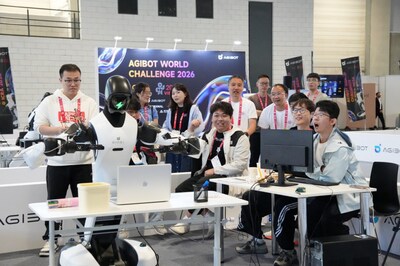
AGIBOT World Challenge 2026: Advancing Embodied AI via Real-Robot Testing
Beyond the Sandbox: The Rise of Physical Intelligence and Embodied AI
For years, artificial intelligence has lived primarily behind screens. We’ve marveled at LLMs that can write poetry or generate photorealistic art, but these systems lacked one critical component: a body. They understood the concept of a cup of coffee, but they had no idea how to actually grasp one without crushing it or knocking it over.
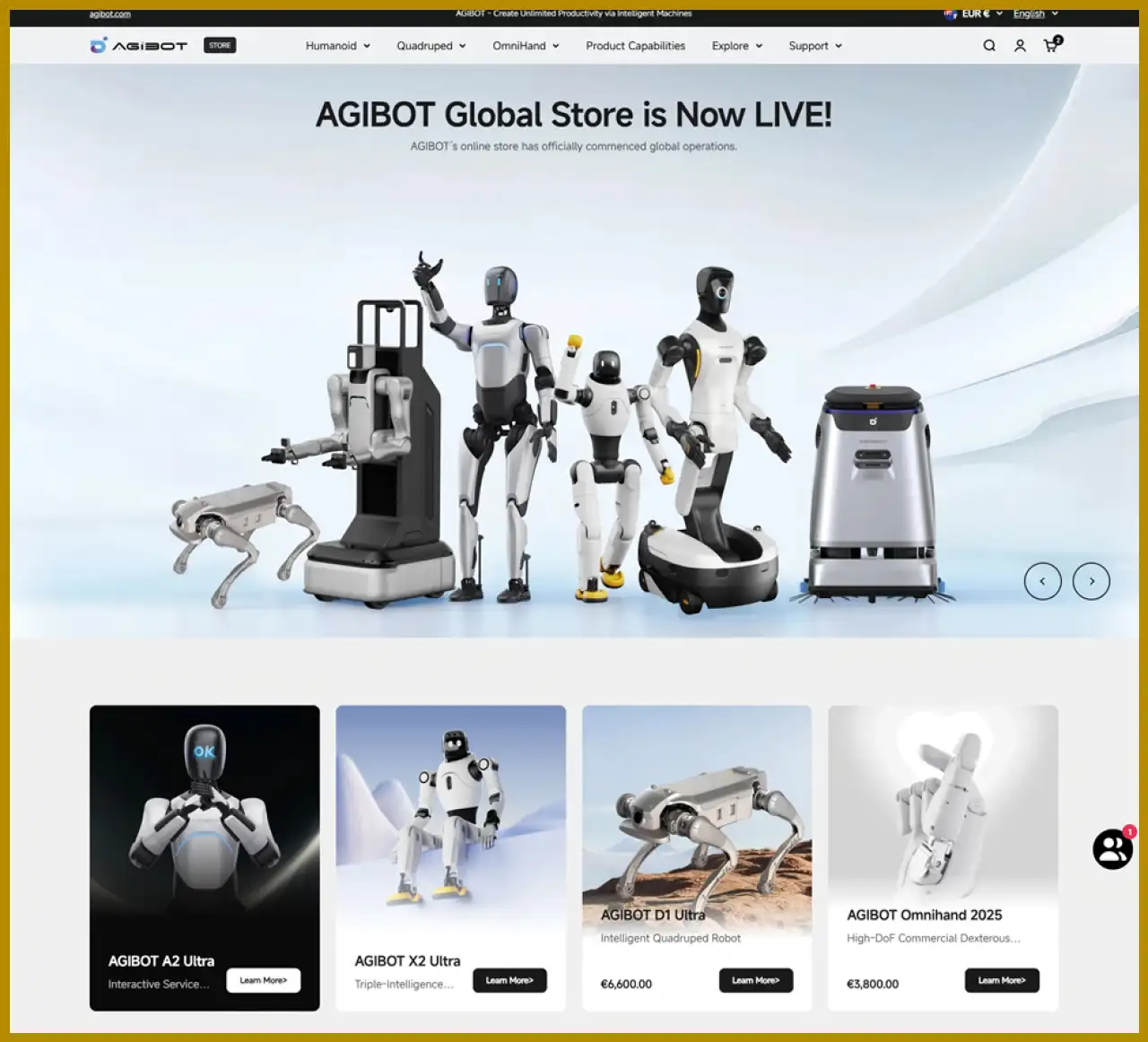
We are now entering the era of Embodied AI. The shift is moving away from pure digital intelligence toward “Physical Intelligence,” where AI is integrated into robotic forms to interact with the messy, unpredictable real world. The recent surge in global competitions and the development of humanoid platforms like the AGIBOT G2 signal a pivotal transition from simulation-based learning to real-world deployment.
Closing the Sim-to-Real Gap: Why Simulation Isn’t Enough
In the early days of robotics, developers relied heavily on simulation. It was safe, fast, and cheap. However, a robot that scores 100% in a virtual environment often fails miserably in a real-world setting because simulations cannot perfectly model the physics of every surface or the unpredictability of human movement.
The trend is now shifting toward closed-loop testing. Instead of just measuring if a robot can reach a coordinate, engineers are testing “long-horizon task reliability.” So the robot must plan, execute, fail, adapt, and eventually succeed in a continuous loop.
Take, for example, the challenge of a real-world supermarket. A robot isn’t just navigating a map; it’s dealing with varying shelf heights, randomized item placements, and the physical constraints of gripping a slippery plastic bottle. Here’s where true embodied intelligence is forged.
The Move Toward Standardized Benchmarks
To move the industry forward, we need more than anecdotal success stories; we need “Olympics” for robots. Standardized benchmarks, such as EWMBench or similar frameworks, allow developers to compare models objectively. When we have a common yardstick, the pace of innovation accelerates because teams can identify exactly where their “Reasoning to Action” (R2A) pipeline is breaking down.
World Models: Giving AI a Sense of Physics
One of the most exciting frontiers in AI is the development of World Models (WM). While a standard AI predicts the next word in a sentence, a World Model predicts the next state of the physical environment.
If a humanoid robot pushes a vase, a World Model allows the AI to predict that the vase will tip and break before it even happens. This predictive capability is what separates a programmed machine from an intelligent agent. By incorporating “non-ideal” interactions—like object drops or grasping failures—into training, AI is learning the laws of physics through experience.
From Reasoning to Action: The New Cognitive Architecture
The “Reasoning to Action” (R2A) framework represents a leap in how robots think. Traditional robots followed a linear script: If X, then do Y. Modern Embodied AI uses a more fluid process:
- Environment Understanding: Using vision and sensors to map the surroundings.
- Task Planning: Breaking a complex goal (e.g., “clean the spill”) into atomic skills.
- Physical Execution: Translating those plans into precise motor movements.
- Disturbance Adaptation: Adjusting in real-time if someone bumps into the robot.
This architecture allows for zero-shot transfer, where a robot can apply a skill learned in one context to a completely new environment without needing to be reprogrammed from scratch.
The Future: General Purpose Humanoids in the Wild
We are rapidly approaching a tipping point where robots move from specialized roles (like warehouse arms) to general-purpose assistants. The integration of locomotion, interaction, and manipulation intelligence into a single system is the “Holy Grail” of robotics.
As production scales—with some companies already hitting milestones of tens of thousands of units—the focus will shift toward edge deployment. We will see robots that don’t rely on a massive cloud server to think, but possess enough on-board intelligence to operate safely and efficiently in homes, hospitals, and retail spaces.
For more insights on the evolution of AI, check out our guide on the next generation of AI hardware.
Frequently Asked Questions
What exactly is Embodied AI?
Embodied AI refers to artificial intelligence that is housed within a physical body (like a humanoid robot or a drone), allowing it to learn from and interact with the physical world rather than existing only in a digital space.
Why are “World Models” important for robots?
World Models allow AI to simulate the outcomes of its actions internally. This helps the robot predict physics, avoid accidents, and plan more complex movements without needing to fail in the real world first.
What is the difference between a traditional robot and an Embodied AI robot?
Traditional robots typically follow pre-programmed paths or simple rules. Embodied AI robots use neural networks to perceive their environment, reason through tasks, and adapt to changes in real-time.
Join the Conversation
Do you think humanoid robots will become a common sight in our homes within the next decade, or is the “Sim-to-Real” gap still too wide? Let us know your thoughts in the comments below or subscribe to our newsletter for the latest in physical intelligence!