
Aging in Young Adulthood: The Impact of Age Gap on the Risk of Early-Onset Solid Cancers
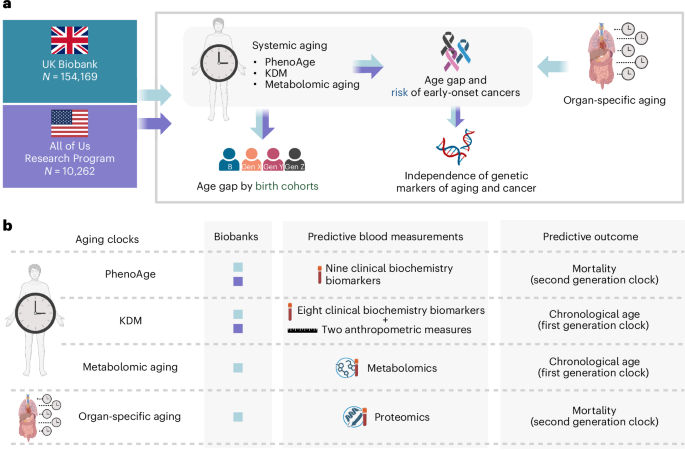
A large-scale study linking biological aging markers to early-onset solid cancers has been conducted using data from the UK Biobank and the All of Us Research Program, revealing significant associations between accelerated aging metrics and cancer risk in individuals under 55 years old.
The research analyzed over 154,000 UK Biobank participants under 55, using measures like PhenoAge, KDM biological age, metabolomic aging, and organ-specific aging scores to assess aging profiles. These metrics were compared against cancer incidence data collected through national registries, tracking cases diagnosed between 2006–2020 and 2010–2022 in the two cohorts.
Key findings showed that individuals with higher biological age gaps—measured as discrepancies between chronological age and aging biomarkers—had increased risks for various cancers, including breast, lung, and colorectal cancers. The study emphasized that these associations remained significant even after adjusting for socioeconomic factors, lifestyle, and genetic predispositions.
Why This Matters
The study underscores the growing concern about rising cancer rates in younger adults, with early-onset solid cancers increasing since the mid-1990s. By identifying biological aging as a potential risk factor, the research could inform targeted screening strategies and interventions for populations showing accelerated aging markers.

What May Happen Next
Researchers may explore whether interventions to slow biological aging, such as lifestyle modifications or pharmacological treatments, could reduce cancer risk in younger adults. Further validation in diverse populations and longitudinal studies could refine these biomarkers as clinical tools for early cancer detection.
Frequently Asked Questions
What is PhenoAge? PhenoAge is a biological aging metric derived from nine blood biochemistry measurements and chronological age, designed to predict 10-year mortality risk and correlate with both mortality and morbidity.
How many participants were involved? The study included 154,169 UK Biobank participants under 55 for primary analyses and 14,851 All of Us Research Program participants aged under 55 for validation.
What cancers were studied? The research focused on early-onset solid cancers, including breast, lung, colorectal, and others, excluding hematological malignancies due to variability in biomarker measurements.
Could biological aging metrics become standard tools for cancer screening in younger adults? What challenges might arise in implementing these findings globally?