
America’s Most Iconic Landmarks: A Tour of the Country’s Most Famous Statues
The United States is home to iconic landmarks often referred to as statues, though many stretch the traditional definition. These structures, ranging from the Statue of Liberty to the Gateway Arch, are recognized for their cultural and historical significance rather than strict sculptural form.
Statue of Liberty: A French Gift and American Icon
The Statue of Liberty, gifted by France and dedicated in 1886, is the most renowned. Designed by Frederic Auguste Bartholdi, it arrived in 350 pieces and features copper sheets as thin as two pennies. A tour of its torch-bearing arm in 1876 helped fund its completion, though the torch has been closed to the public since 1916.
Lincoln Memorial: A Marble Figure and Folklore
The 19-foot marble statue of Abraham Lincoln inside the Lincoln Memorial, carved by the Piccirilli Brothers, has sparked folklore. Some claim Lincoln’s hands form sign language letters A and L, but the National Park Service states this is coincidental.
Mount Rushmore: Presidential Faces in Granite
Mount Rushmore’s 60-foot presidential faces, carved by Gutzon Borglum and his son, were intended to extend to the waist but were shortened due to funding. The monument, completed in 1941, honors Washington, Jefferson, Roosevelt, and Lincoln.
Cloud Gate: The Bean of Chicago
Anish Kapoor’s mirror-polished sculpture, known as The Bean, reflects Chicago’s skyline. Built from 168 stainless steel plates, it is one of the few traditional sculptures on the list, though its nickname was initially disliked by the artist.
Gateway Arch: A Monument Without a Statue
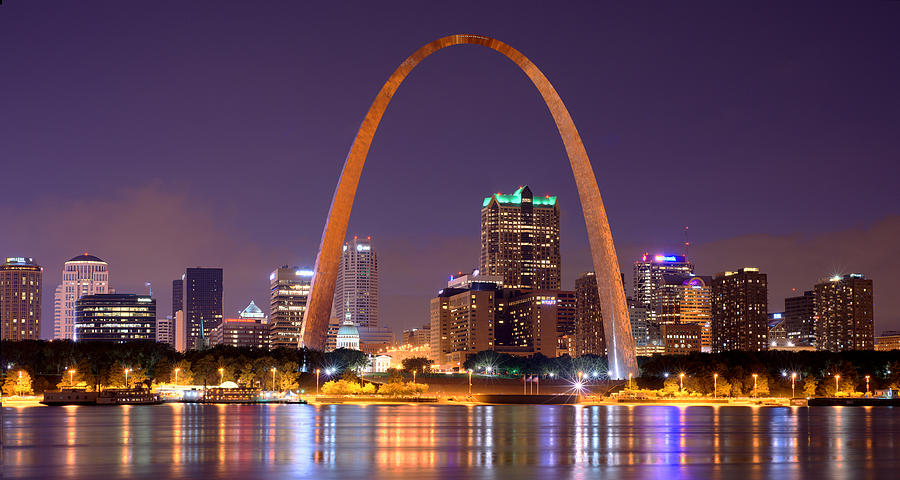
The 630-foot Gateway Arch in St. Louis, designed by Eero Saarinen, is the tallest arch in the Western Hemisphere. Though not a statue, it commemorates westward expansion and is a recognized landmark.
Other Notable Landmarks
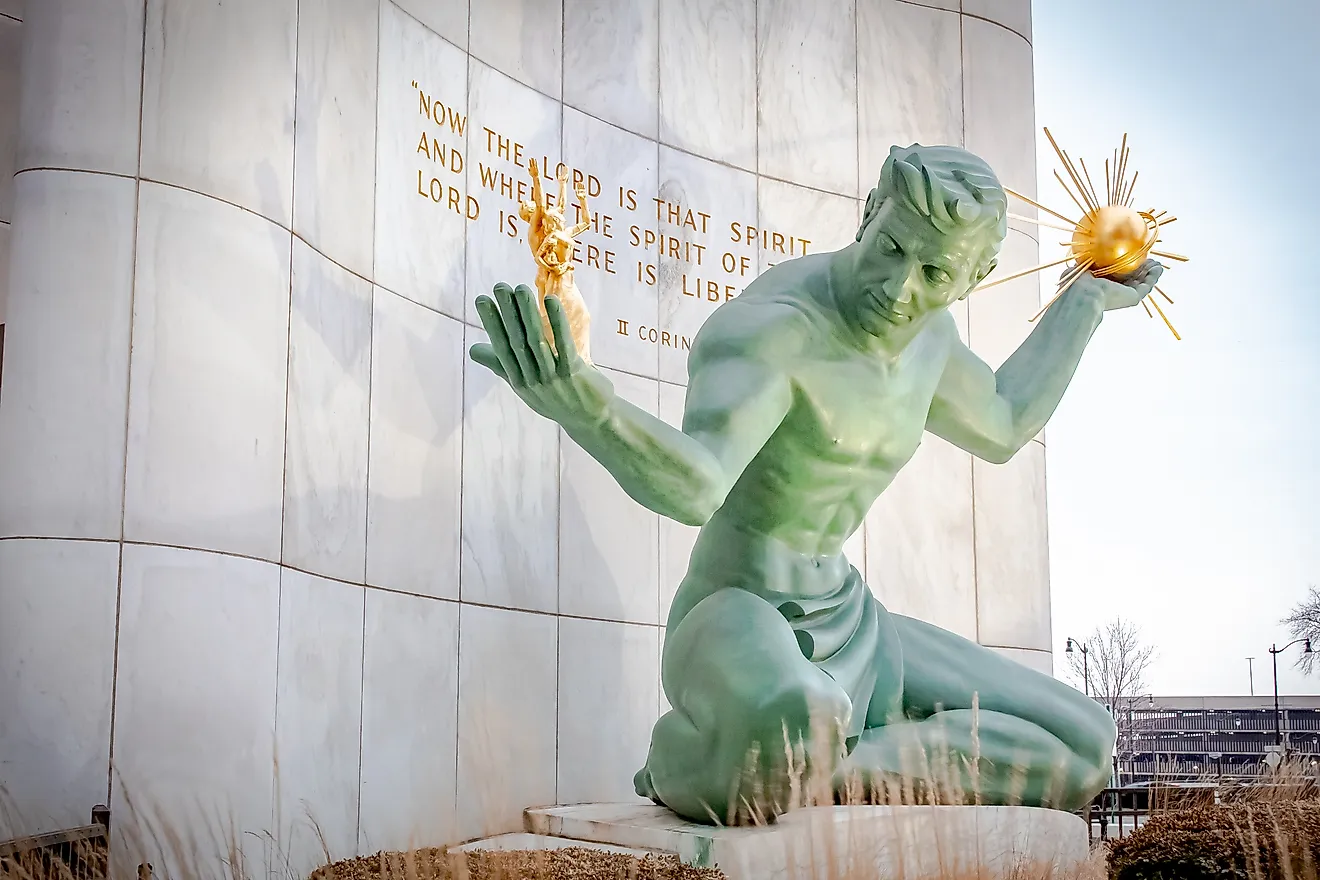
The Christ of the Ozarks, the Spirit of Detroit, and the This Is the Place Monument each highlight regional significance. The Library Lions of New York and the Statue of Commodore John Barry further illustrate the diversity of these structures.
Why These Landmarks Matter
While some, like the Statue of Liberty, fit the traditional definition, others like the Gateway Arch challenge it. Their shared recognition underscores how cultural and historical value often outweighs technical classification.
What may happen next? Continued preservation efforts and evolving public perceptions could shape how these landmarks are interpreted. Analysts suggest community-driven narratives may play a larger role in their future significance.
How do these landmarks reflect the evolving definition of “statue” in American culture?