

Analyzing the effectiveness of RPOs over the last five NFL seasons
NFL run-pass option (RPO) usage has declined for three consecutive seasons, falling to 7.95% of offensive plays in 2025. While RPOs produce a higher successful play rate than standard plays, they generate fewer yards per play, leading many coaches to abandon the concept in high-leverage game situations.
The concept peaked in 2023 at 10.52% of all offensive plays. According to league data, RPO usage has since decreased annually, reaching its lowest level since 2019.
Why is RPO usage declining in the NFL?
Defenses have improved their ability to stop the play. Early in the evolution of the RPO, these plays generated as many as 5.0 yards per play, but that figure has settled closer to 4.5 yards per play.
Over the last five seasons, RPOs have generated nearly a full yard fewer per play than all other offensive options. They rarely produce explosive gains, with only 20 RPOs gaining more than 30 yards last season.
Most RPOs consist of routine inside handoffs or quick throws to receivers who are typically tackled after modest gains. These plays are primarily used to keep an offense on schedule, a trend reflected in PFF’s successful play percentage metrics.
How do different NFL teams employ RPOs?
Nearly three-quarters of all RPOs are designed as runs. For most teams, the RPO is an extension of the rushing attack used to force perimeter defenders to remain honest.
The Los Angeles Rams and Houston Texans were the only two teams to pass as often as they ran on RPOs last season. Both teams used the concept primarily near the goal line; Matthew Stafford threw 13 touchdowns on 23 RPO plays last season.
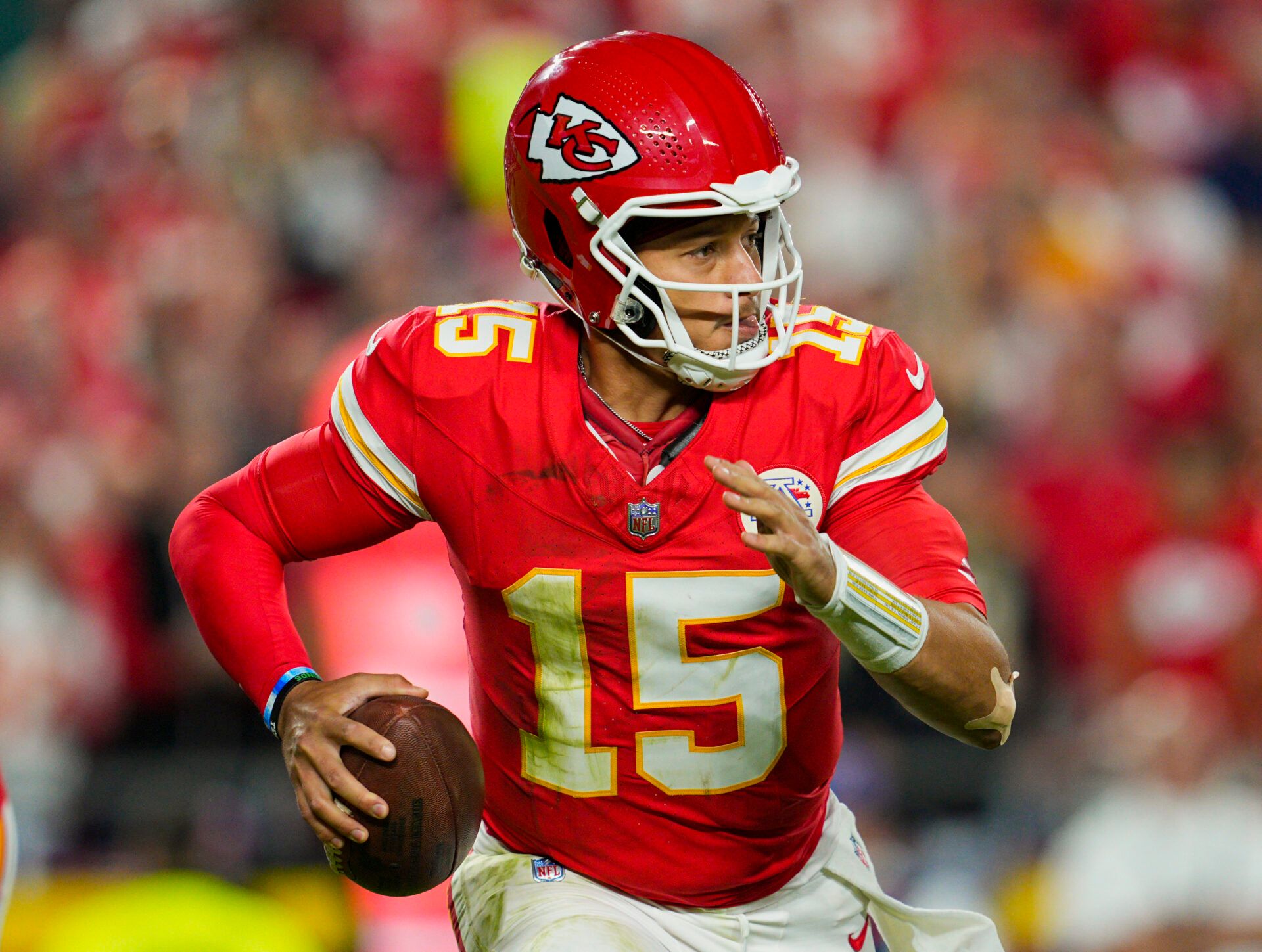
The Kansas City Chiefs operate the league’s premier RPO passing offense. Head coach Andy Reid utilizes a balanced RPO game featuring screens and jet sweeps. Patrick Mahomes has led the NFL in RPO pass attempts for two straight seasons.
Mahomes operates faster than any other high-volume RPO passer. His average time to throw on RPOs over the last four seasons is 1.17 seconds, which is nearly half the average time of the next highest-volume passer, Jalen Hurts.
Why are RPOs abandoned in clutch situations?
Offenses rarely trust RPOs in high-leverage moments. Usage fell from 9.0% on early-down plays in 2025 to 5.0% on third down and 3.1% on fourth down.
Timing also affects usage. RPOs accounted for 8.4% of plays through the first three quarters, but usage dropped to 7.0% in the fourth quarter and 4.9% in overtime.
The Atlanta Falcons provide a clear example of this trend. Despite leading the NFL in yards per RPO last season at 6.3, coordinator Zac Robinson called zero RPOs across 107 offensive plays during third and fourth downs in the fourth quarter of one-score games.
What happens next for RPO strategies?
The RPO is unlikely to disappear but may continue to blend into broader offensive schemes. Pre-snap motion and condensed formations are now used more frequently to achieve similar objectives without requiring a post-snap read by the quarterback.
Offensive coordinators may continue to rely on RPOs as low-risk tools for early-down efficiency. However, they are likely to remain secondary to conventional play calls when game-deciding moments arrive.
Frequently Asked Questions
What is the current rate of RPO usage in the NFL?
In 2025, RPOs accounted for 7.95% of offensive plays.
Which quarterback is the most prolific RPO passer?
Patrick Mahomes has led the NFL in RPO pass attempts for the past two seasons and is the only player with over 300 attempts since 2020.
Do RPOs generate more yards than standard plays?
No. Over the past five seasons, RPOs have generated nearly a full yard fewer per play than all other offensive plays.
How do you think the evolution of RPOs will change the way defenses align in future seasons?