

Andes Virus: Understanding Interpersonal Hantavirus Transmission
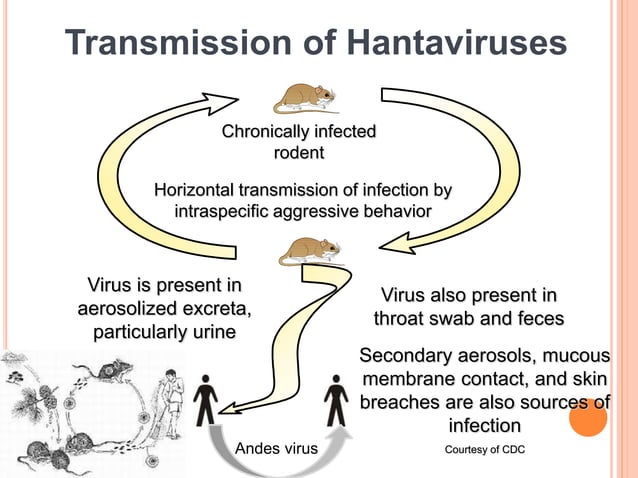
For decades, hantaviruses were understood as strictly zoonotic infections. The epidemiological path was simple: humans became ill after inhaling aerosols contaminated by the urine, saliva, or feces of infected rodents, and the transmission stopped there.
However, the Andes virus, primarily identified in southern Argentina and Chile, has challenged this long-standing paradigm. Associated with the long-tailed mouse (Oligoryzomys longicaudatus), this specific virus has demonstrated a distinct behavior since the 1990s.
A Shift in Transmission Paradigms
In Patagonia, health officials began observing family clusters and transmission chains that were difficult to explain solely through environmental exposure. These cases typically occurred in contexts of prolonged and close contact.
Over time, international bodies including the World Health Organization (WHO), the CDC, and the ECDC accepted that the Andes virus can be transmitted between people. This capability is considered exceptional among known hantaviruses.
The Impact of Epuyén and the MV Hondius
The 2018-2019 outbreak in Epuyén, Chubut, served as a critical turning point. With 34 confirmed cases, researchers identified transmission chains compatible with person-to-person contagion, including events linked to “super-spreaders.”
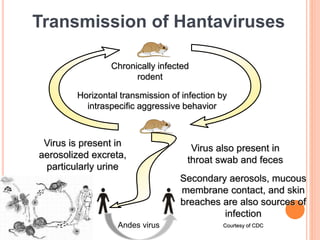
This event raised questions about whether respiratory secretions or aerosolized particles in closed, poorly ventilated spaces could facilitate the spread, moving beyond simple physical contact or saliva exchange.
The debate intensified in 2026 following an international outbreak on the cruise ship MV Hondius. After departing from Ushuaia, multiple cases were reported among passengers and crew, with initial reports citing 7 confirmed cases and 3 deaths, though total cases later exceeded 10.
Because the outbreak involved multiple nationalities in a closed environment, it triggered international quarantines and extensive epidemiological tracking across several continents.
Clarifying the “Aerosol” Debate
We see critical to distinguish between specific aerosol events and sustained airborne transmission. Current evidence does not suggest that the Andes virus behaves like influenza, measles, or SARS-CoV-2.
There is no evidence of explosive community circulation or massive casual contagions. The estimated reproductive number remains low compared to classic respiratory viruses.
The current scientific discussion focuses on whether specific scenarios—such as high viral load, poor ventilation, and prolonged proximity—could allow small respiratory particles to play a larger role in some infections.
Clinical Severity and Management
The Andes virus is particularly concerning due to the gravity of Hantavirus cardiopulmonary syndrome. It can progress rapidly from nonspecific fever to severe respiratory failure, non-cardiogenic pulmonary edema, shock, and multi-organ failure.
Historical lethality rates typically range between 30% and 40%. This depends heavily on the timing of the diagnosis and access to intensive care.
Currently, Notice no approved specific antivirals or vaccines for general use. Treatment is limited to intensive supportive care, including early hemodynamic management, oxygen therapy, and mechanical ventilation.
Future Outlook and Precautions
As science continues to investigate the Andes virus, the general population risk is expected to remain low. Future efforts may likely focus on narrowing the gap between epidemiological evidence and virological demonstration.
Public health strategies may continue to emphasize a combination of environmental and clinical precautions. This could include the reduction of rodent exposure in endemic areas and the use of respiratory protection during close contact with suspected cases.
A possible next step for health authorities could be the refinement of ventilation standards and isolation protocols to further mitigate the risk of interpersonal transmission in closed settings.
Frequently Asked Questions
How is the Andes virus transmitted?
It is transmitted zoonotically via aerosols contaminated by the urine, saliva, or feces of the long-tailed mouse, and exceptionally, it can be transmitted between humans through close and prolonged contact.
Is there a vaccine available for the Andes virus?
No, there are currently no approved vaccines or specific antiviral treatments available for general use.
What is the mortality rate associated with this virus?
Historical lethality rates are generally between 30% and 40%, depending on factors such as the speed of diagnosis and availability of intensive care.
Do you believe that current international health protocols are sufficient to handle rare but high-lethality viruses in closed environments like cruise ships?