
Antares Reaches Criticality With First New US Nuclear Reactor Design
Antares has become the first startup to achieve criticality with a new nuclear reactor design at the Idaho National Laboratory. This milestone, spurred by a federal executive order to accelerate US nuclear power, utilizes TRISO fuel—a ceramic-coated uranium system designed for inherent safety and high-temperature stability.
Why is the Antares criticality milestone a big deal?
Reaching criticality is the “proof of concept” moment for any nuclear reactor. According to reporting from Ars Technica, it means the nuclear reactions inside the hardware have become self-sustaining. It isn’t the same as generating electricity for the grid, but it proves the physics of the design actually work in a real-world setting.
This achievement is particularly significant because of the timeline. A Trump Administration executive order tasked the Department of Energy with pushing three different reactor designs to criticality within roughly a year. Antares is the first to cross that finish line. Until now, the US nuclear startup ecosystem had plenty of licensed designs on paper, but almost no one was actually building them.
How does TRISO fuel make reactors safer?
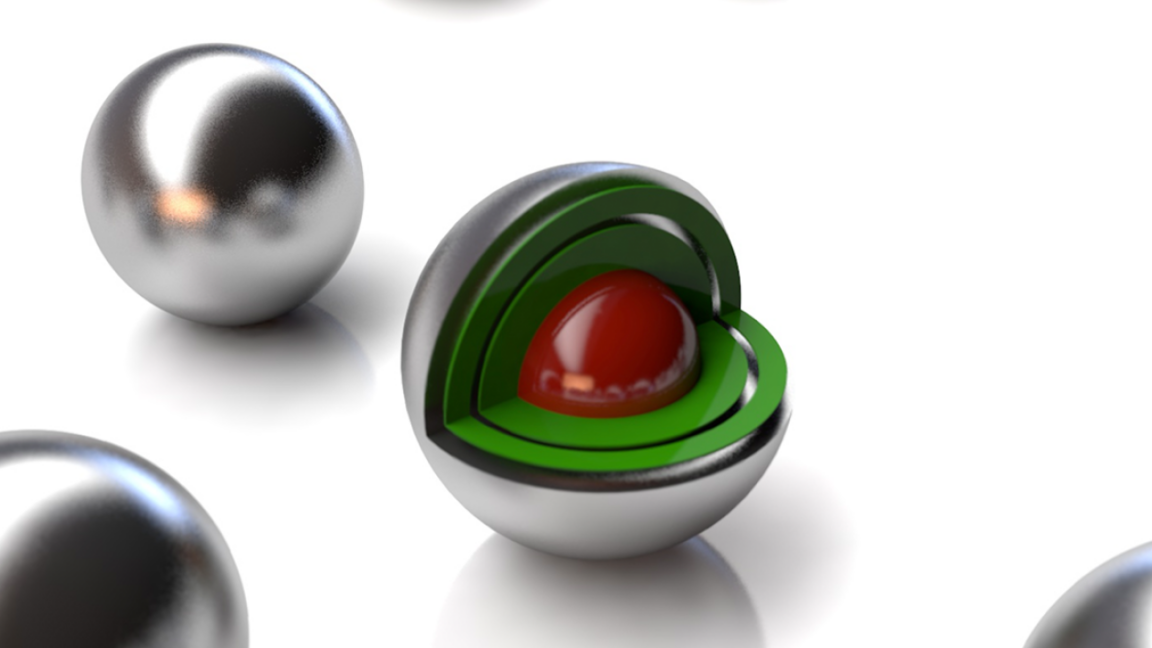
Traditional reactors rely on massive containment buildings and complex external cooling systems to prevent disasters. Antares and several other startups are flipping that logic by putting the safety measures directly into the fuel. This is the core of TRISO (Tri-structural Isotropic) fuel.
According to the Department of Energy, TRISO fuel consists of tiny pellets with a uranium oxide core. Each core is wrapped in several layers of carbon. These layers serve two purposes: they moderate the energy of neutrons and lighter nuclei released during fission, and they act as a physical barrier.
The final touch is a hard ceramic shell. This shell keeps the radioactive materials trapped inside even under extreme heat. By moving the safety burden from the reactor’s plumbing to the fuel pellet itself, the overall design of the plant can be simplified, potentially lowering costs and construction times.
What happens next for the US nuclear startup ecosystem?
The path from a successful test reactor to a commercial power plant is steep. While Antares has hit a critical physics milestone, the broader industry still struggles with the gap between licensing and deployment. Ars Technica notes that while some designs have been fully licensed, there are currently no concrete plans to build those specific instances.
The focus is now shifting toward Small Modular Reactors (SMRs). These are designed to be built in factories and shipped to sites, rather than being massive, one-off construction projects that take decades to finish. The success at the Idaho National Laboratory suggests that the federal push to accelerate these timelines is starting to yield tangible results.
Comparing Traditional Reactors vs. TRISO-based SMRs
The shift toward designs like the one from Antares represents a fundamental change in nuclear philosophy. Here is how the new approach contrasts with the legacy systems we’ve used for decades:
- Safety Mechanism: Legacy plants use active cooling and thick concrete domes. TRISO designs use passive safety embedded in the fuel’s ceramic shell.
- Scale: Traditional plants are gigawatt-scale behemoths. SMRs are smaller, modular, and easier to site near industrial hubs.
- Fuel Form: Traditional fuel uses long metal rods; TRISO uses microscopic, reinforced pellets.
Frequently Asked Questions
What exactly is “criticality”?
It is the state where a nuclear chain reaction becomes self-sustaining. It means the reactor can keep the reaction going without needing an external neutron source, though it doesn’t necessarily mean it’s producing usable electricity yet.
Is TRISO fuel dangerous to handle?
The ceramic coating makes TRISO fuel exceptionally robust. According to the DOE, it is designed to contain fission products even under extreme accident conditions, making it safer than traditional fuel forms.
Will these reactors replace solar and wind?
Most industry experts view SMRs as a “baseload” complement. While solar and wind are intermittent, nuclear provides a steady, carbon-free flow of power that can stabilize the grid.
What do you think about the push for smaller, modular nuclear reactors? Is the “unmeltable” fuel enough to change public opinion on nuclear energy? Let us know in the comments below or subscribe to our newsletter for more deep dives into the future of energy.