

Anthropic’s ‘Claude’ Shakes Up Software Industry & Triggers Tech Stock Sell-Off
The AI Earthquake: How Anthropic’s Claude is Shaking Up the Software World
The tech landscape is bracing for impact. Anthropic’s Claude, particularly its enterprise-focused iteration “Claude Workflows,” isn’t just another AI chatbot; it’s a potential disruptor threatening to upend the established order of the software industry. The fear? That powerful, general-purpose AI can – and will – replace specialized software, leading to a dramatic reshuffling of market dominance and investor confidence.
The Software Sell-Off: A Sign of Things to Come?
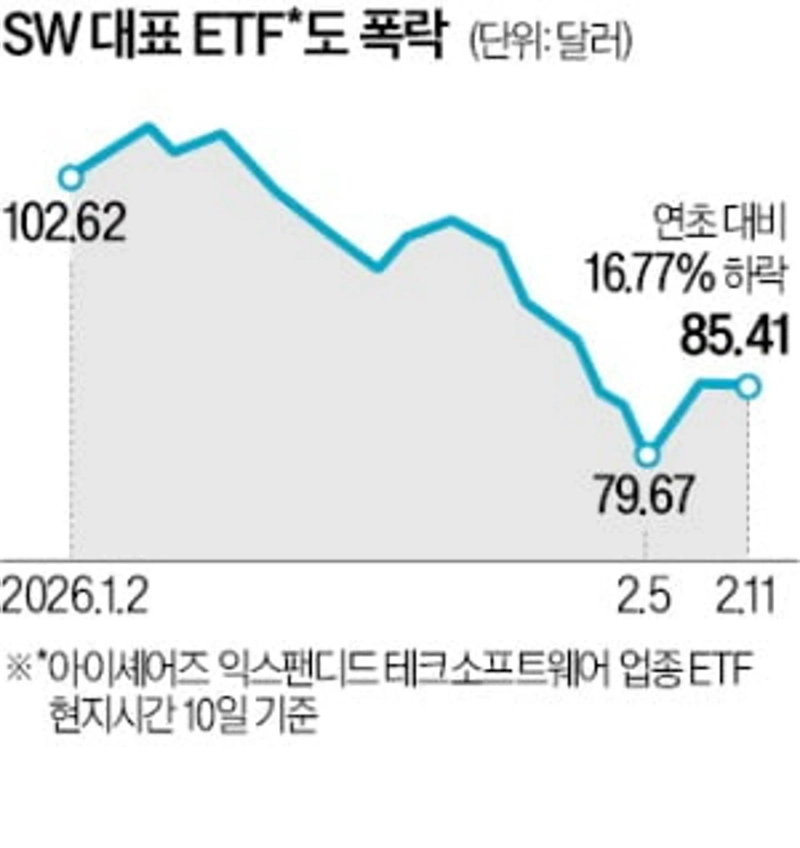
Recent market movements suggest investors are taking the threat seriously. Since the beginning of the year, major software players have experienced significant stock declines. Salesforce is down over 23%, Intuit has plummeted by 33%, ServiceNow has lost 27% and Adobe has fallen by over 20% as of mid-May. The iShares Expanded Tech-Software Sector ETF, a key indicator, has dropped nearly 17%. This isn’t isolated to customer relationship management (CRM) or general productivity suites.
The addition of legal functionality to Claude Workflows – specifically, automated contract review – sent shockwaves through the legal tech sector. Companies like Thomson Reuters, LegalZoom, and even the London Stock Exchange saw their stock prices tumble. Data analytics and research firms, including FactSet Research and S&P Global, also experienced volatility. Financial Times analysis confirms the trend: the IT sector has underperformed all other industries since late October of last year, declining by 7.7%.
The Rise of the Generalist AI: Why Specialized Software is on Notice
Claude Workflows’ power lies in its accessibility. It’s designed to allow non-programmers – everyday office workers – to automate tasks through simple conversation. This democratization of AI is what’s fueling the anxiety. If a single AI can handle tasks previously requiring dedicated software and specialized expertise, the business case for those dedicated tools weakens. This isn’t just about cost savings; it’s about agility and efficiency. Companies are exploring how to consolidate tools and streamline workflows using AI as a central hub.
Did you know? Gartner predicts that by 2026, 40% of all professional work will be augmented by AI, potentially reducing the need for certain software licenses.
Capital Flight and the Search for “AI Immunity”
The software slump has triggered a shift in investment strategies. Deutsche Bank reports that over $62 billion has flowed into U.S. Funds focused on sectors *outside* of technology in recent weeks – surpassing the entire year’s inflow for 2023. Investors are seeking refuge in sectors perceived as “AI-immune,” such as utilities, food, mining, construction, and telecommunications. This “rotation” suggests a belief that these industries are less susceptible to disruption.
Andrew Lapsley of Societe Generale calls this a “major sectoral rotation,” while Jeff Blazic of Nuveen suggests investors are prioritizing stable, sustainable returns and defensive portfolios. The move highlights a growing concern that the high valuations of tech companies may not be justified in an era of rapid AI advancement.
The Counterargument: Is the Panic Overblown?
Not everyone agrees with the doom and gloom. Nvidia CEO Jensen Huang famously dismissed the idea of AI replacing software as “the most illogical thing in the world.” He argues that AI will *enhance* software, not eliminate it. Arm CEO Rene Haas echoed this sentiment, labeling the software stock decline “micro-hysteria” and pointing out that we’re still far from realizing the full potential of AI integration.
Pro Tip: Instead of viewing AI as a replacement, consider how it can be integrated into existing software workflows to improve efficiency and unlock new capabilities. Focus on augmentation, not automation.
Beyond Software: The Ripple Effect on Cloud Providers
The potential impact extends beyond software companies. Analysts warn that a decline in software spending could negatively affect the major hyperscalers – Amazon, Microsoft, and Alphabet – who rely heavily on software companies as customers. A slowdown in software innovation and adoption could translate to reduced demand for cloud services, creating a cascading effect throughout the tech ecosystem.
The Future of Work: A Hybrid Approach
The most likely scenario isn’t a complete software apocalypse, but a significant evolution. We’re moving towards a hybrid model where general-purpose AI tools like Claude Workflows complement and augment specialized software. This will require software companies to adapt, integrating AI capabilities into their products and focusing on areas where they offer unique value – such as deep domain expertise, complex integrations, and robust security features.

FAQ: Navigating the AI Disruption
- Will AI really replace my software? Not entirely. AI will likely augment and transform software, but specialized tools will still be needed for complex tasks.
- Which sectors are most vulnerable? Those relying on repetitive, rule-based tasks are most at risk.
- Should I sell my software stocks? That depends on your risk tolerance and investment strategy. Consult with a financial advisor.
- What skills will be important in the age of AI? Critical thinking, problem-solving, creativity, and the ability to adapt to new technologies.
The current market turbulence is a stark reminder that the AI revolution is not a distant future; it’s happening now. The companies that embrace AI and adapt their strategies will thrive, while those that resist risk being left behind. The next few years will be crucial in determining the shape of the software landscape and the future of work.
Further Reading:
- Gartner – Leading research and advisory company.
- Anthropic – Developer of Claude AI.
- Nvidia – Leading AI hardware and software provider.
What are your thoughts on the impact of AI on the software industry? Share your opinions in the comments below!