
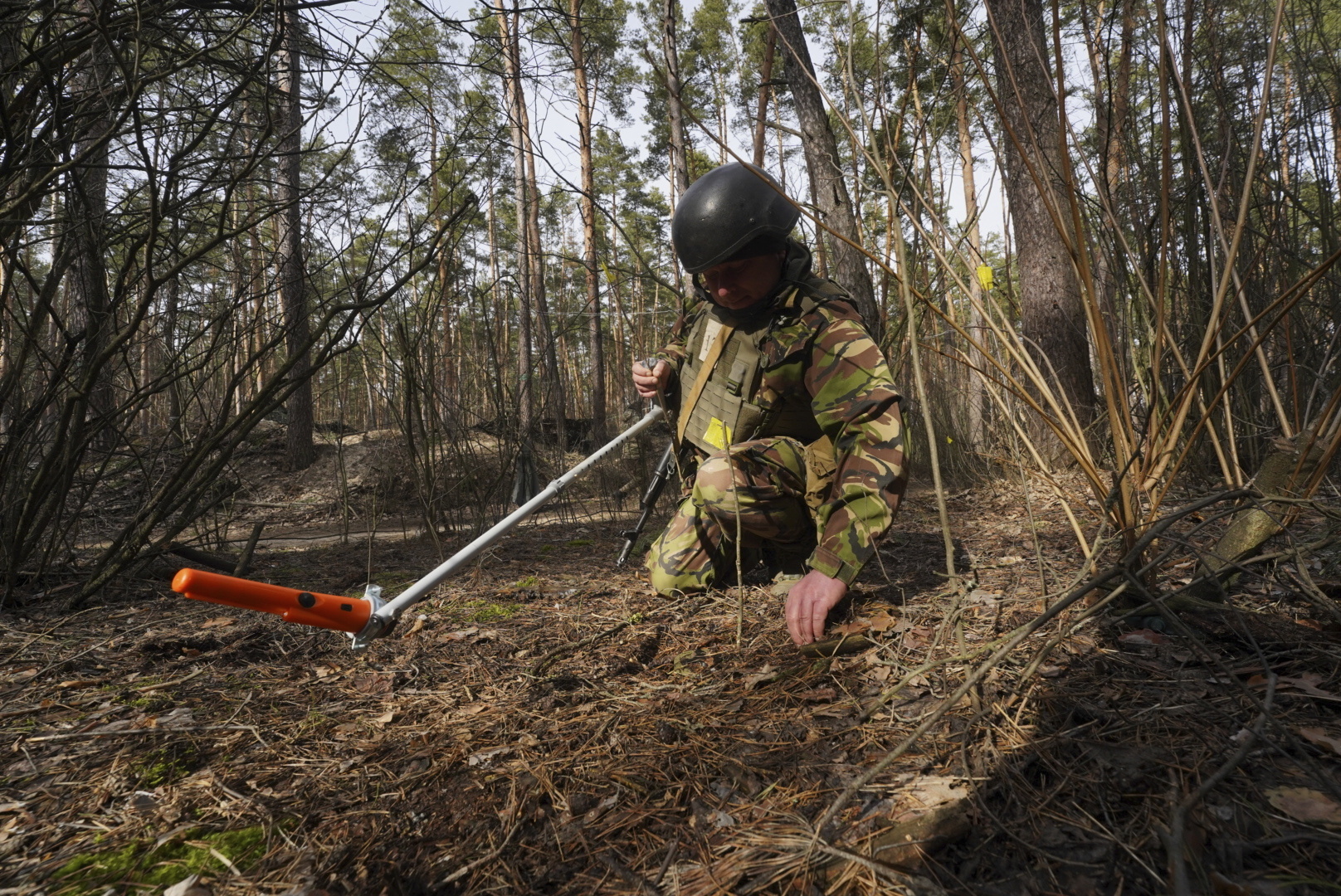
Anti-Personnel Mines: Rethinking Deterrence and the Ottawa Convention in Europe
Several NATO members, including Poland, Finland, and the Baltic states, withdrew from the Ottawa Convention in 2025 to regain the legal ability to use anti-personnel mines for territorial defense. This shift follows Russia’s invasion of Ukraine, which demonstrated the tactical utility of dense minefields in slowing enemy advances.
Why are NATO states withdrawing from the anti-personnel mine ban?
Estonia, Latvia, Lithuania, Finland, and Poland notified the UN of their withdrawals in 2025, citing Russia’s ongoing aggression as the primary driver. According to a joint statement from the defense ministers of Estonia, Latvia, Lithuania, and Poland, the move signals that these nations will use “every necessary measure” to defend their freedom.
Estonia’s official depositary notification explicitly linked the decision to “exceptional circumstances” caused by the Russian Federation’s war in Ukraine. These states sought to exit the treaty lawfully before potentially entering a conflict, as the Ottawa Convention prevents members from withdrawing while actively engaged in armed hostilities.
How has the war in Ukraine changed landmine tactics?
The conflict in Ukraine has highlighted a sharp contrast in military doctrine. Russian forces utilize a Soviet-rooted approach that emphasizes attrition over mobility. According to Richard L. Garcia and Colin Colley of T2COM G2, Russia possesses the world’s largest stockpile of anti-personnel mines (APMs) to defend its vast, open terrain.

The “Surovikin Line” serves as a primary example of this strategy. In late 2022, General Sergei Surovikin established a fortified defensive belt stretching over 800 km from Zaporizhzhia to the Sea of Azov. This line combined trenches and dense minefields to blunt the 2023 Ukrainian counteroffensive by forcing advancing units into “kill zones” covered by artillery and drones.
Ukrainian forces, though bound by the Convention, adapted by using selective mining. While Russia deploys large, scattered fields, the Armed Forces of Ukraine (AFU) target specific avenues of advance. This necessity has made Ukraine the most heavily mined country in the world, according to the United Nations Development Programme.
What is Ukraine’s legal dilemma regarding the Ottawa Convention?
Ukraine announced its intention to suspend the application of the Convention in July 2025. Because Article 20(3) of the treaty prohibits withdrawal during an active conflict, Ukraine cannot formally leave the agreement while fighting Russia.
The Ukrainian Ministry of Foreign Affairs attempted to justify this suspension in June 2025 by citing a “fundamental change of circumstances,” a legal principle known as rebus sic stantibus. This is outlined in Article 62 of the Vienna Convention on the Law of Treaties (VCLT).
Legal analysts suggest this argument is difficult to sustain. The Ottawa Convention’s primary purpose is to restrict mine use specifically during armed conflicts. If the suspension is ruled unlawful, other state parties could potentially initiate legal proceedings against Ukraine.
How will the Baltic Defence Line utilize mines?
The Baltic states are currently constructing the Baltic Defence Line (BDL), a defensive belt extending up to 50 kilometers deep along the borders of Russia, Belarus, and the Kaliningrad exclave. According to the Estonian Centre for Defence Investments, the BDL integrates natural obstacles like the Narva River with bunkers and anti-mobility installations.
APMs are included in the BDL strategy, though officials state they would be deployed only during actual hostilities, not during peacetime. Similar measures are being implemented under Poland’s “East Shield” program.
Military experts, including Michael N. Schmitt of the Lieber Institute, suggest mines will be critical in the Suwałki Corridor. By combining mines with the region’s wooded terrain, defenders can create bottlenecks that expose Russian forces to concentrated attacks.
What are the humanitarian risks of returning to landmines?
The shift toward re-arming with APMs has drawn sharp criticism. UN High Commissioner for Human Rights Volker Türk expressed he was “gravely alarmed” by the withdrawals in 2025, noting that mines primarily harm civilians.
NGOs argue that tactical advantages are outweighed by long-term humanitarian costs. While some modern mines feature self-destruct mechanisms, technical failures mean the risk to non-combatants can never be zero. Canada has expressed regret over the NATO withdrawals but attributed the decisions to Russia’s “threatening behaviour” toward its neighbours.
Comparison: Russian vs. NATO Mine Strategies
| Feature | Russian Doctrine | Baltic/Polish Strategy |
|---|---|---|
| Primary Goal | Attrition and total immobilization | Deterrence and canalization |
| Deployment | Large, scattered minefields | Targeted “anti-mobility” belts |
| Legal Status | Never signed Ottawa Convention | Withdrawing from Convention (2025) |
Frequently Asked Questions
What is the Ottawa Convention?
Signed in 1997 and entering into force in 1999, it is an international treaty that prohibits the use, stockpiling, production, and transfer of anti-personnel mines.
Can Ukraine legally withdraw from the mine ban?
No. Under Article 20(3), a state involved in an armed conflict cannot withdraw from the treaty until the conflict ends.
Do anti-personnel mines still have military utility?
Yes. According to reports on the Ukraine war, they serve as force multipliers by slowing enemy advances, creating psychological fear, and channeling troops into kill zones.
What do you think about the balance between national security and international humanitarian law? Share your thoughts in the comments below or subscribe to our newsletter for more deep dives into European defence strategy.