
Apple’s MLS Experiment: The Future of Sports Broadcasting or Clever Marketing?
The Death of the Broadcast Truck? How Smartphones are Redefining Live Production
For decades, the image of a professional sports broadcast was synonymous with a massive production truck parked outside the stadium, filled with million-dollar switchers and a small army of engineers. But the recent experiment of broadcasting a Major League Soccer (MLS) match using the iPhone 17 Pro Max has sent a shockwave through the industry. It wasn’t just a marketing stunt; it was a glimpse into a fundamental shift in how we capture and consume live media.
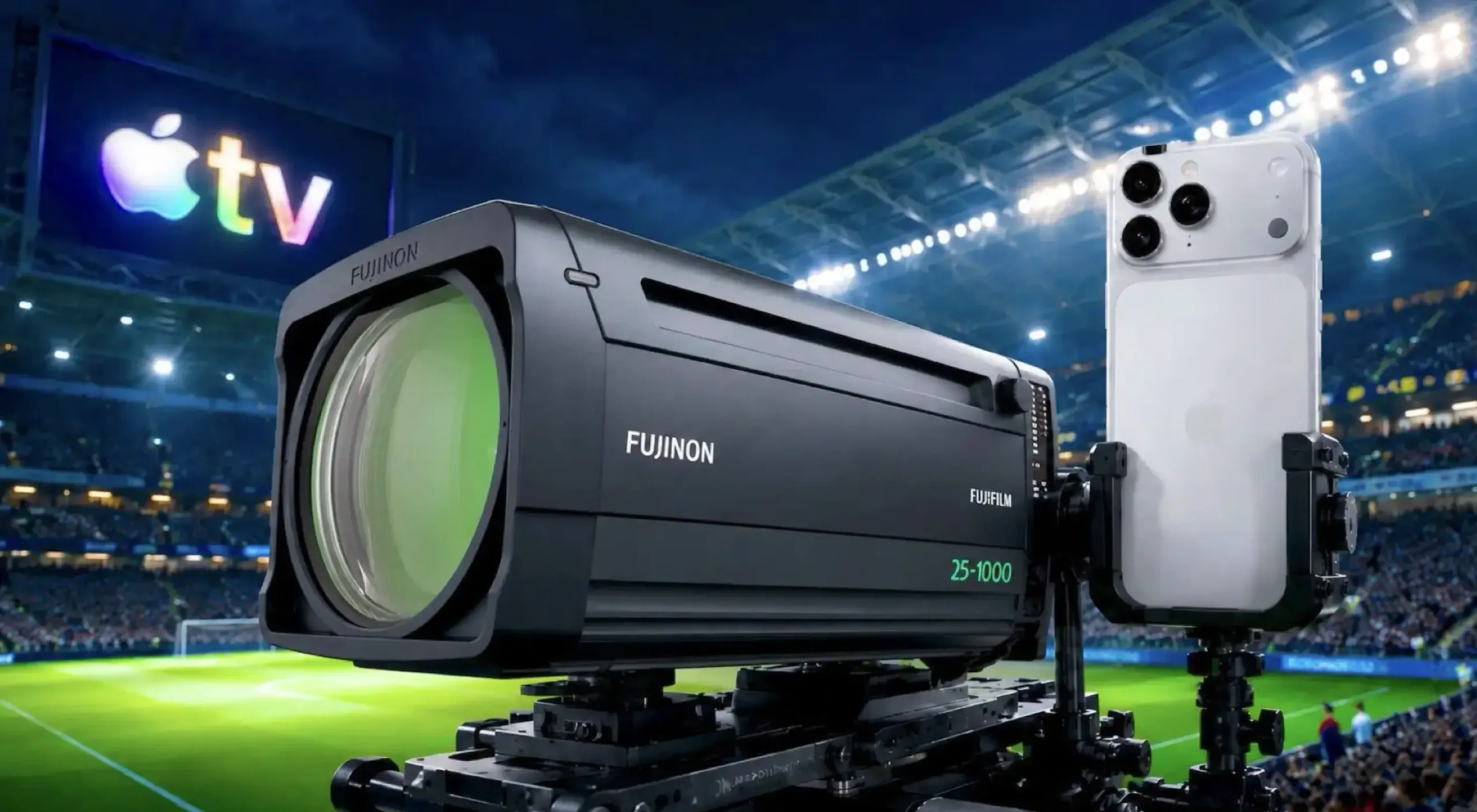
While the “Shot on iPhone” narrative suggests a simple swap of hardware, the reality is far more nuanced. The production still relied on professional RF networks and high-end Fujinon box lenses. However, the core “brain” of the operation—the sensor and processor—was a device that fits in your pocket. This hybrid approach signals the beginning of a new era in media production.
The Rise of the Hybrid Production Model
We are not heading toward a world where professional broadcast cameras disappear entirely. For the World Cup or the Olympics, the need for extreme optical zoom and massive dynamic range makes traditional cinema cameras irreplaceable. Instead, we are entering the age of Hybrid Production.
In this model, smartphones act as the agile “satellite” cameras. Imagine a football game where the main wide shots are handled by traditional rigs, but the “on-pitch” intensity, the player tunnels, and the emotional reactions in the crowd are captured by 5G-enabled iPhones. This allows directors to place cameras in locations where a traditional rig would be too bulky or expensive to deploy.
Industry leaders are already seeing this trend in “Mobile Journalism” (MoJo). Outlets like the BBC and Al Jazeera have integrated mobile-first workflows to get breaking news to screens faster than a satellite truck could ever deploy.
Computational Photography vs. Optical Glass
The real battle isn’t between a phone and a camera; it’s between optical physics and computational intelligence. Traditional cameras rely on large sensors and heavy glass to manage light and depth. Smartphones, however, use AI to “cheat” the physics.
Through advanced HDR processing and AI-driven stabilization, smartphones can now produce images that “look” professional to the average viewer. As Apple and Samsung push the boundaries of Neural Engines, the software will eventually compensate for the smaller sensor size, making the difference between a $200,000 camera and a $1,200 phone invisible to 95% of the audience.
Lowering the Barrier for Mid-Tier Sports
The most significant impact of this technology won’t be felt in the MLS or the NFL, but in the “long tail” of sports. Think of semi-professional leagues, collegiate sports, or niche competitions like Padel or Pickleball.
Previously, broadcasting a game with professional quality required a budget that these leagues simply didn’t have. Now, a small crew with a few high-end smartphones, a cloud-based switcher (like vMix or OBS), and a 5G connection can produce a broadcast that looks “good enough” for a global audience. This opens up massive new monetization opportunities for sports that were previously invisible to the public eye.
The Shift Toward “Good Enough” Consumption
There is a psychological shift happening in how we watch content. The rise of TikTok and Instagram Reels has trained the human eye to accept—and even prefer—the vertical, raw, and immediate aesthetic of mobile video. This “authenticity” often outweighs the polished, sterile look of a traditional TV broadcast.
When a viewer watches a game on a 6-inch smartphone screen, they aren’t looking for the subtle color grading of a Hollywood film; they are looking for clarity, speed, and engagement. This shift in consumer expectation is the wind in the sails of the mobile broadcasting revolution.
Frequently Asked Questions
Can a smartphone truly replace a professional broadcast camera?
For high-end, flagship events, no. Physical optics (zoom and light gathering) still beat software. However, for most commercial and mid-tier productions, the gap has closed enough that a smartphone is a viable primary tool.
What is the biggest limitation of mobile broadcasting?
Thermal throttling and battery life. Processing 4K video at high frame rates generates immense heat, which can cause the device to drop frames or shut down without professional cooling solutions.
Does “Shot on iPhone” mean no other equipment was used?
Usually, no. In professional settings, smartphones are often paired with external lenses, professional audio mixers, and high-speed data transmitters to ensure the signal reaches the broadcaster without lag.
What do you think? Would you rather watch a perfectly polished TV broadcast or a more intimate, mobile-driven perspective of your favorite sport? Let us know in the comments below, or share this article with a fellow tech enthusiast!
Want to stay ahead of the curve in media tech? Subscribe to our weekly newsletter for deep dives into the tools shaping the future of content creation.