
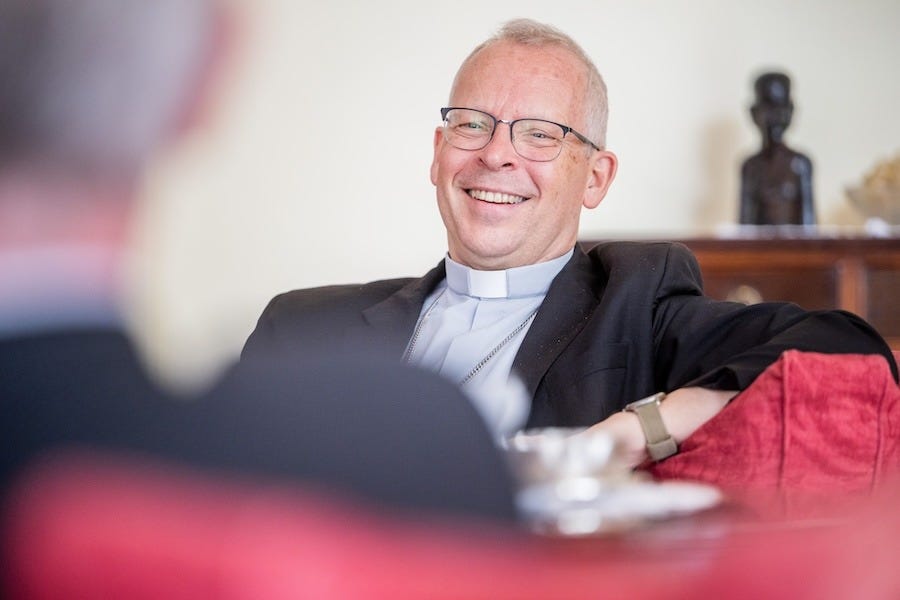
Archbishop Hubertus van Megen: New Apostolic Nuncio to Germany Amid Vatican Tensions
Archbishop Hubertus van Megen arrived in Berlin on June 15, 2026, to begin his term as the apostolic nuncio to Germany. According to Vatican Radio, the 64-year-old Dutchman succeeds Archbishop Nikola Eterović during a period of heightened tension between the Holy See and German bishops over the “synodal way” reform initiative.
Why was Archbishop Hubertus van Megen appointed as nuncio to Germany?
The Vatican chose van Megen for his unique blend of cultural familiarity and ecclesiastical independence. Born in Eygelshoven, a village near the German border, van Megen is fluent in German. He told Vatican Radio he learned the language through radio, television, and daily interactions rather than formal study.
Historically, the Holy See appointed nuncios who weren’t German or from neighboring countries, often selecting Italians. Van Megen appears to be the first Dutchman in this role. This shift suggests the Vatican wants a diplomat with a strong affinity for Germany who isn’t entwined with the German Catholic establishment.
Van Megen also brings a perspective from the Global South. He spent over a decade in Africa, serving as nuncio to Sudan, Eritrea, Kenya, and South Sudan. He described the German Church as “old and gray” in an interview with Vatican Radio, contrasting it with the energy and growth he witnessed in Africa.
What conflicts will the new nuncio have to manage?
Van Megen inherits a diplomatic minefield. The primary conflict centers on the “synodal way,” a process launched in 2019 by German bishops and the lay Central Committee of German Catholics to address clerical abuse and modernize church practice.
According to report details, the movement culminated in 2023 with 150 pages of resolutions. These included calls for:
- The ordination of women deacons.
- A re-examination of mandatory priestly celibacy.
- The use of lay preaching during Masses.
- Revised Catechism teachings regarding homosexuality.
The most contentious issue is the creation of a permanent synodal body with decision-making powers. While the Vatican previously blocked this, a compromise in 2024 stipulated that no such body could be established without Rome’s approval. In March 2026, Bishop Heiner Wilmer submitted the new body’s statutes to the Vatican. Van Megen must now mediate whether these statutes are accepted or ignored.
How does this appointment fit Pope Leo XIV’s broader strategy?
The appointment of van Megen aligns with Pope Leo XIV’s effort to inject “missionary dynamism” into European Catholicism by introducing outside leadership. A clear precedent for this occurred in November 2025, when the Pope appointed an Indian-born Carmelite priest as the first non-European Catholic bishop in Germany.
By placing a Dutchman with extensive African diplomatic experience in Berlin, the Vatican is contrasting the traditional Italian-led diplomacy with a more globalized approach. Van Megen stated to Vatican Radio that his goal is to understand the “emotions” behind local theological views rather than just the rational arguments.
Comparison: Van Megen vs. Eterović
The transition from Archbishop Nikola Eterović to Hubertus van Megen marks a change in diplomatic tone. Eterović served from September 2013 to April 2026, a period defined by the emergence of the synodal movement and increasing friction. While Eterović managed the initial “stop signs” from Rome, van Megen is tasked with the actual implementation or rejection of the synodal statutes.
What other tensions await the nunciature in Berlin?
Beyond the synodal body, van Megen faces several unresolved disputes:
- Blessing Guidelines: The German Church continues to use blessing guidelines that the Vatican has explicitly rejected.
- Hospital Ethics: Germany’s largest Catholic women’s association, the kfd, recently called for abortions to be permitted in Catholic hospitals. The kfd falls under the oversight of the German bishops’ conference.
- Internal Divisions: The German bishops’ conference is split between a majority pushing the synodal agenda and a minority resisting it.
Van Megen’s role in selecting new bishops will be critical. He must decide whether to appoint leaders who bolster the reformist majority, support the conservative minority, or attempt to build a “missing center.”
Frequently Asked Questions
Who is the current apostolic nuncio to Germany?
Archbishop Hubertus van Megen, who arrived in Berlin on June 15, 2026.
What is the “synodal way”?
An initiative started in 2019 by German Catholic leaders to reform church teachings on women, celibacy, and LGBTQ+ issues in response to clerical abuse scandals.
Where did Archbishop van Megen serve before Germany?
He served as nuncio to Kenya, South Sudan, Sudan, and Eritrea, and had previous postings in Brazil, Israel, Slovakia, and at the UN in Geneva.
Do you think a diplomat from outside the German establishment can bridge the gap between Berlin and the Vatican? Share your thoughts in the comments or subscribe to our newsletter for more updates on Vatican diplomacy.