
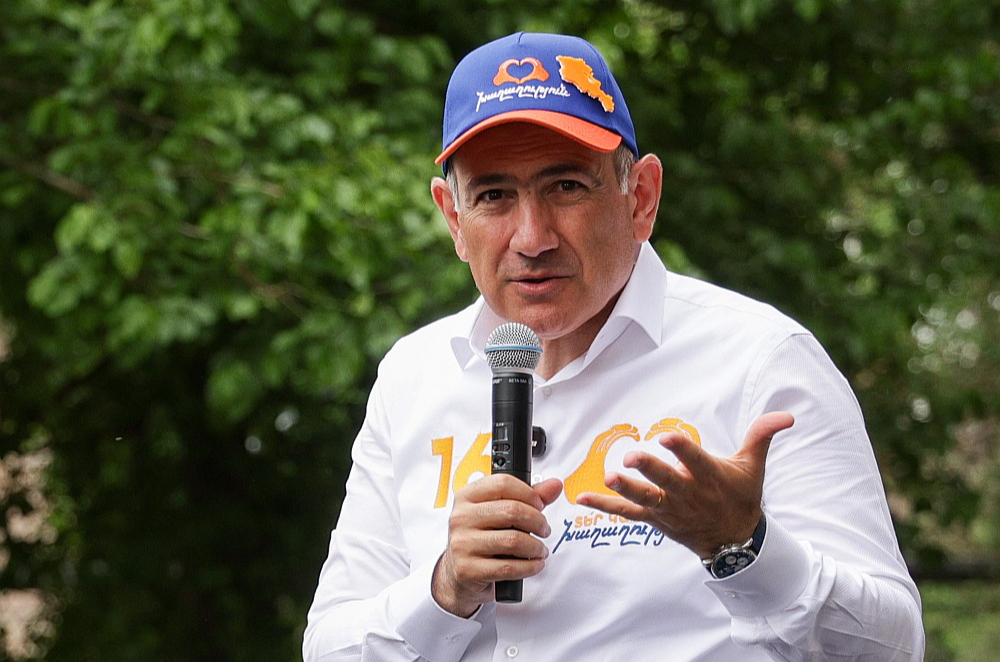
Armenia Elections: Pashinyan Seeks Victory Amid Russian Pressure
Armenia is set to hold parliamentary elections this Sunday, an event that could significantly reshape the trajectory of the small Caucasian nation and the broader regional landscape. Prime Minister Nikol Pashinyan, who has held power since 2018, is seeking a decisive victory to resolve several long-standing national challenges.
Geopolitical Tensions and the “Ukraine Scenario”
The elections occur amid escalating tensions with Moscow. Russian President Vladimir Putin has warned of a potential “Ukraine scenario” if Yerevan continues its pivot toward the European Union, as outlined in a 2025 Armenian parliamentary law.
While U.S. President Donald Trump has expressed support for Pashinyan, the Kremlin has intensified its pressure. This includes the withdrawal of the Russian ambassador from Yerevan and demands from Russia, Belarus, Kazakhstan, and Kyrgyzstan for a referendum on whether Armenia should remain in the Eurasian Economic Union or join the EU.
Prime Minister Pashinyan has rejected the referendum, describing the choice between the two entities as currently theoretical. He has further pledged to achieve a visa-free regime with the EU within two years.
Economic Warfare and Trade Restrictions
Russia has employed various leverage points to influence the election outcome, including “food security” restrictions on Armenian imports. These bans affect the export of tomatoes, cucumbers, peppers, strawberries, cognac, and wine.
Beyond trade, Russian officials have threatened to interrupt the supply of natural gas and oil products. Armenia remains heavily dependent on these Russian energy imports, a vulnerability analysts suggest is largely a result of the country’s conflict with Azerbaijan.
Reports from Reuters indicate that Moscow may have considered sending Armenian citizens living in Russia back to Armenia to vote for Pashinyan’s opponents. A disinformation campaign targeting Pashinyan has been observed online.
The Path to Peace and Regional Trade
A central pillar of Pashinyan’s platform is the pursuit of a final peace treaty with Azerbaijan. While conflict has subsided since Azerbaijan took control of Nagorno-Karabakh in 2023, a formal agreement remains unsigned.
Azerbaijan has requested that Armenia amend its constitution to remove references to claims over Nagorno-Karabakh from its 1990 independence declaration. A strong parliamentary majority could allow Pashinyan to implement these constitutional changes more easily.
a decisive victory may facilitate the development of the “International Peace and Prosperity Road,” named after Donald Trump. This corridor would link Azerbaijan to its Nakhchivan exclave via Armenian territory, potentially creating new trade routes and opening borders with Turkey.
Potential Outcomes and Future Scenarios
Polls suggest that Pashinyan’s “Civil Contract” party is likely to receive the most votes, though the exact margin remains uncertain due to a significant number of undecided voters.
If the “Civil Contract” party achieves a convincing win, it may allow Armenia to gradually reduce Moscow’s influence and accelerate peace negotiations with Azerbaijan. Conversely, a weaker result could embolden pro-Kremlin opposition parties, such as “Strong Armenia,” led by Samvel Karapetyan.
The outcome could determine whether Armenia continues its shift toward the EU or is forced to maintain closer ties with the Eurasian Economic Union to secure essential energy supplies.
Frequently Asked Questions
What is the “Ukraine scenario” mentioned by Vladimir Putin?
It refers to the risk of a crisis occurring if Armenia continues to move closer to the European Union, drawing a parallel to the crisis that began when Kyiv decided to join the EU.
Which Armenian products are currently restricted by Russia?
Russia has limited the import of tomatoes, cucumbers, peppers, strawberries, cognac, and wine, citing food security concerns.
What is the purpose of the “International Peace and Prosperity Road”?
This proposed corridor would connect Azerbaijan with its Nakhchivan exclave through Armenian territory, providing Armenia with new trade routes and reducing the regional influence of Moscow.
Do you believe economic interdependence can be successfully decoupled from political alignment in volatile regions?