

Astronomers Want to Build a Swarm of Telescopes to Find LIFE
The Large Interferometer for Exoplanets (LIFE) mission, a proposed space-based observatory, aims to detect signs of life on distant worlds by analyzing mid-infrared thermal emissions. According to a report from the W.M. Keck Institute for Space Studies, the mission would utilize formation-flying spacecraft to isolate exoplanet signatures, potentially providing the first definitive evidence of biological processes beyond our solar system in the 2040s.
How does the LIFE mission plan to detect life?
Unlike current telescopes that rely on capturing reflected visible light, the LIFE mission focuses on mid-infrared wavelengths. According to the W.M. Keck Institute for Space Studies, this thermal light allows researchers to directly observe the atmosphere of an exoplanet without the interference of the host star’s overwhelming glare. By monitoring these emissions, scientists can identify spectral biosignatures such as ozone, methane, carbon dioxide, and phosphine.
Phosphine is considered a “capstone” biosignature. Its presence in an atmosphere is difficult to explain through abiotic chemical processes, making it a high-priority target for future exoplanet research.
Why is formation-flying necessary for exoplanet observation?
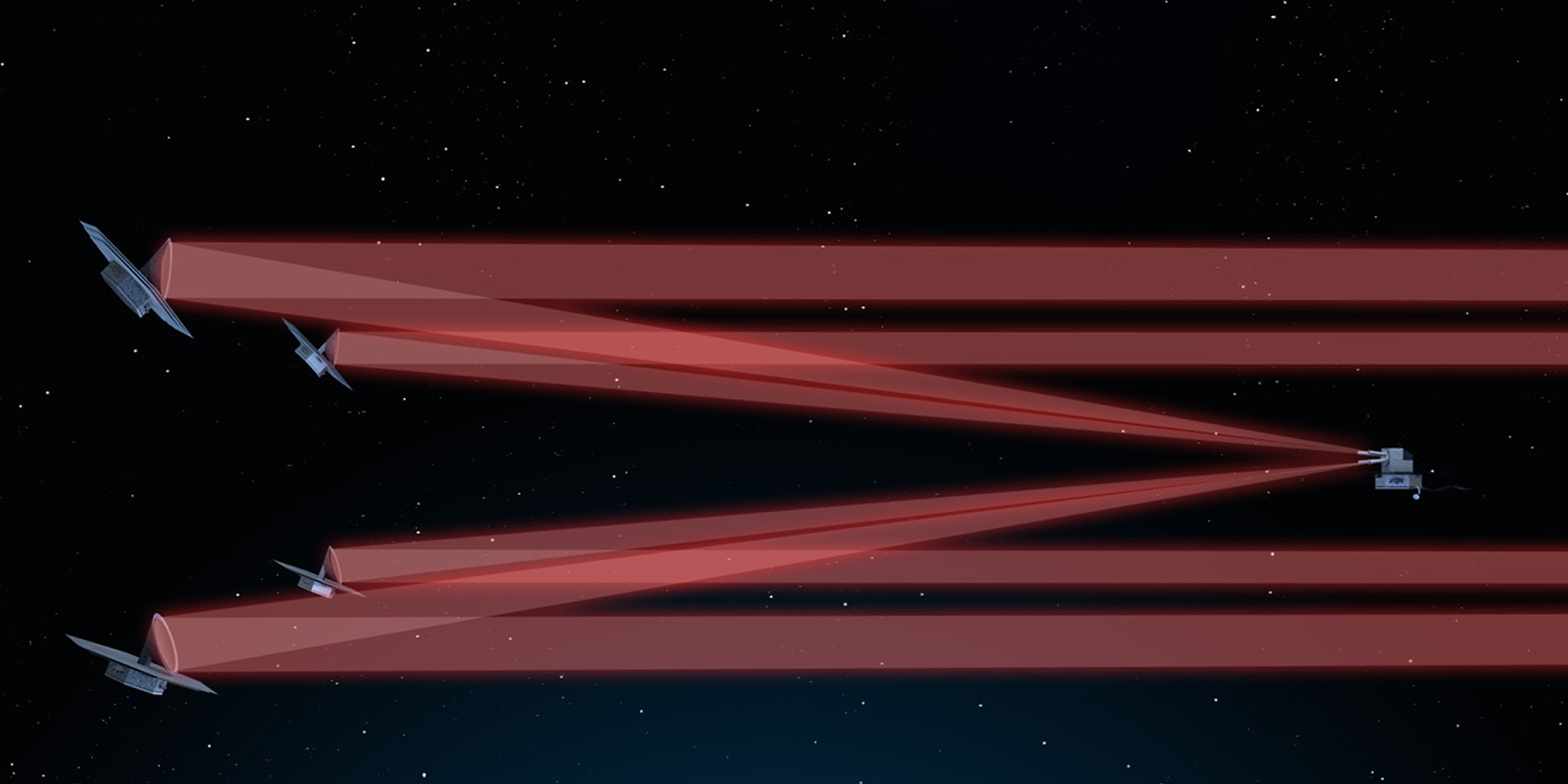
A single, monolithic telescope large enough to resolve exoplanet atmospheres at the required detail would be too bulky to launch on existing rockets. To solve this, the LIFE mission proposes “formation-flying null interferometry.” According to the project report, multiple spacecraft will fly in a precise, untethered formation tens to hundreds of meters apart. These ships will beam collected light to a central collector, which uses optical interference to “null” the light of the host star while amplifying the planet’s heat signature.
How does LIFE compare to NASA’s Habitable World Observatory (HWO)?
While both missions target life, they operate as complementary systems rather than direct competitors. According to the W.M. Keck Institute, the HWO is designed to capture visible and ultraviolet light using a coronagraph to block stellar glare. Conversely, LIFE targets the mid-infrared spectrum to derive a planet’s radius, temperature, and chemical composition. Combining data from both missions is necessary to prevent “false positives,” where non-biological atmospheric processes might be misidentified as signs of life.
| Feature | Habitable World Observatory (HWO) | LIFE Mission |
|---|---|---|
| Primary Light Type | Visible / Ultraviolet | Mid-Infrared |
| Primary Method | Coronagraph | Null Interferometry |
Is the technology for space interferometry ready?
Previous attempts at space interferometry, such as NASA’s Terrestrial Planet Finder and the European Space Agency’s Darwin, were cancelled due to technological limitations. However, recent developments in astrophotonics have successfully shrunk complex optical instruments to the size of microchips, according to the LIFE report. Furthermore, upcoming technology demonstrations like SEIRIOS and SunRISE are slated to test formation-flying capabilities using CubeSats, potentially validating the core mechanics required for the mission.
Watch for updates on the SEIRIOS and SunRISE missions. Their success in coordinating multiple spacecraft in orbit will be a primary indicator of whether the LIFE mission remains on track for a 2040s launch window.
Frequently Asked Questions
What is a biosignature?
A biosignature is any substance—such as an element, isotope, or molecule—that provides scientific evidence of past or present life. In exoplanet research, scientists look for these in planetary atmospheres.

Why can’t the James Webb Space Telescope (JWST) do this?
While the JWST is capable of infrared observation, its mirror size and instrument configuration are not optimized to isolate the light of small, rocky exoplanets from the intense brightness of their host stars.
How will the LIFE mission be funded?
The W.M. Keck Institute report suggests that the mission should function as an international collaboration to distribute costs and avoid reliance on a single funding source.
Are we alone in the universe? Join the conversation in the comments below or subscribe to our newsletter for the latest updates on deep-space exploration and upcoming telescope technology.