
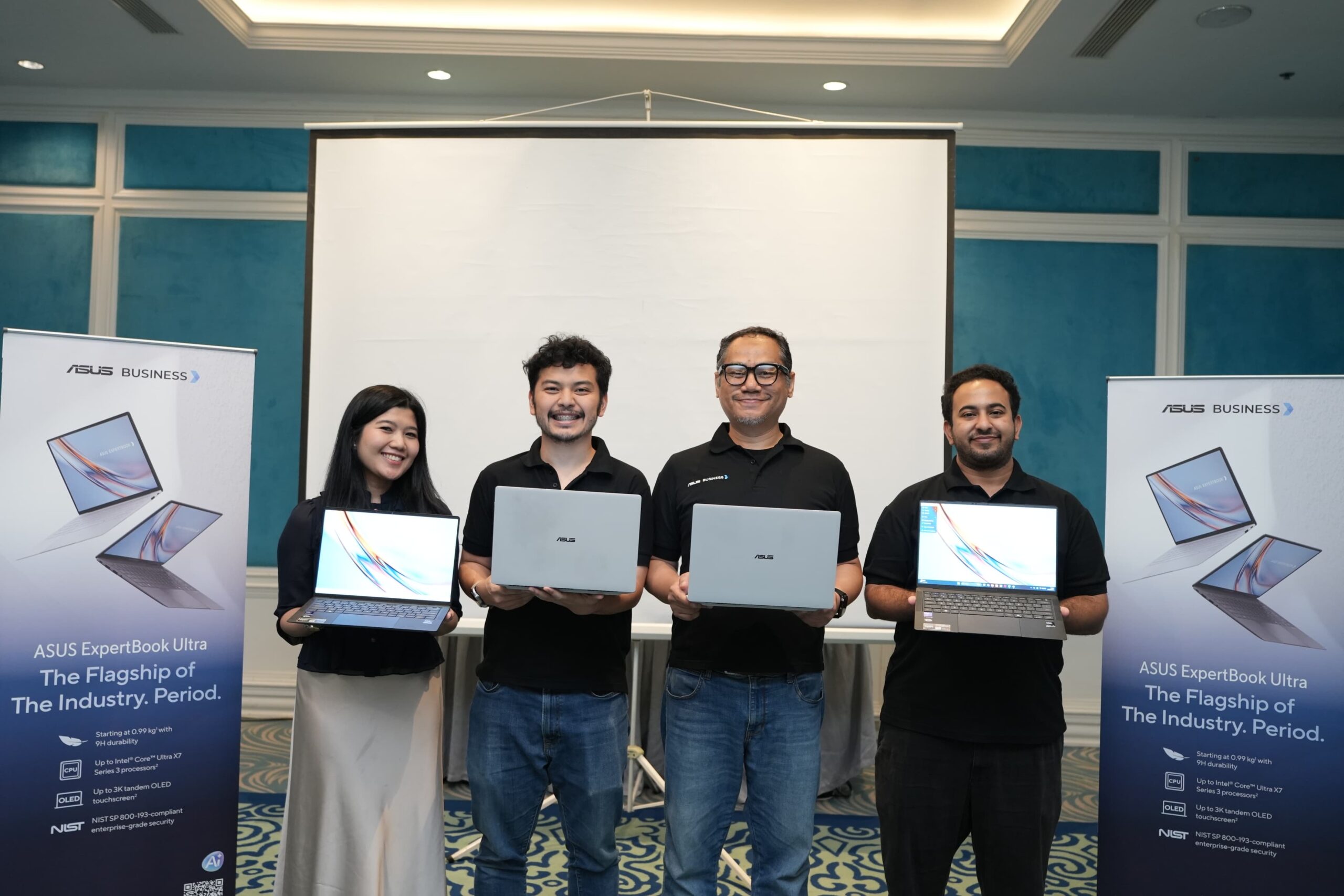
ASUS ExpertBook Ultra: The Ultimate Flagship AI Business Laptop
The ASUS ExpertBook Ultra has set a new benchmark for enterprise computing by integrating a 50 TOPS Neural Processing Unit (NPU) and Tandem OLED display technology. According to ASUS Commercial Director Eric Khoven, this flagship laptop outperforms competitors like the Lenovo ThinkPad X1 Carbon Gen 13 and Apple MacBook Air M4 by leveraging specialized AI hardware to handle local processing tasks, ensuring both high performance and data privacy for corporate users.
How Does On-Device AI Change Corporate Productivity?
Modern enterprise workflows increasingly rely on local AI processing to ensure security and speed. ASUS reports that the ExpertBook Ultra utilizes its 50 TOPS NPU to run generative AI and real-time transcription locally, bypassing the latency and privacy risks associated with cloud-based processing. By comparison, industry peers largely utilize the Intel Core Ultra 7 Series 2, which caps at 48 TOPS. This technical gap allows the ExpertBook Ultra to maintain a sustained 50W Thermal Design Power (TDP) without throttling, enabling executives to manage data-heavy tasks like automated meeting minutes and complex Excel modeling simultaneously.

Why is Tandem OLED Replacing Traditional Laptop Displays?
The shift to Tandem OLED technology addresses the primary weakness of high-end business laptops: visibility in variable lighting. According to ASUS, the ExpertBook Ultra reaches a peak brightness of 1400 nits, nearly tripling the output of standard displays while consuming 40% less power. This innovation is designed to mitigate the “burn-in” risks common in older OLED panels. For professionals working in high-glare environments—such as airport lounges or outdoor client meetings—this technology provides a measurable edge over the Apple MacBook Air or Dell Latitude 7450, where screen reflections often compromise document legibility.
What Are the Security Implications of Hardware-Level Protection?
Enterprise security now extends beyond software firewalls to physical hardware architecture. The ASUS ExpertBook Ultra incorporates the ExpertGuardian system, which holds NIST Level-4 certification. As noted by Eric Khoven, this security layer ensures that even if an SSD is physically removed from the chassis, the data remains cryptographically inaccessible. This approach aligns with the growing industry trend of “Zero Trust” hardware, where the device itself—rather than just the network—acts as the primary defense against data exfiltration.
Comparison: Flagship Business Laptop Specifications

| Feature | ASUS ExpertBook Ultra | Industry Competitors (Average) |
|---|---|---|
| NPU Performance | 50 TOPS | 48 TOPS |
| Peak Brightness | 1400 nits | 400–600 nits |
| SSD Speed | PCIe Gen 5.0 (14,000+ MB/s) | PCIe Gen 4.0 |
Frequently Asked Questions
- Can the ExpertBook Ultra handle 8K video editing? Yes, the integrated Intel Arc B390 GPU and Gen 5.0 SSD allow for high-speed raw footage processing directly on the device.
- Is the Tandem OLED screen prone to burn-in? No, the Tandem structure and advanced thermal management significantly reduce the risk compared to conventional OLED panels.
- How does the battery life compare to competitors? The 70Wh battery is rated for up to 26 hours, supported by 50% charging in just 30 minutes.
Are you looking to upgrade your company’s hardware fleet for the AI era? Share your thoughts on the transition to local NPU processing in the comments below or explore the full range of ASUS commercial solutions here.