
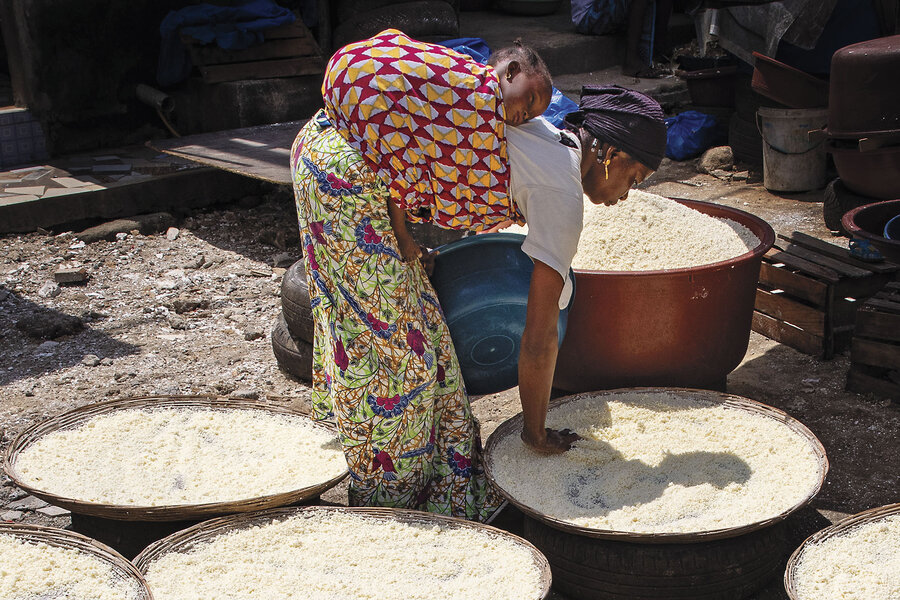
Attiéké: Côte d’Ivoire’s UNESCO-Recognized Traditional Cassava Dish
In the suburbs of Abidjan, a quiet revolution of tradition is taking place on the city’s wide avenues. Groups of women, working in highly efficient, open-air production lines, transform raw, brown cassava roots into attiéké, the fermented staple that serves as the cornerstone of Ivorian cuisine.
The process is a labor-intensive craft: women peel the rough skin from the root, soak the white stalks in water, grind the pulp, and utilize steel presses to remove moisture. The resulting granules are dried in the sun and later steam-cooked in metal pots, a method that practitioners insist imparts a superior flavor compared to mechanized alternatives.
Preserving a Cultural Legacy
The significance of this artisanal practice was formally acknowledged in 2024, when UNESCO recognized the skill involved in making attiéké as part of Côte d’Ivoire’s intangible cultural heritage. Beyond its culinary importance, the industry serves as a vital economic engine.
According to the Ivorian Ministry of Agriculture, the production of attiéké employs an estimated 300,000 women. For many, this work has provided a pathway out of poverty, solidifying the dish’s role not just as a national meal, but as a crucial source of livelihood.
Did You Know? Attiéké is traditionally served with a variety of accompaniments—including fish, chicken, shrimp, boiled eggs, or avocado—and practitioners like Madame Hortense maintain that the dish is best enjoyed when eaten with one’s hands.
The Future of Artisanal Production
While industrial methods for processing cassava exist on a small scale, the preference for hand-crafted attiéké remains strong among consumers. As the artisanal technique continues to be passed down and practiced, it is likely that manual production will remain the primary method for meeting local demand.
Expert Insight: The UNESCO recognition highlights a global trend of valuing traditional food systems that sustain local economies. The tension between industrial efficiency and artisanal quality suggests that the future of the Ivorian food market may hinge on maintaining the specific flavor profiles that only human labour can produce.
Looking ahead, the continued reliance on manual labour in these production lines could see further growth in employment for women in the region. Analysts might expect that as long as the cultural preference for hand-made attiéké persists, the artisanal sector will continue to thrive alongside, or even in place of, larger industrial operations.
Frequently Asked Questions
What is the primary ingredient in attiéké?
The primary ingredient is the cassava root, which is peeled, soaked, fermented, and ground into granules.
How many people are employed in this industry?
According to the Ivorian Ministry of Agriculture, the production of attiéké employs upwards of an estimated 300,000 women.
Why do some producers prefer hand-processing over machines?
Producers like Madame Hortense note that people prefer the specific flavor of attiéké when it is processed by hand rather than by machines.
How do you think the recognition of traditional culinary skills influences the preservation of local food cultures?