

Australia inks $3b defence system deal with Canada
Australia has signed a AU$2.5 billion (NZ$3.05 billion) agreement to provide Canada with over-the-horizon (OTH) radar technology, marking the largest defense export in Australian history. According to Defence Minister Richard Marles, Canada will utilize the system primarily for surveillance over the Arctic region to detect targets at distances far exceeding the capabilities of traditional radar.
Why is over-the-horizon radar different from traditional systems?
Over-the-horizon radar detects targets beyond the visual line of sight. Traditional radar systems are limited by the curvature of the earth, meaning they can’t “see” objects once they dip below the horizon. OTH technology bypasses this limitation, allowing for the monitoring of vast oceanic or atmospheric spaces.
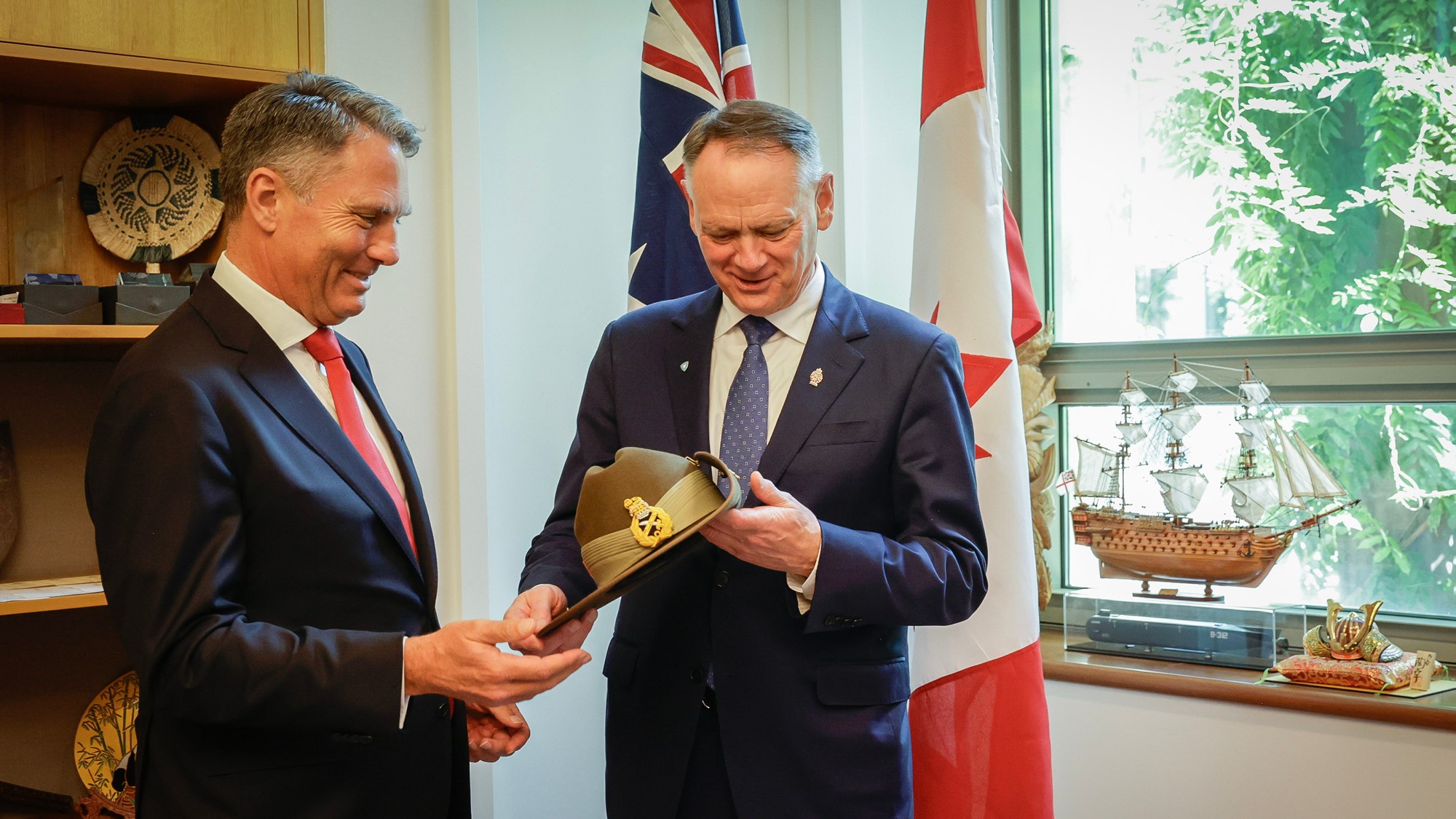
Minister Richard Marles stated that Canada will use this specific technology to engage in surveillance over the Arctic. He noted that Canada, like Australia, manages massive geographic areas that require long-range monitoring to maintain security.
What does the AU$2.5 billion deal mean for Australia and Canada?
The agreement formalizes a deeper strategic partnership between the two nations. Stephen Fuhr, Canada’s Secretary of State for Defence Procurement, told reporters in Canberra that the deal extends beyond radar. It covers cooperation in artificial intelligence, critical minerals, energy, investment, and general security.
Fuhr described Australia as a “strong partner” as both nations adjust to new strategic and economic realities. The deal transforms the relationship from a buyer-seller transaction into a development partnership. Marles confirmed that the two countries are now partners in the future development of OTH radar technology.
For more on how these partnerships evolve, see our analysis on global defense procurement trends or visit the Australian Department of Defence for official records.
How does this impact Arctic surveillance and security?
The deployment of OTH radar in the Arctic allows Canada to monitor air and sea movements in a region where infrastructure is sparse. Because the Arctic is a critical corridor for both trade and military movement, the ability to detect targets at long distances provides a significant early-warning advantage.
The shift toward OTH technology reflects a broader trend in defense: moving away from localized sensors toward wide-area persistence. This allows security forces to track movements long before they enter sovereign airspace or territorial waters.
Comparison: Traditional Radar vs. Over-the-Horizon Radar
| Feature | Traditional Radar | OTH Radar |
|---|---|---|
| Range | Limited by line-of-sight (Earth’s curve) | Extends beyond the horizon |
| Primary Use | Local air traffic, short-range defense | Wide-area surveillance (Arctic/Ocean) |
| Coverage | Point-based or sectoral | Continental or hemispheric |
Frequently Asked Questions
How much is the Australia-Canada radar deal worth?
The agreement is valued at AU$2.5 billion (approximately NZ$3.05 billion).
What is the primary purpose of the OTH radar in Canada?
According to Defence Minister Richard Marles, the technology will be used for surveillance over the Arctic.
Is this a common export for Australia?
No. This is the first time Australian OTH radar technology has been sold overseas and represents the country’s largest defense export deal to date.
Want to stay updated on global security and defense tech?
Join our newsletter for deep-dive analyses on defense procurement and strategic alliances.