

Austria’s Path to Competitiveness: Infrastructure, Energy, and AI
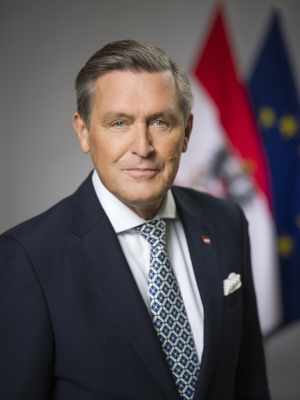
Austrian government and business leaders identified bureaucracy reduction, energy system overhauls, and digital sovereignty as critical for national competitiveness during the first “Schiefer Talk.” Minister Peter Hanke noted that while Austria invests roughly five billion euros annually in infrastructure, the country must adapt to new global realities to remain independent.
The discussion, hosted by Martin Schiefer at his law firm on Vienna’s Rooseveltplatz, brought together executives from the transport, energy, and legal sectors. Paul Leitenmüller of the Opinion Leaders Network moderated the session focused on “Austrian Future Visions – Quo vadis?”
Why is infrastructure speed a concern for Austrian business?
Austria maintains a strong position in European infrastructure, according to Minister Peter Hanke. He stated the Republic invests approximately five billion euros annually, identifying the rail network as a strategic factor for both the economy and climate protection.
Karl-Heinz Strauss, CEO of Porr AG, described Austria as a leader in the construction, renovation, and maintenance of roads and rails. However, Strauss noted that long permit procedures prevent projects from being implemented as desired.
How will the energy transition impact Austria’s systems?
Gerhard Christiner, Vorstandssprecher and Technical Director of APG, described Austria’s current supply security as very high. He argued that the energy transition requires a “total overhaul” of the system rather than just adding wind turbines and photovoltaic plants.
Christiner stated that the transformation depends on net infrastructure, storage technologies, and high-level digitalization. He warned that if one part of this integrated system fails, the entire process could stall.
Karl-Heinz Strauss called for a fact-based, non-ideological 10-year plan to cover energy needs. He noted that the construction industry must play a role in any such transformation.
What role do AI and connectivity play in competitiveness?
Annette Mann, CEO of Austrian Airlines, identified international connectivity as a decisive location factor. She stated that while airport and air traffic control quality are currently high, AI and digitalization could make aircraft and personnel planning more efficient.
Martin Schiefer, CEO of Schiefer Rechtsanwälte, said AI will disrupt professional industries. He argued that Europe could reach the top of AI development if digital sovereignty and competitiveness are pursued together.
Schiefer warned against leaving technological developments exclusively to non-European corporations.
What steps could Austria take to secure its future?
Participants suggested that a coordinated effort between politics, business, and civil society is necessary. Minister Hanke stated that these three elements must not drift apart if the country is to live off innovation.
Possible next steps discussed include:
- Reducing bureaucracy, which Strauss suggested could significantly improve economic conditions.
- Increasing regional value creation through public procurement, which Schiefer argued should focus on “Made in Europe, made in Austria” to maximize output from tax money.
- Accelerating the rollout of energy storage and grid digitalization to utilize existing hydropower and wind energy.
Annette Mann noted that Austria must monitor global trends to remain successful, stating the country does not exist in isolation.
Frequently Asked Questions
How much does Austria invest in infrastructure annually?
According to Minister Peter Hanke, the Republic invests around five billion euros per year.
What is the main obstacle to infrastructure implementation cited by Porr AG?
CEO Karl-Heinz Strauss stated that permit procedures in Austria take too long, hindering the speed of implementation.
What is required for the energy transition according to APG?
Gerhard Christiner stated that the transition requires a total system overhaul, specifically focusing on net infrastructure, storage technologies, and digitalization.
How should a nation balance the use of global AI tools with the need for digital sovereignty?