
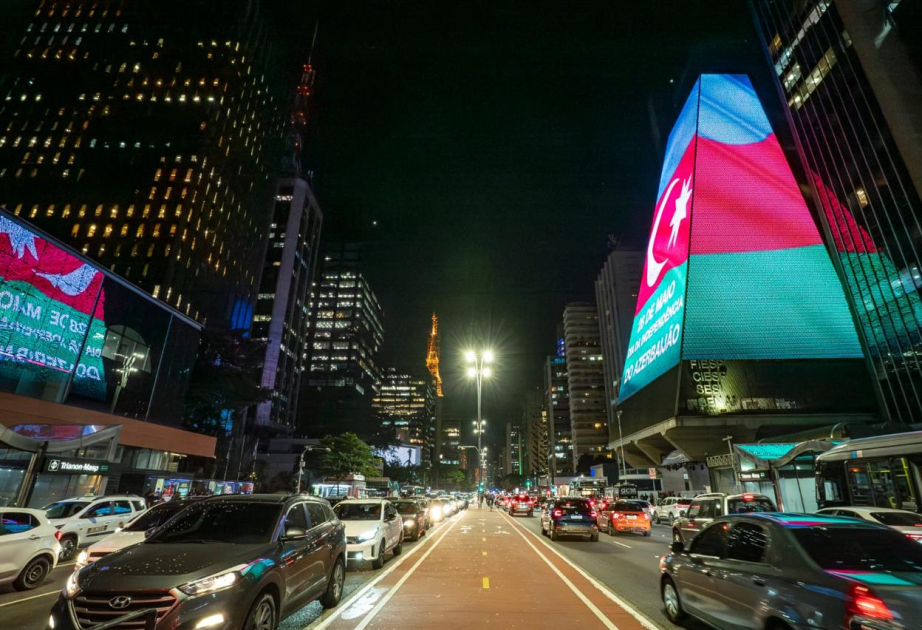
Azerbaijan Celebrates Independence Day With Light Projections in São Paulo
The Future of Cultural Diplomacy: Why Landmarks Are the New Global Stage
In an era defined by digital saturation, nations are discovering that true influence isn’t just found online—it’s found in the physical architecture of the world’s most iconic cities. The recent projection of the Azerbaijani flag across São Paulo’s skyline, including the FIESP skyscrapers and the Octavio Frias de Oliveira Bridge, serves as a masterclass in modern cultural diplomacy.

This shift from traditional gala dinners to immersive, large-scale visual displays marks a turning point in how countries build soft power. By embedding national heritage into the daily landscape of global business hubs, nations are moving beyond static messaging to create high-impact, experiential storytelling.
The Rise of “Landmark Branding” in International Relations
Why are nations flocking to major metropolitan landmarks? Because these sites command attention from millions of commuters and business leaders daily. When Azerbaijan illuminated the FIESP complex—a hub representing roughly 23% of Brazil’s GDP—it wasn’t just a display; it was a strategic placement in one of the world’s most powerful economic corridors.

Future trends suggest we will see more “Digital Takeovers” of cityscapes. As projection mapping technology becomes more affordable and higher in resolution, we can expect:
- Hyper-Localized Content: Tailoring visual narratives to specific city cultures to foster deeper emotional resonance.
- Integrated Cultural Exchanges: Combining light displays with live performances, such as the concert held by pianist Nargiz Aliyarova in Brasília, to create a multi-sensory experience.
- Sustainability in Displays: Utilizing low-energy LED projection tech to showcase green initiatives alongside national branding.
Why Soft Power Matters in the Global Economy
Cultural diplomacy is no longer a “nice-to-have”—This proves a critical component of economic growth. According to the Soft Power 30 index, nations that successfully communicate their cultural identity are more likely to attract foreign direct investment and tourism. By showcasing natural landscapes, cuisine and history in major financial centers like São Paulo, a country reduces the “perceived distance” between itself and potential international partners.
The Intersection of Technology and Heritage
The future of this medium lies in interactivity. Imagine a scenario where passersby can scan a QR code on a projected wall to instantly download a curated playlist of that country’s traditional music or book a travel itinerary. The integration of augmented reality (AR) with physical building projections is the next frontier for embassies and cultural ministries worldwide.
Frequently Asked Questions (FAQ)
- What is cultural diplomacy?
- It is the act of using a nation’s culture, values, and traditions to foster mutual understanding and build relationships with other countries.
- Why do countries project flags on foreign buildings?
- It serves as a highly visible symbol of friendship, marks significant national anniversaries, and introduces the country’s culture to a new, diverse audience in a memorable way.
- How does this impact local economies?
- These events often require local partnerships, media coverage, and technical crews, which stimulate local creative industries while simultaneously boosting the visibility of the host city as a global center.
What do you think is the most effective way for a nation to share its culture abroad? Share your thoughts in the comments below, or subscribe to our global affairs newsletter for more insights into the shifting landscape of international relations.