
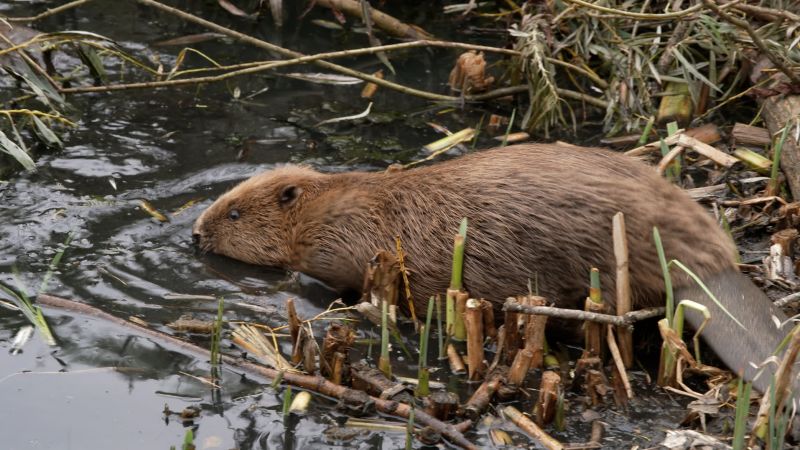
Beaver rewilding: This city had a flooding problem, so it turned to the world’s second largest rodent for help
The Ealing Beaver Project in West London has successfully eliminated localized flooding in the Paradise Fields area for the first time in a decade, according to project leader Sean McCormack. By reintroducing a family of five beavers to the 24-acre site in 2023, conservationists created a series of dams and canals that function as a natural sponge, preventing water from inundating streets and the nearby Greenford tube station.
Wild beavers were extinct in the UK for approximately 400 years after being hunted for their fur, meat, and scent gland secretions, which were historically used in perfumes and food flavoring.
Why nature-based engineering works
Beavers act as natural engineers capable of mitigating extreme weather impacts, according to Emily Fairfax, an assistant professor of geography at the University of Minnesota. Their dams create reservoirs that hold excess water during rainstorms, while their system of canals spreads water across valley bottoms to reduce flood surges.
Beyond flood control, these wetlands provide resilience against other climate-driven events. Fairfax notes that the high water content of these landscapes makes them resistant to wildfires and provides vital hydration to surrounding areas during periods of drought.
While the Ealing project demonstrates the efficacy of rewilding, experts emphasize that these initiatives require careful site selection. The success of such projects depends on adequate food, water, and space, alongside robust contingency planning to manage potential interactions with human infrastructure.
Challenges and community reception
Not all rewilding efforts receive universal support, particularly when animals are introduced without authorization, a practice known as “beaver bombing.” George Holmes, a conservation professor at the University of Leeds, reports that some landowners and farmers view the animals as an unwanted burden due to potential damage to riverbanks, which can trap machinery or livestock.
However, the local response in Ealing remains positive. The site has become a destination for residents, with children and wildlife enthusiasts frequently visiting to observe the beavers. McCormack suggests that the project serves as a model for how urban environments can successfully integrate with wildlife to create more resilient habitats.
What happens next
The Ealing Beaver Project is currently monitoring a new litter of kits born this spring. Project leaders expect to confirm the total number of new arrivals once they emerge from their lodge, which is likely to occur later this month. Future efforts will continue to assess how these animals manage the site’s hydrology and support the growing population of birds, bats, and fish that have moved into the area.
Frequently Asked Questions
How do beavers prevent flooding?
Beavers build dams that turn the landscape into a sponge, allowing the ground to hold more water during heavy rain rather than letting it run off into streets and infrastructure.
Are there risks to having beavers in a community?
Yes, according to George Holmes. Beavers can dig tunnels in riverbanks that may trap cattle or farm machinery, and they can cause flooding concerns for some landowners if not managed properly.
What is “beaver bombing”?
This term refers to the illicit introduction of beavers into an area without official approval or community planning, which can lead to conflict with local farmers and property owners.
How might urban planning change if more cities adopt nature-based flood defenses?