
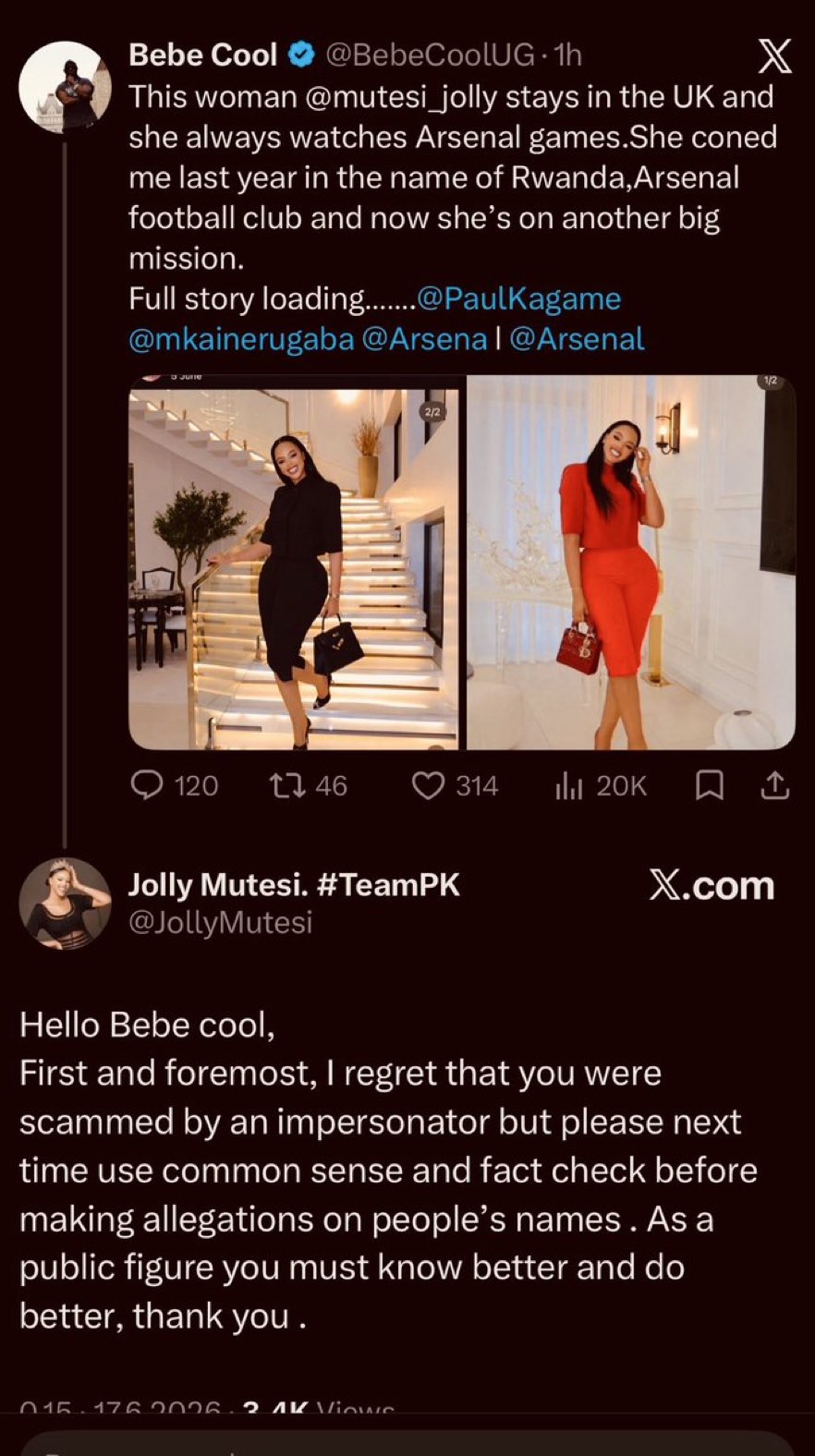
Bebe Cool Apologizes to Jolly Mutesi Following Gen. Muhoozi Intervention
The resolution of the public feud between Ugandan musician Bebe Cool and former Miss Rwanda Jolly Mutesi, mediated by Gen. Muhoozi Kainerugaba, highlights a growing trend of high-level informal mediation to resolve digital impersonation disputes. According to Gen. Muhoozi, the conflict ended on June 18, 2026, after Bebe Cool issued an apology that Mutesi accepted.
How is digital impersonation evolving for public figures?
Digital impersonation is shifting from simple profile cloning to sophisticated social engineering. In the dispute between Bebe Cool and Jolly Mutesi, the musician alleged a scam involving high-ticket deals with Arsenal Football Club and Cristiano Ronaldo. Mutesi countered that a “sophisticated cyber-impersonator” used her identity to target prominent East Africans, according to her legal team at Mbidde & Co. Advocates.
Fraudsters now leverage the perceived authority of beauty queens or diplomats to create trust. They use leaked photos and believable narratives to lure targets into financial commitments. This mirrors global trends where “CEO fraud” uses impersonation to divert large sums of money via encrypted apps like WhatsApp.
Why are celebrities shifting from courts to high-influence mediators?
High-profile figures are increasingly bypassing lengthy court battles in favor of rapid, influence-based mediation. While Mbidde & Co. Advocates issued a formal cease-and-desist notice on June 17, 2026, the matter was settled within 24 hours following the intervention of Gen. Muhoozi Kainerugaba.

Court proceedings for defamation are often public, slow, and damaging to a brand’s reputation. According to reports from Watchdog Uganda, Gen. Muhoozi advised the musician to use “private, diplomatic channels.” This approach allows parties to save face and avoid the discovery process of a trial, which could expose further private communications to the public.
Comparing Legal Action vs. Diplomatic Mediation
| Feature | Legal Route (Cease-and-Desist) | Diplomatic Route (Mediation) |
|---|---|---|
| Speed | Slow (Months/Years) | Rapid (Hours/Days) |
| Visibility | Public Record | Private/Controlled |
| Outcome | Financial Damages/Judgment | Mutual Apology/Agreement |
What happens when social media evidence is debunked?
The “screenshot era” of evidence is becoming unreliable. Bebe Cool initially shared WhatsApp conversations as proof of a scam. However, these were deleted once the impersonation claim gained traction and legal pressure mounted. This demonstrates a critical vulnerability in digital disputes: the ease with which forged or misinterpreted screenshots can trigger a public storm.
As AI-generated text and deepfake audio become more accessible, the threshold for “proof” on social media is rising. Legal teams now prioritize verifying the metadata of communications rather than the visual content of a screenshot. The rapid retraction of Bebe Cool’s posts suggests a recognition that digital evidence can be easily contested in a legal setting.
How can individuals protect themselves from celebrity-themed scams?
Protective measures must move beyond passwords to identity verification. The Mutesi case shows that even a known public profile can be spoofed. Experts suggest using multi-factor authentication and verifying “high-ticket” offers through secondary, official channels.

According to cybersecurity best practices, any offer involving global icons like Cristiano Ronaldo or major clubs like Arsenal should be treated with skepticism if the primary point of contact is a third-party intermediary on an encrypted messaging app. Verifying the legal standing of the agent or the official press office of the entity is the only way to ensure authenticity.
Frequently Asked Questions
What is a cease-and-desist notice?
It is a formal document sent by a lawyer demanding that a party stop an illegal activity—such as defamation—or face a lawsuit. In this case, Mbidde & Co. Advocates used it to demand a retraction from Bebe Cool.
How do cyber-impersonators trick high-profile targets?
They use a combination of stolen photos, public information, and “authority lures” (like fake deals with famous athletes) to build trust before requesting money or sensitive information.
Can a social media apology stop a legal case?
Yes, if the aggrieved party accepts the apology and agrees not to pursue litigation. As Gen. Muhoozi stated, once the apology was accepted, the matter was considered resolved.
Join the Conversation: Do you think high-influence mediation is more effective than the court system for celebrity disputes? Let us know in the comments below or subscribe to our newsletter for more insights on digital security and East African news.