

Belkin SoundForm Mini 2: Safe and Durable Headphones for Kids
The Belkin SoundForm Mini 2 marks a shift toward safer, more social audio for children, featuring a strict 85dB volume limit and “Rockstar Mode” for shared listening. This evolution reflects a broader industry trend focusing on hearing protection and durable, long-battery hardware designed specifically for the rigors of family travel.
Why is the 85dB limit becoming the industry standard for kids?
Most modern children’s headphones, including the SoundForm Mini 2, cap volume at 85 decibels (dB). This isn’t an arbitrary number. According to the World Health Organization (WHO), prolonged exposure to sounds above 85dB can lead to permanent hearing loss, especially in developing ears.
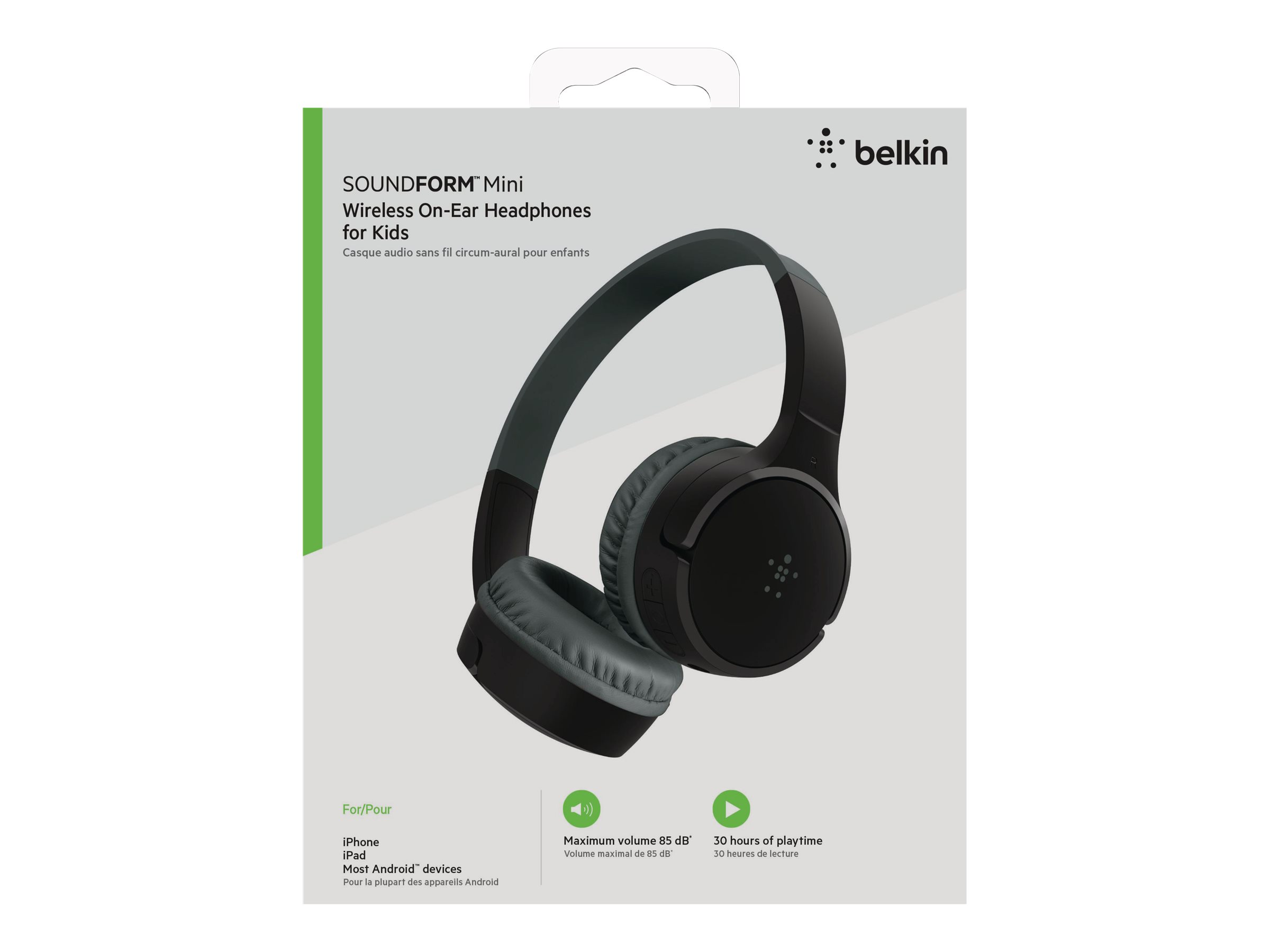
Children’s ear canals are smaller than adults’, meaning the sound pressure is more concentrated. By hard-coding a limit, manufacturers remove the risk of a child accidentally cranking the volume to dangerous levels during a loud flight or a noisy car ride.
How will “shared audio” change the way children consume content?
Belkin’s “Rockstar Mode” allows two pairs of headphones to connect to one device. This solves a perennial parenting struggle: the fight over who gets to watch the movie on the tablet. But the trend goes deeper than just peace and quiet in the backseat.
We’re seeing a move toward “collaborative consumption.” In educational settings, this allows a teacher or parent to sync audio across multiple devices for a shared lesson. Future iterations will likely move beyond simple mirroring to interactive, synchronized audio experiences where kids can communicate while listening to the same story.
Will battery life and durability finally keep up with kids?
The SoundForm Mini 2 offers 55 hours of playback. To put that in perspective, many entry-level kids’ headphones typically hover around 20 to 30 hours. This jump is critical for long-haul travel where charging ports are scarce.
Durability is the next frontier. While current models focus on “sweat and splash resistance,” the industry is moving toward modularity. Imagine a world where a snapped headband or a torn ear cushion can be replaced for $5 instead of replacing the entire unit. This shifts the product from a disposable gadget to a long-term tool.
What’s next for the “screen-free” entertainment trend?
There’s a growing movement among parents to reduce screen time. High-quality audio gear is fueling a resurgence in audiobooks and podcasts for children. Because the SoundForm Mini 2 includes both Bluetooth and a 3.5mm jack, it bridges the gap between old-school MP3 players and new tablets.
Experts suggest that audio-only storytelling improves cognitive visualization and focus more than video does. As hardware becomes more comfortable and battery life extends, we’ll likely see “audio-first” devices that don’t have screens at all, designed specifically for kids to explore stories independently.
Comparing the SoundForm Mini 2 to Standard Kids’ Audio
| Feature | Standard Kids’ Gear | SoundForm Mini 2 |
|---|---|---|
| Battery Life | 20-30 Hours | 55 Hours |
| Audio Sharing | Rare / Wired Splitters | Rockstar Mode (Wireless/Wired) |
| Volume Cap | Varies / Often missing | Strict 85dB Limit |
Frequently Asked Questions
Is 85dB actually safe for all children?
Yes, according to most health guidelines, 85dB is the threshold where sound begins to potentially cause damage over long periods. It is widely accepted as the safest ceiling for children’s audio.

Why do some kids’ headphones still have wires?
Wired connections (3.5mm) are essential for airplane entertainment systems and school laptops that don’t support Bluetooth. Hybrid options provide the most flexibility.
Does “Rockstar Mode” reduce sound quality?
Generally, no. Because it is mirroring the signal rather than splitting the power of a single analog output, the audio quality remains consistent across both pairs.
Want to stay updated on the latest gadgets and family-friendly tech? Let us know in the comments: do you prefer wireless freedom or the reliability of a cable for your kids? Subscribe to our newsletter for more deep dives into the tech that actually makes parenting easier.