
Bhashini & Kathmandu University To Create ‘Voice First’ Platform For Nepal
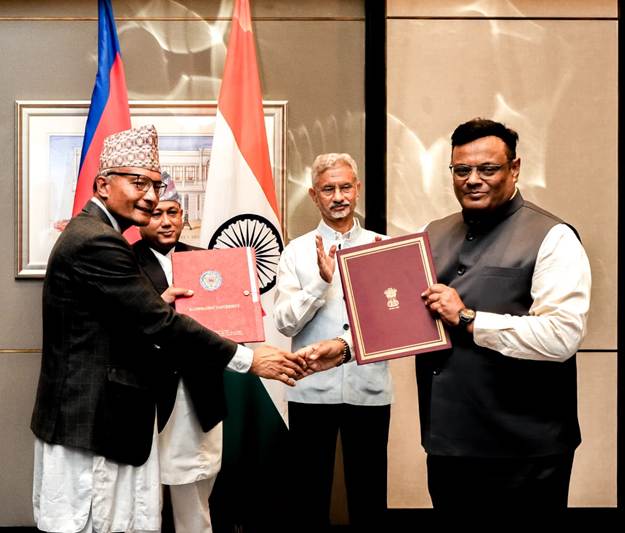
India’s Digital India BHASHINI Division and Kathmandu University have partnered to build a ‘Voice First’ AI platform for Nepal. This collaboration leverages multilingual Digital Public Infrastructure (DPI) to provide government services in local languages, utilizing Bhashini’s AI framework to bridge literacy and digital access gaps across the region.
The agreement, signed by Shri Amitabh Nag, CEO of the Digital India BHASHINI Division, and Prof. Bal Krishna Bal of Kathmandu University, marks a shift in how South Asian nations approach digital inclusion. It isn’t just a software deal. It’s an effort to ensure that language doesn’t act as a barrier to basic human rights and government services.
Why is ‘Voice First’ technology critical for Nepal?
For millions of people, typing on a keyboard is a hurdle. Literacy rates and the complexity of local scripts often leave rural populations stranded on the wrong side of the digital divide. A ‘Voice First’ approach allows users to interact with technology using their natural speech.
According to the MoU, the partnership will focus on creating high-quality Nepali language datasets and speech corpora. This means the AI won’t just translate words; it’ll understand the nuances of how people actually speak. By implementing speech-to-text and text-to-speech capabilities, the Government of Nepal can extend public services to the “last mile” of its population.
Imagine a farmer in a remote district accessing crop insurance or a student querying educational grants in their native tongue without needing a middleman. That’s the practical application of this tech. MeitY’s vision for Bhashini is to make this a standard across the Global South.
How does Bhashini’s DPI model scale across borders?
Digital Public Infrastructure (DPI) is the “invisible plumbing” of the modern state. India’s approach—using open and interoperable systems—allows other countries to adopt the framework without being locked into a single private vendor’s ecosystem.
Shri Amitabh Nag noted that this model has the potential to transform digital access across South Asia. By sharing the “plumbing” (the AI resources and translation layers), Nepal doesn’t have to build a multilingual AI from scratch. Instead, they can adapt Bhashini’s existing infrastructure to the specific linguistic needs of the Nepali people.
What happens to ‘low-resource’ languages in the AI era?
Many languages face “digital extinction.” If a language isn’t represented in the data used to train AI, it effectively disappears from the digital world. This creates a cycle where speakers of these languages are forced to switch to English or Hindi to use the internet.

The collaboration between the DPI-AI Center at Kathmandu University and Bhashini explicitly targets these underrepresented languages. Prof. Bal Krishna Bal emphasized that linguistic heritage should be a catalyst for the digital future, not a barrier. By digitizing these languages, the project preserves cultural identity while granting those communities access to digital commerce and education.
This is a stark contrast to traditional AI development, which typically favors “high-resource” languages (like English or Spanish) because they offer the most data. By intentionally building datasets for low-resource languages, India and Nepal are setting a precedent for linguistic equity.
Will this create new economic opportunities?
Yes, and the impact goes beyond government apps. Multilingual AI opens the door for local entrepreneurs to reach global markets. A Nepali artisan can now potentially list products and communicate with international buyers using real-time, AI-driven translation that understands their specific dialect.
Moreover, the MoU envisions joint research and capacity building. This means Nepali students and researchers will gain hands-on experience in Natural Language Processing (NLP), creating a homegrown workforce capable of maintaining and evolving these AI systems. [Internal Link: The Rise of AI Talent in South Asia]
Comparing the Scope: Bhashini’s Current Reach vs. Future Goals
| Feature | Current Bhashini Capability | Nepal Partnership Goal |
|---|---|---|
| Language Support | 36 Indian text / 23 voice | Expansion into Nepali & low-resource dialects |
| Infrastructure | 800+ Indian Gov websites | Integration with Nepal’s public services |
| Primary Focus | National digital inclusion | Regional cooperation & linguistic preservation |
Frequently Asked Questions
What is a ‘Voice First’ platform?
It’s a system designed primarily for voice interaction rather than text input. It uses AI—specifically speech-to-text and text-to-speech—to allow users to navigate services and get information by speaking.

What does ‘Digital Public Infrastructure’ (DPI) mean?
DPI refers to digital blocks—like digital ID, payment systems, or language AI—that are built as open platforms. This allows the government and private sector to build services on top of them, similar to how roads are a physical infrastructure that businesses use to transport goods.
How does this benefit someone who isn’t tech-savvy?
By removing the need to type or read complex digital interfaces, people can use their native voice to access healthcare, banking, and government aid, making technology accessible regardless of literacy levels.
Want to stay ahead of the AI curve?
The landscape of multilingual AI is shifting rapidly. Subscribe to our newsletter for deep dives into how Digital Public Infrastructure is reshaping the Global South.