
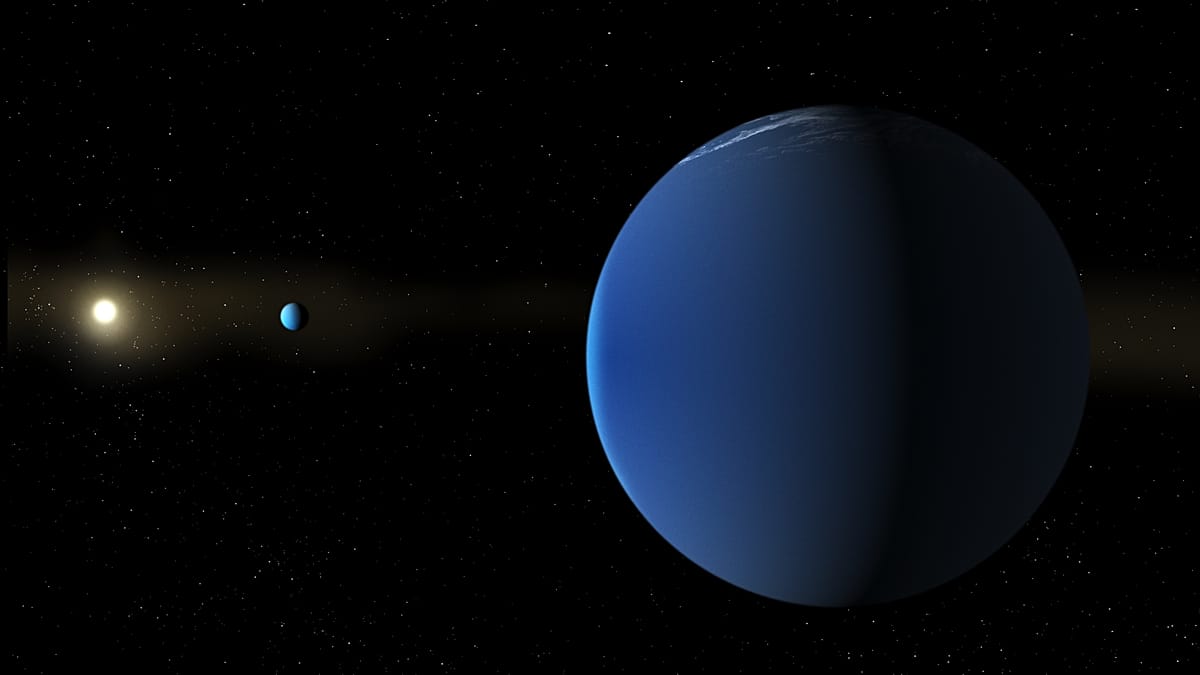
Bigger than Jupiter, lighter than cotton candy: Astronomers discover two ‘super-puff’ planets
Astronomers have identified two “super-puff” exoplanets with densities comparable to shaving foam, marking them as the lightest planets of their size ever discovered. Orbiting a star 1,110 light-years away in the constellation Volans, these gas giants possess a mass significantly lower than Jupiter despite having a similar physical volume, according to research led by George Dransfield of the University of Oxford.
What makes these exoplanets unique?
The defining characteristic of these newly discovered planets is their extreme low density. While Jupiter is 35 times denser than this pair, these “super-puffs” maintain a physical size comparable to our solar system’s largest planet while weighing a fraction of the amount. According to the study published in the Monthly Notices of the Royal Astronomical Society, the planets likely consist primarily of hydrogen and helium.
Scientists classify “super-puffs” as rare celestial objects. Fewer than 40 have been confirmed among the nearly 6,300 exoplanets catalogued by NASA to date.
How do astronomers detect such low-density worlds?
The discovery was made using data from NASA’s Transiting Exoplanet Survey Satellite (TESS). By observing the slight dip in light as the planets cross in front of their host star, researchers can calculate the planet’s size and orbital characteristics. George Dransfield notes that while the exact color remains unconfirmed, the planets likely appear white or blue due to their cloud composition rather than the “cotton-candy” pink sometimes associated with the term “super-puff.”
Why does the study of super-puffs matter?
Researching exotic, low-density systems provides essential data for models of planetary formation. Current scientific theory suggests these planets form in gas-rich discs surrounding newborn stars before gradually shedding their material. By analyzing these rare systems, astronomers aim to refine their understanding of how planets evolve and determine our own place in the cosmos, according to Dransfield.
What are the next steps for atmospheric research?
Confirming the precise chemical makeup of these planets requires advanced spectroscopic analysis. The scientific team anticipates that follow-up observations using NASA’s Webb Space Telescope will be necessary to identify the specific gases and aerosols present in the planets’ atmospheres. This transition from detection to atmospheric characterization is a standard progression in modern exoplanet research.
Pro Tip: Understanding Light-Years
A light-year represents the distance light travels in a vacuum in one year, which is approximately 9.7 trillion kilometers. At 1,110 light-years away, these planets are located well outside our immediate interstellar neighborhood.

Frequently Asked Questions
- Are these planets habitable? No. Their composition of hydrogen and helium and their extremely low density make them incompatible with life as we know it.
- Why are they called “super-puffs”? The term refers to their exceptionally low density, which makes them appear bloated or “puffy” compared to solid, rocky planets like Earth.
- How many exoplanets have been found? NASA has catalogued nearly 6,300 exoplanets to date, with fewer than 40 classified as super-puffs.
Interested in the latest discoveries from deep space? Subscribe to our weekly astronomy newsletter for updates on the Webb Space Telescope and upcoming NASA missions.