
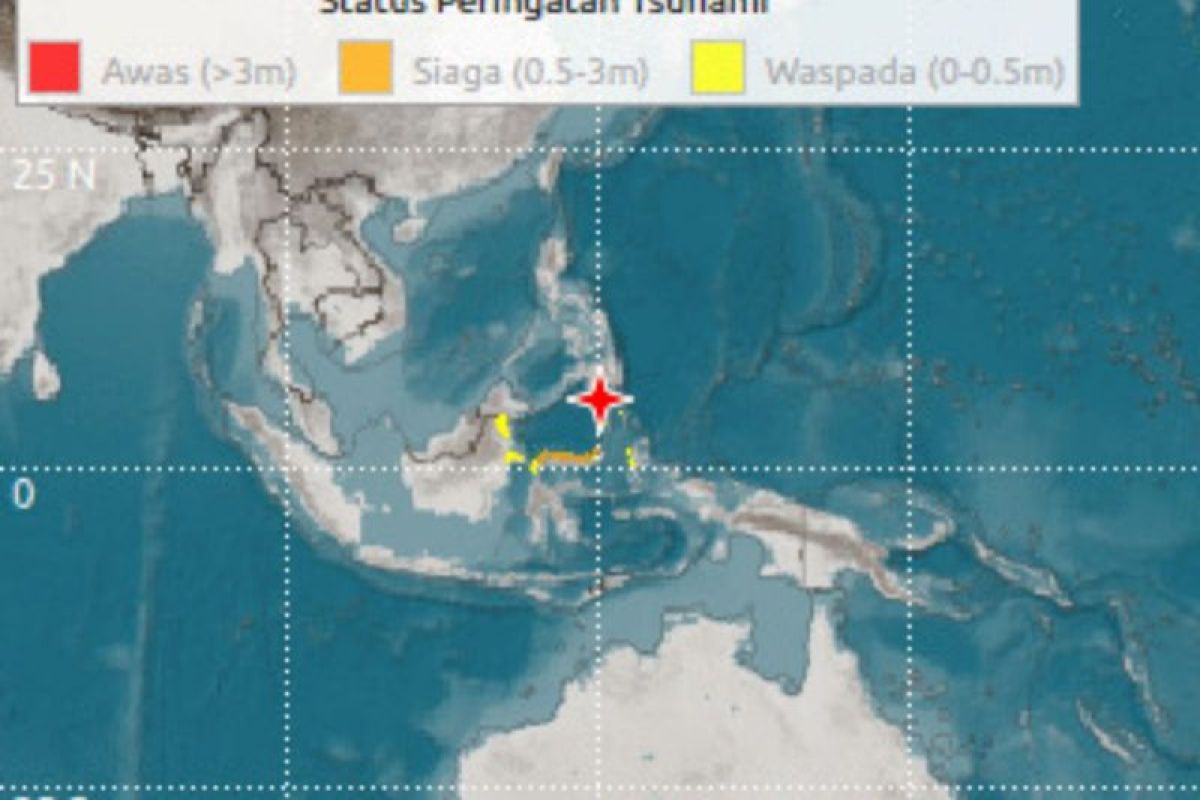
BMKG lifts tsunami warning following Sulawesi Sea 7.7M earthquake
The Meteorology, Climatology, and Geophysics Agency (BMKG) recently lifted a tsunami warning after a 7.7 magnitude earthquake struck near Mindanao, Philippines. While wave heights peaked at 75 centimeters in Sangihe, North Sulawesi, the stabilization of sea levels confirms the immediate threat has passed, highlighting the critical role of real-time tide gauge monitoring in saving lives.
When a 7.7 magnitude quake hits, the clock starts ticking. For the people of North Sulawesi and North Maluku, those first few hours are a blur of sirens and evacuation orders. But the real story isn’t just the quake—it’s how we’re getting better at predicting what happens next.
How do early warning systems prevent disaster?
Early warning systems rely on a network of sensors that detect sea-level anomalies almost instantly. In this recent event, BMKG used tide gauges to track wave arrivals in real-time. This data allows officials to move from a general “danger” alert to a specific “all clear” based on hard evidence.
According to BMKG Head Teuku Faisal Fathani, lifting the warning at 10:15 a.m. WIB was a strategic move. It wasn’t just about the water stopping; it was about allowing disaster management teams to shift from evacuation mode to rescue and consolidation mode. Without a formal “all clear,” rescue teams often can’t enter high-risk zones to help those trapped by structural collapses.
What happens when a magnitude 7.7 earthquake hits the Ring of Fire?
A quake of this size triggers a chain reaction. First is the shaking, then the potential for a tsunami, and finally, the grueling cycle of aftershocks. The impact varies wildly depending on where you stand.
In this event, the shaking was measured using the Modified Mercalli Intensity (MMI) scale. BMKG reported a VI MMI intensity in Miangas and Melonguane. At this level, the quake isn’t just felt—it’s destructive. We’re talking about falling wall plaster and damaged chimneys. Contrast that with the IV MMI felt in Manado City, which was enough to wake residents but didn’t tear down walls.
Comparing the Wave Impact
Not all tsunamis look like the 50-foot walls of water seen in movies. Often, they’re “silent” surges that cause massive flooding. Look at the variance in the BMKG data from this event:
- Palengen, Sangihe: 75 centimeters (The highest recorded)
- Paleleh, Central Sulawesi: 45 centimeters
- Bitung: 29 centimeters
- Loloda: 9 centimeters
This disparity shows how coastal geography—the shape of the bay or the depth of the ocean floor—can amplify or dampen a tsunami’s power.
Why are aftershocks a hidden danger after the initial quake?
The main event gets the headlines, but the aftershocks are where the stealthy danger lies. Following the Mindanao quake, BMKG monitored 20 aftershocks, some as strong as magnitude 6.7.
Here’s the problem: the first quake weakens the “bones” of a building. A wall that survived the 7.7 magnitude shock might be leaning or cracked. When a 6.7 aftershock hits, that compromised structure can finally give way. It’s why BMKG explicitly warned the public to inspect their homes for structural damage before stepping back inside.
What are the future trends in seismic safety?
We’re moving toward “hyper-local” warnings. Instead of warning an entire province, future systems aim to warn specific neighborhoods based on real-time bathymetry (ocean floor mapping). This reduces “warning fatigue,” where people stop evacuating because they feel the alerts are too frequent or inaccurate.

Additionally, the integration of AI into tide gauge analysis is speeding up the time between the quake and the alert. The goal is to shave seconds off the response time, as every second counts when a wave is traveling at the speed of a jet plane.
For more on how tectonic movements shape our world, check out our guide on plate subduction zones or visit the USGS for global seismic tracking.
Frequently Asked Questions
What is the difference between Magnitude and MMI?
Magnitude (like 7.7) measures the energy released at the source. MMI (like VI) measures the actual shaking felt by people and the damage caused at a specific location.
How long does a tsunami warning usually last?
There’s no set time. Warnings stay active until monitoring agencies, like BMKG, confirm that sea levels have stabilized and the threat of further surges has passed.
Are aftershocks always smaller than the main quake?
Generally, yes. However, they can still be powerful enough (like the 6.7 recorded here) to collapse already damaged buildings.
Want to stay prepared? Tell us in the comments: Does your community have a clear evacuation plan for seismic events? Subscribe to our newsletter for more deep dives into environmental safety and disaster resilience.