
Bringing advanced imaging to patients around the world
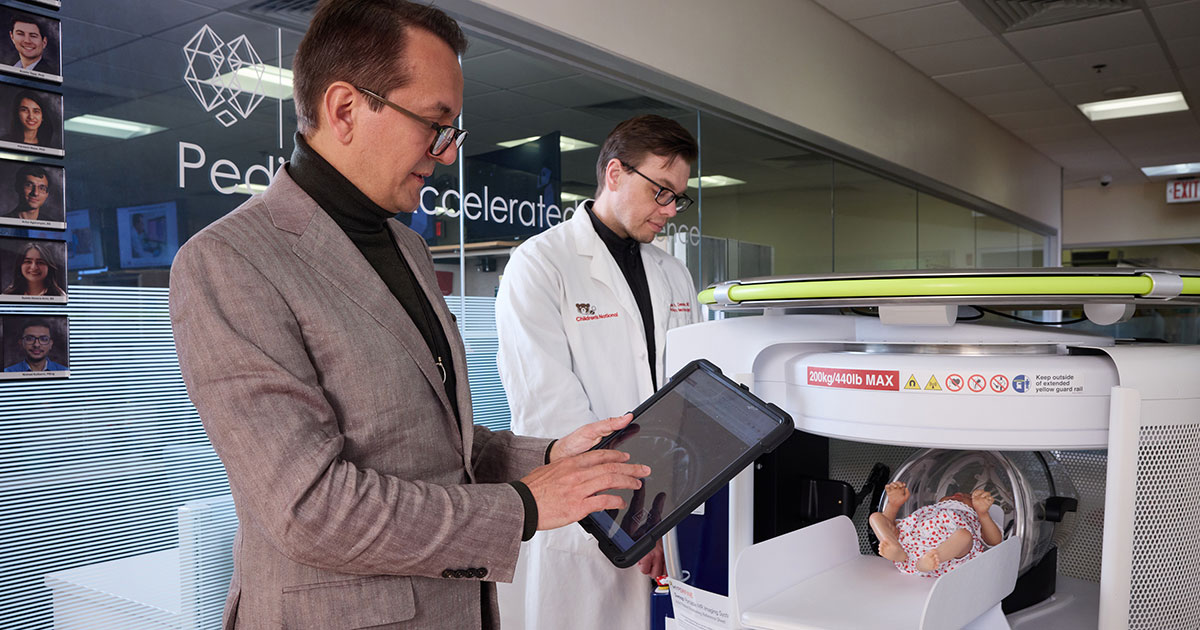
Children’s National is testing the Hyperfine Swoop, a portable, ultra-low-field MRI machine combined with AI algorithms to increase medical imaging access. According to Dr. Marius Linguraru, the device is 20 times lighter than traditional MRIs and requires no sedation, which could potentially expand imaging access to 5 billion people globally.
How does the Hyperfine Swoop differ from traditional MRI?
Traditional MRI machines often weigh tons and cost millions of dollars, limiting their use to major medical centers with specialized staff and space. The Hyperfine Swoop is a commercially available, ultra-low-field scanner that plugs into a standard wall outlet.
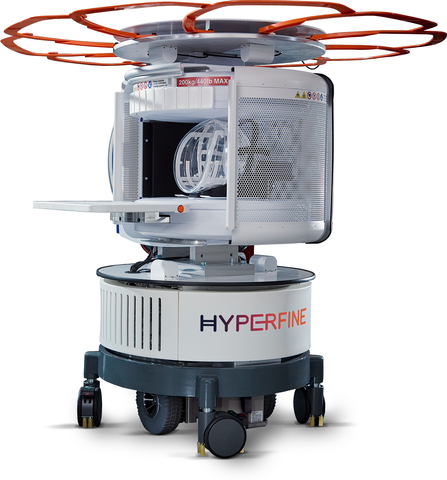
Dr. Marius Linguraru, director of the Division of AI Research, stated the device is 20 times lighter and multiple times cheaper than standard machines. He noted that the system does not require sedation and can complete a patient scan in as little as two minutes.
Because it lacks the strong magnets found in traditional MRIs, the Swoop can roll into sensitive areas. This includes intensive care units and operating rooms.
How is AI improving portable imaging quality?
Portable MRI machines typically produce blurry images. Dr. Linguraru’s team is testing AI algorithms that use thousands of data points to sharpen these pictures of a child’s brain.
According to the research team, these AI enhancements allow intricate nuances to emerge, bringing the image quality closer to that of a typical MRI. Dr. Daniel Donoho, a neurosurgeon, noted that one millimeter of precision can significantly impact a child’s health.
What is the global impact of the UNITY project?
The Gates Foundation is funding this research through the Ultra-Low Field Neuroimaging in the Young (UNITY) project. This network connects dozens of research centers and hospitals worldwide.
The UNITY project is evaluating the portable scanner for infant brain scanning and research into infectious diseases and hunger. Dr. Linguraru stated that AI is the most significant technological leap for enhancing care in low-resource countries, specifically in South Asia and sub-Saharan Africa.
What may happen next for this technology?
Doctors at Children’s National currently use the Hyperfine Swoop and AI on an experimental basis. Dr. Donoho has used the device on approximately 100 patients with spine and brain disorders over the last three years.
A $100,000 global health grant from the Children’s National Research Institute is supporting further testing. This funding may allow the team to extend technology testing to Ethiopia and Tanzania.
Dr. Donoho indicated that the potential for this technology is massive and could eventually provide MRI access to roughly 5 billion people.
Frequently Asked Questions
Who is funding the UNITY project?
The Gates Foundation invests in this work through the Ultra-Low Field Neuroimaging in the Young (UNITY) project.
Why is the Hyperfine Swoop useful for delicate patients?
According to Dr. Donoho, patients with brain and spine disorders are often too delicate to be moved or to endure the length of a traditional MRI scan.
What specific global health issues is the UNITY project researching?
The project is evaluating the tool for infant brain scanning and research into infectious diseases and hunger.
How could portable imaging change the way rural communities access specialized healthcare?