

Building the Agentic Enterprise: A Scalable System for AI Agents
Microsoft is launching a comprehensive agent platform integrating GitHub, Microsoft IQ, Foundry, and Agent 365 to shift enterprise AI from simple chatbots to autonomous agent teams. According to Microsoft, this system enables organizations to build, contextualize, and govern AI agents as production software to automate complex, long-running workflows across finance, HR, and operations.
How does Microsoft’s agent platform change enterprise AI?
The platform moves AI from fragmented experiments to a governed system for running real work. Microsoft states the goal is to replace disconnected tools with a single, integrated stack involving Azure, GitHub, Microsoft IQ, Fabric, Foundry, and Microsoft 365.
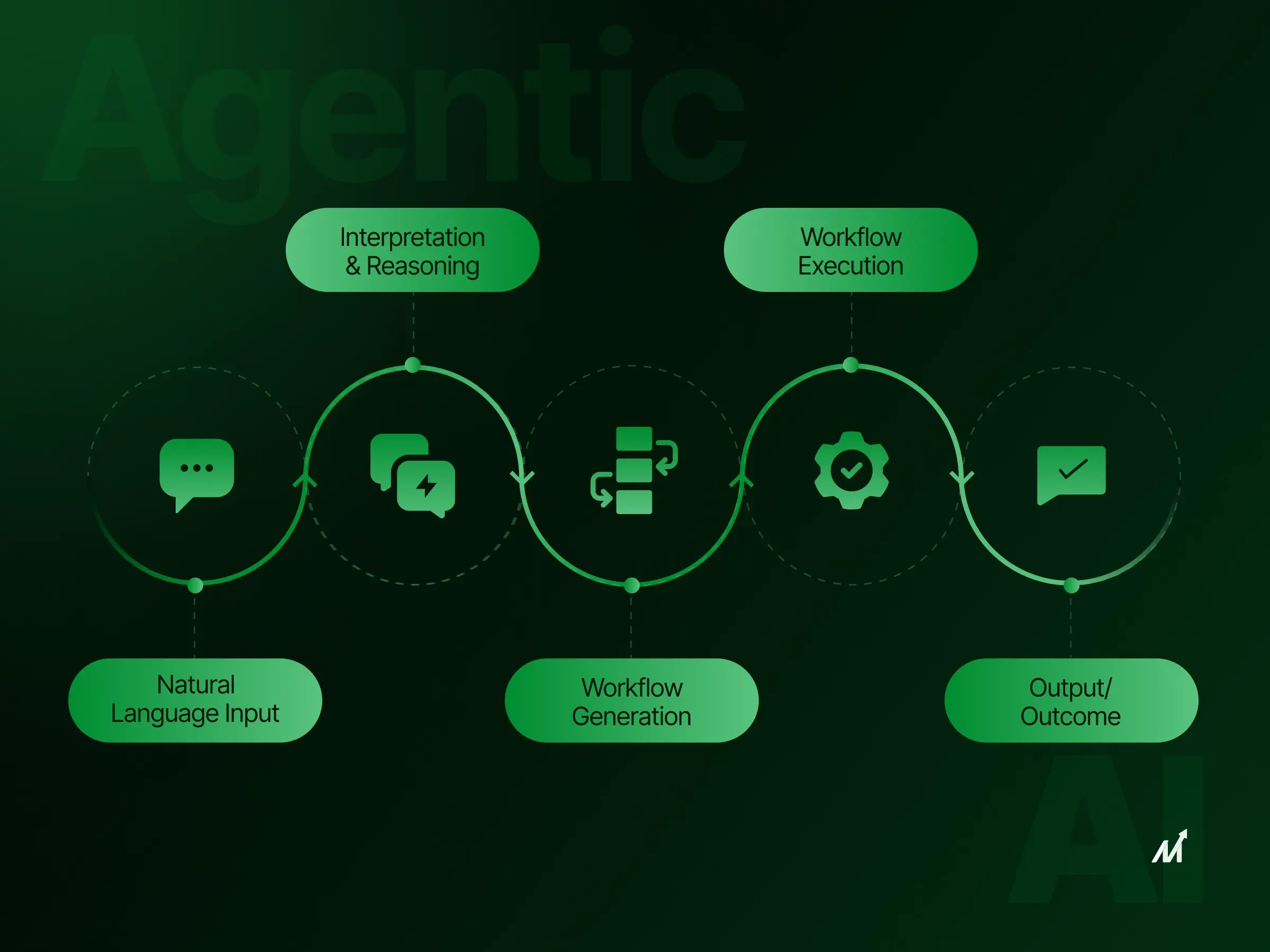
This shift focuses on “teams of agents” rather than single-prompt interfaces. These agents execute workflows across functions like software delivery and support. Microsoft claims the winners of this era won’t be companies with the most demos, but those that turn AI into a continuously improving system.
Why is business context more important than the AI model?
A powerful model alone is insufficient because it lacks specific company knowledge. Microsoft IQ addresses this by grounding agents in enterprise data from Microsoft 365, core business systems, and websites. According to the company, this prevents AI from “guessing” or hallucinating by providing a structured layer of business intelligence.
To further specialize these agents, Microsoft introduced Frontier Tuning and a family of seven new MAI models covering voice, image, coding, and reasoning. These models use reinforcement learning environments—which Microsoft describes as “training gyms”—to learn a company’s specific standards and processes.
This approach mirrors the evolution of early enterprise software. Just as early databases required specific schemas to be useful, AI agents now require “contextualization” to move from generalists to customized business partners.
What happens when thousands of agents run in one company?
Scaling AI creates a governance risk where different teams deploy agents with varying levels of security and quality. Microsoft is introducing Agent 365 to act as a central catalog for every agent in an organization, regardless of where it was built.
Governance is managed through a combination of Entra, Purview, and Defender. This allows IT departments to monitor what data an agent can access, track its cost, and enforce policies. Microsoft states that without this native security stack, AI remains “fragile and difficult to trust at scale.”
How are AI agents built differently than standard applications?
Agents require a specific lifecycle: source, test, deploy, observe, and improve. Microsoft is centering this process in GitHub, where developers can use GitHub Copilot to write code and manage agent skills alongside versioned evals and observability assets.
The execution happens in Foundry, a specialized runtime designed for reasoning and tool calling. Foundry provides several key capabilities:
- Model Routing: An optimized router balances quality, speed, and cost across various models.
- Open Model Support: Integration with Fireworks AI allows for faster inference of open models.
- Framework Flexibility: Support for LangGraph, Claude Agent SDK, and the Microsoft Agent Framework.
These agents then surface where employees already work, specifically within Teams and Microsoft 365, inheriting the existing identity and security models of the Azure cloud.
Comparison: Chatbots vs. Agentic Systems
| Feature | Traditional Chatbots | Agentic Platforms |
|---|---|---|
| Scope | Single-turn Q&A | Long-running cross-functional work |
| Data Use | General knowledge/RAG | Deep contextualization via Microsoft IQ |
| Governance | Prompt filtering | Central catalog (Agent 365) & Entra |
Frequently Asked Questions
What is Microsoft IQ?
It is a platform that grounds AI agents in enterprise-specific data, connecting them to Microsoft 365 and other business systems to ensure accurate, context-aware responses.
How does Foundry differ from a standard cloud host?
Foundry is a runtime specifically for agents. It handles model routing, tool calling via APIs and MCP, and provides the traces needed to measure and improve agent behavior.
Can I use non-Microsoft models on this platform?
Yes. Microsoft states the platform is open and supports partner models and open models, including optimized inference via Fireworks AI.
What is the role of GitHub in this AI ecosystem?
GitHub serves as the development hub where agents are coded, tested, and versioned using the same lifecycle as production software.
Join the Conversation: Is your organization moving toward autonomous agents or sticking with chatbots? Share your experience in the comments below or subscribe to our newsletter for more deep dives into enterprise AI.