
Bumblebees Use Balls as Ladders to Solve Problems
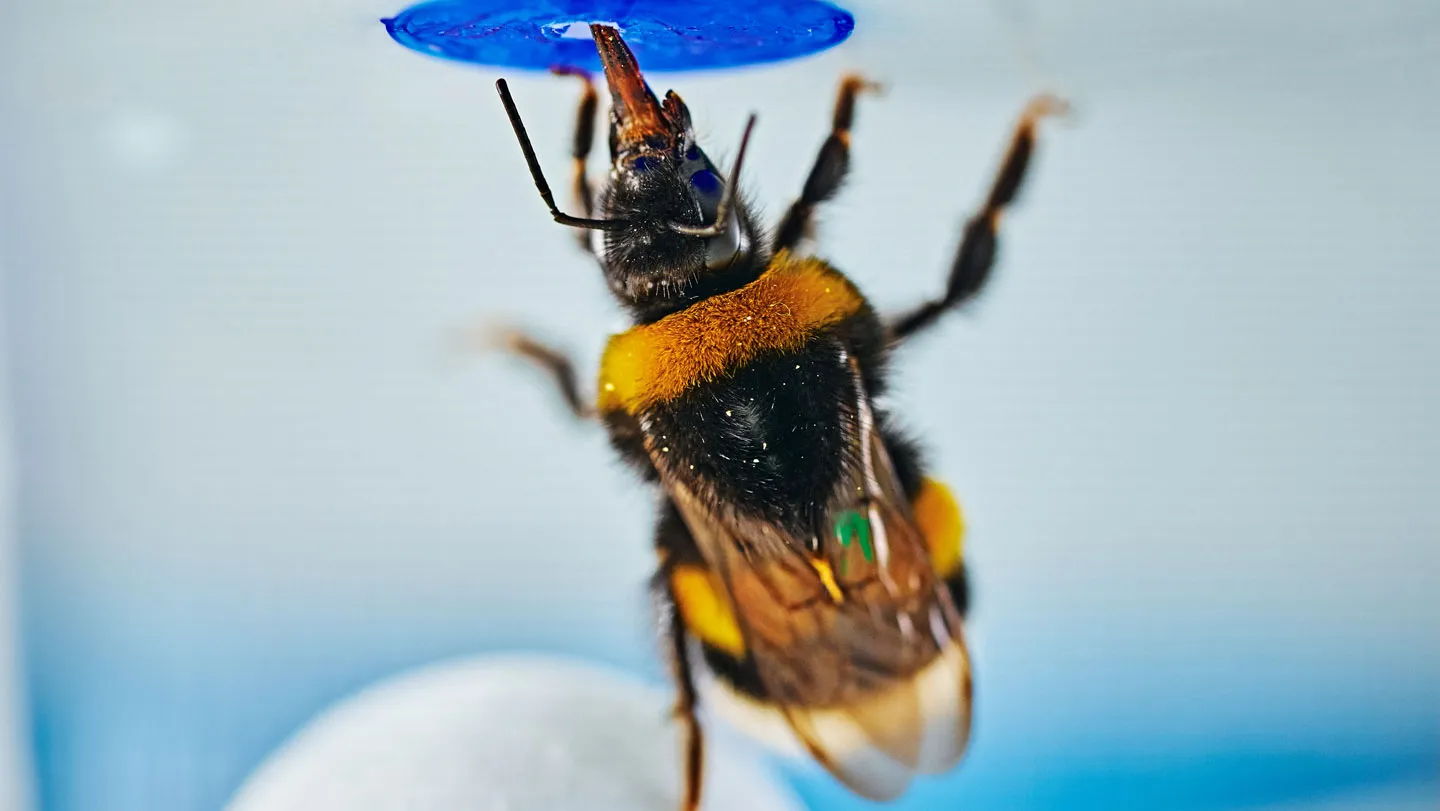
In a striking display of cognitive ability, buff-tailed bumblebees have demonstrated an unprecedented capacity for spontaneous problem-solving. Research published in the June 4 issue of Science reveals that these insects can independently determine how to use a ball as a tool—specifically as a ladder—to reach a food source that is otherwise inaccessible.
The Mechanics of Intelligence
To test the bees’ problem-solving skills, researchers at the University of Oulu in Finland set up a series of plexiglass arenas. The bees were presented with a blue ring—a visual cue representing a flower—placed on the ceiling, out of reach for flight. The insects were required to retrieve a moveable ball and position it as a ladder to reach the reward.
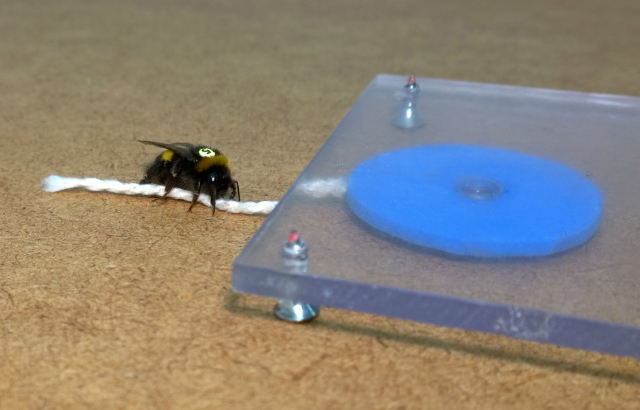
The study is notable because it is the first to confirm that the subjects had no prior experience with problem-solving tasks. While vertebrates like chimpanzees and parrots have shown similar capabilities, behavioral ecologist Olli Loukola notes that this is the first time such spontaneous problem-solving has been demonstrated in an invertebrate.
Significance and Future Analysis
The implications of this research extend beyond simple task completion. The fact that bees continued to solve the puzzle even when barriers were introduced suggests they were operating with a specific goal rather than relying on chance or visual triggers. Behavioral ecologist Akshaye Bhambore noted that the bees understood the nature of the task, requiring them to remember the location of the flower while retrieving the necessary tool.
A possible next step for the research team involves the use of slow-motion cameras and detailed video analysis. Analysts expect that this higher-resolution monitoring may reveal subtle behavioral cues, such as grooming patterns, that coincide with the moment a bee “figures out” the solution. This could help clarify how these insects process information during complex, non-instinctual challenges.
Frequently Asked Questions
What was the primary goal of the study?
The study aimed to determine if bumblebees could independently solve a problem by using a ball as a tool to reach a food source that was physically out of reach.

Did the bees receive any training to solve the puzzle?
No. The bees were not trained to solve the specific task; they were only taught that balls are movable objects and that a blue ring represents a source of food.
Why is this finding considered significant?
This is the first time that spontaneous problem-solving has been demonstrated in an invertebrate, suggesting that bumblebees possess a capacity for logic and goal-oriented behavior previously associated primarily with vertebrates.
What other complex behaviors do you think might be hidden within the world of insects?