
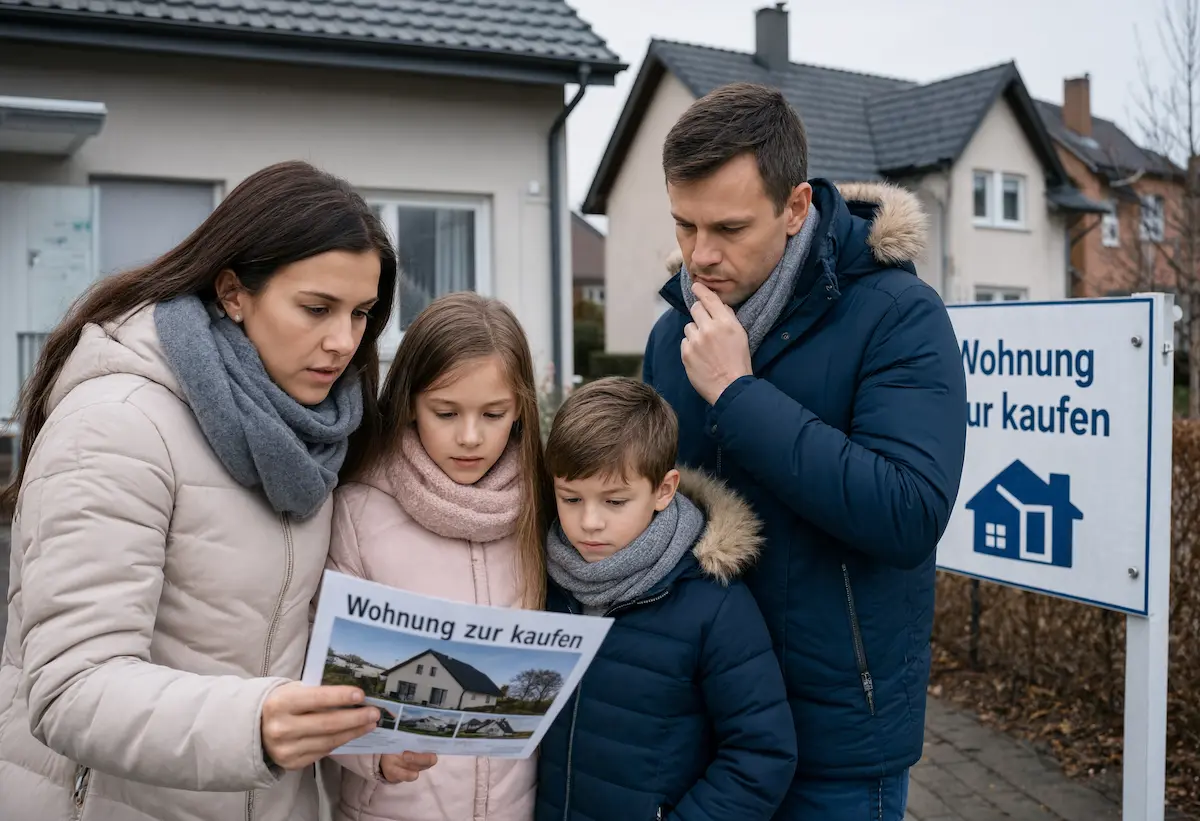
Buying Property in Germany for Foreigners: Costs and Legal Guide
Non-citizens can purchase real estate in Germany in 2026 without a residence permit, according to legal guidelines. Buyers must budget an additional 9% to 15% above the purchase price for closing costs, including state-specific transfer taxes ranging from 3.5% to 6.5% and mandatory notary fees.
How much do additional closing costs impact the budget?
The listed price of a property rarely represents the final cost before key handover. Buyers must plan for “Kaufnebenkosten,” or closing costs, which typically add 9% to 15% to the total budget.
According to the provided data, a property listed at €350,000 can cost nearly €400,000 once these fees are applied. These costs include the real estate transfer tax, notary fees, land registry entries, and broker commissions.
What are the specific tax and notary requirements?
The real estate transfer tax (Grunderwerbsteuer) is the largest additional expense. Under the Grunderwerbsteuergesetz (GrEStG), rates vary by federal state, creating significant price differences. On a €400,000 property, the difference between a 3.5% tax rate and a 6.5% rate is €12,000, according to Bundesfinanzministerium data.

All property purchases must be handled by a neutral notary to be legally valid. Notary and land registry fees typically range from 1.5% to 2% of the price, as regulated by the GNotKG.
Ownership does not transfer upon signing the contract. Under § 873 BGB, legal ownership only begins once the new owner is officially entered into the land registry (Grundbuch).
How do broker fees and due diligence work?
Broker commissions generally range from 3% to 3.57%. Pursuant to § 656c BGB, the commission is shared between the buyer and seller when the property is purchased for owner-occupancy.
Due diligence requires reviewing the energy certificate (Energieausweis), minutes from owner meetings, and monthly house fees (Hausgeld). One example involved a family from Ukraine buying a Berlin-area apartment for €320,000, only to discover the kitchen was not included in the price, requiring an additional €8,500 payment.
Can foreigners buy property and obtain residency?
Non-residents face no legal restrictions on buying property regardless of where they live, according to the portal IAmExpat Germany. However, banks strictly scrutinize income, creditworthiness (Schufa), and the origin of funds.
Transferring money from abroad can create hurdles. One example cited a family purchasing a €430,000 home in Hamburg who spent an additional €2,000 to €3,000 on certified translations and documentation to satisfy bank requirements for proof of funds.
Buying property does not grant a residence permit. According to Make it in Germany, there is no “Golden Visa” for real estate investment in Germany; property ownership only serves as a secondary indicator of financial stability.
What happens next for prospective buyers?
Buyers may see a shift in total costs if they move their search to states with lower transfer taxes. Those seeking financing will likely need to prepare extensive documentation on the origin of their capital to avoid delays during the bank’s verification process.
A possible next step for buyers is to seek “provisionsfrei” (commission-free) listings to eliminate the 3% to 3.57% broker fee from their budget.
Frequently Asked Questions
How long does the buying process take?
The process typically takes between one and three months from the first viewing to the handover of keys, though it may move faster for cash buyers.
Is it possible to negotiate the price?
Yes, particularly for properties that have been listed for a long time or require renovation. Discounts of 5% to 10% are more common in smaller cities than in hubs like Munich or Hamburg.
Can a property be purchased remotely?
Yes, buyers outside of Germany may use a power of attorney (Vollmacht), although notaries and banks often require additional documentation for this method.
Would you prioritize a lower purchase price or a lower state transfer tax when choosing a location in Germany?