
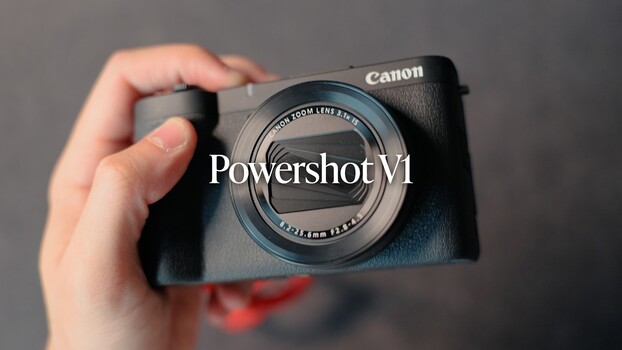
Canon PowerShot V1: Best Compact Video Camera 2026?
The Canon PowerShot V1 is challenging the necessity of heavy full-frame camera kits for content creators by offering professional-grade features like 10-bit 4:2:2 recording and Canon Log 3 in a pocket-sized body. According to videographer Mike Chudley, the camera’s 1.5-inch sensor and wide-angle lens bridge the gap between smartphone convenience and the high-end output typically reserved for systems like the Canon R6 Mark II.
Why are professionals reconsidering compact cameras?
The shift toward compact hardware stems from a desire to reduce “friction” in the production process. Mike Chudley reports that while smartphones, the DJI Osmo Pocket 3, and the Insta360 Ace Pro 2 offer portability, they often require extensive accessory rigs to achieve professional results. In his testing, Chudley found that the PowerShot V1 maintains a streamlined workflow by integrating features like a built-in ND filter and a robust microphone that performs well in wind, effectively eliminating the need for external wireless audio in many run-and-gun scenarios.
How does the PowerShot V1 compare to specialized vlogging tools?
Direct comparisons reveal distinct trade-offs between the PowerShot V1 and current market leaders. Chudley notes that the DJI Osmo Pocket 3 produces footage with a highly processed, “instantly recognizable” look, while the Insta360 Ace Pro 2 serves as a functional POV tool but lacks the nuanced image quality required for more cinematic applications. By contrast, the PowerShot V1’s 22 MP sensor provides a level of image fidelity that Chudley suggests is sufficient for professional stills, a claim that challenges the conventional wisdom that smaller sensors are unsuitable for serious photography.
Stabilization and real-world performance
Spec sheets often fail to capture the nuances of digital stabilization. Through side-by-side walking tests, Chudley demonstrated that the PowerShot V1 offers multiple stabilization modes that significantly alter the final look of the footage. He advises users to test these modes individually rather than relying on manufacturer claims, as the “best” setting often depends on the specific motion of the operator.
What is the future of the “pro-compact” camera category?
The industry is moving toward a middle ground where sensor size is optimized for portability rather than raw pixel count. As demonstrated by the PowerShot V1’s cooling fan and 10-bit color support, manufacturers are prioritizing heat management and dynamic range over miniaturization for its own sake. This trend suggests that future compact cameras will focus on “ecosystem parity,” ensuring that smaller devices act as reliable companions to flagship full-frame cameras rather than mere toys.
Frequently Asked Questions
- Is the PowerShot V1 a replacement for a full-frame camera? No. According to Chudley, it is a specialized tool for reducing friction, not a replacement for the depth of field and low-light capabilities of a full-frame system like the Canon R6 Mark II.
- Does the built-in microphone perform well outdoors? Yes, Chudley reports that the included wind muff allows the internal microphone to handle typical outdoor conditions well enough to skip external wireless mics in many scenarios.
- Can this camera be used for professional photography? While it is not a primary professional body, Chudley concludes that its 1.5-inch sensor delivers high enough quality to be used in professional settings if portability is the primary constraint.
Are you currently balancing a heavy kit with the need for speed? Share your experience with compact cameras in the comments below, or subscribe to our newsletter for more gear reviews and industry insights.