
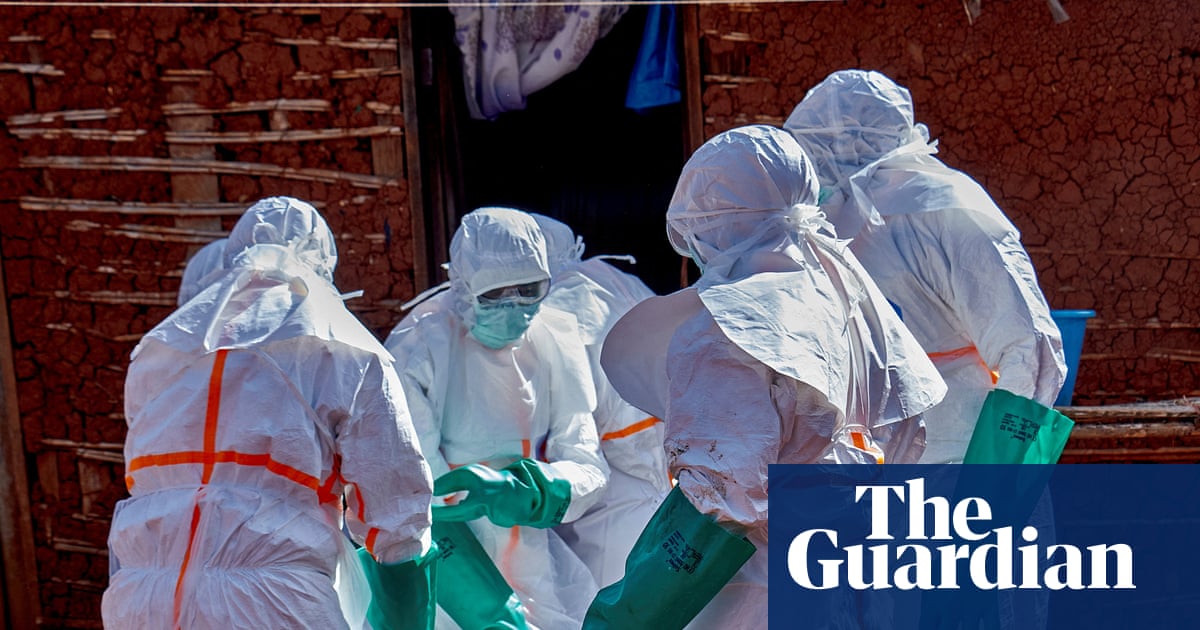
CDC Allocates $107m for Ebola Outbreak Response in DRC and Uganda
The Centers for Disease Control and Prevention (CDC) will use $107 million in emergency funding to support Ebola response efforts in the Democratic Republic of the Congo (DRC) and Uganda, officials announced Thursday. The current outbreak is the third largest on record, though officials state the global risk remains low.
Dr. Satish K Pillai, the CDC’s Ebola response incident manager, said in a Thursday briefing that the agency is approaching 1,000 confirmed cases across 31 health zones in the DRC. As of June 15, the CDC reported 837 confirmed cases in the DRC and 19 in Uganda, with 198 total deaths across both countries.
Pillai noted that 31 cases have been identified in Kampala, Uganda. The CDC has deployed 125 staff members across the two nations, including 23 field staff supporting active disease investigations.
Why is the Bundibugyo viral disease outbreak significant?
The current crisis involves Bundibugyo viral disease (BVD), a rare zoonotic species of Ebola. This hemorrhagic fever began spreading roughly one month ago along the eastern border of Uganda and the western border of the DRC.

BVD carries a high mortality rate. According to source data, the disease killed between 30% and 50% of those infected during recent outbreaks in Congo and Uganda.
How is the CDC managing risks during the Fifa World Cup?
The outbreak coincides with the Fifa World Cup, jointly hosted by the US, Canada, and Mexico. To manage potential risks from international visitors, CDC staff hold twice-weekly calls with US host cities.

Officials stated that local health authorities in host cities have mostly encountered illnesses typical of large-scale events, such as heat-related sickness. Pillai said CDC activities focus on controlling the outbreaks in Africa while ensuring domestic readiness to respond in the unlikely event of cases in the US.
The global risk remains low because BVD is not airborne. Unlike Covid-19 or measles, it transmits through direct contact with contaminated surfaces, blood, and bodily secretions.
What challenges are hindering the response?
African health leaders report a significant funding gap. While roughly $910 million has been pledged to combat the outbreak, less than 10% of those funds have been received from donors.
Logistical and social hurdles have also slowed containment. Officials cited shortages of vehicles for transporting dead bodies, a lack of personal protective equipment, and general mistrust.
Additionally, the US is one of 22 countries that have imposed travel restrictions on people from the DRC and Uganda. These restrictions have been criticized for impeding the overall response to the outbreak.
What could happen next?
African health officials warn that the outbreak could become the worst on record if current infection rates persist. Based on these rates, containment may take up to a year.
A possible next step involves the integration of the new $107 million in CDC funding to address the shortages of protective gear and transport vehicles. The agency is likely to continue its monitoring of World Cup host cities to maintain domestic readiness.
Frequently Asked Questions
How is the Ebola virus transmitted?
The disease is transmitted from person to person through direct contact with contaminated surfaces, blood, and bodily secretions.
What is the mortality rate of Bundibugyo viral disease?
In recent outbreaks in Congo and Uganda, the disease killed between 30% and 50% of those infected.
How many confirmed cases were reported as of June 15?
The CDC reported 837 confirmed cases in the DRC and 19 confirmed cases in Uganda.
Do you believe travel restrictions help or hinder the containment of global health crises?