
Chemists have demonstrated for the first time how RNA may have copied itself on early Earth – solving a bottleneck that had blocked the origin-of-life field for decades
Researchers at the MRC Laboratory of Molecular Biology and UCL Chemistry have achieved the first exponential RNA replication under prebiotic conditions. By using trinucleotides and freeze-thaw cycles, Dr. James Attwater and Dr. Philipp Holliger solved the “strand separation problem,” a major hurdle in the RNA world hypothesis, as detailed in a May 2025 paper published in Nature Chemistry.
Why was RNA replication stuck for so long?
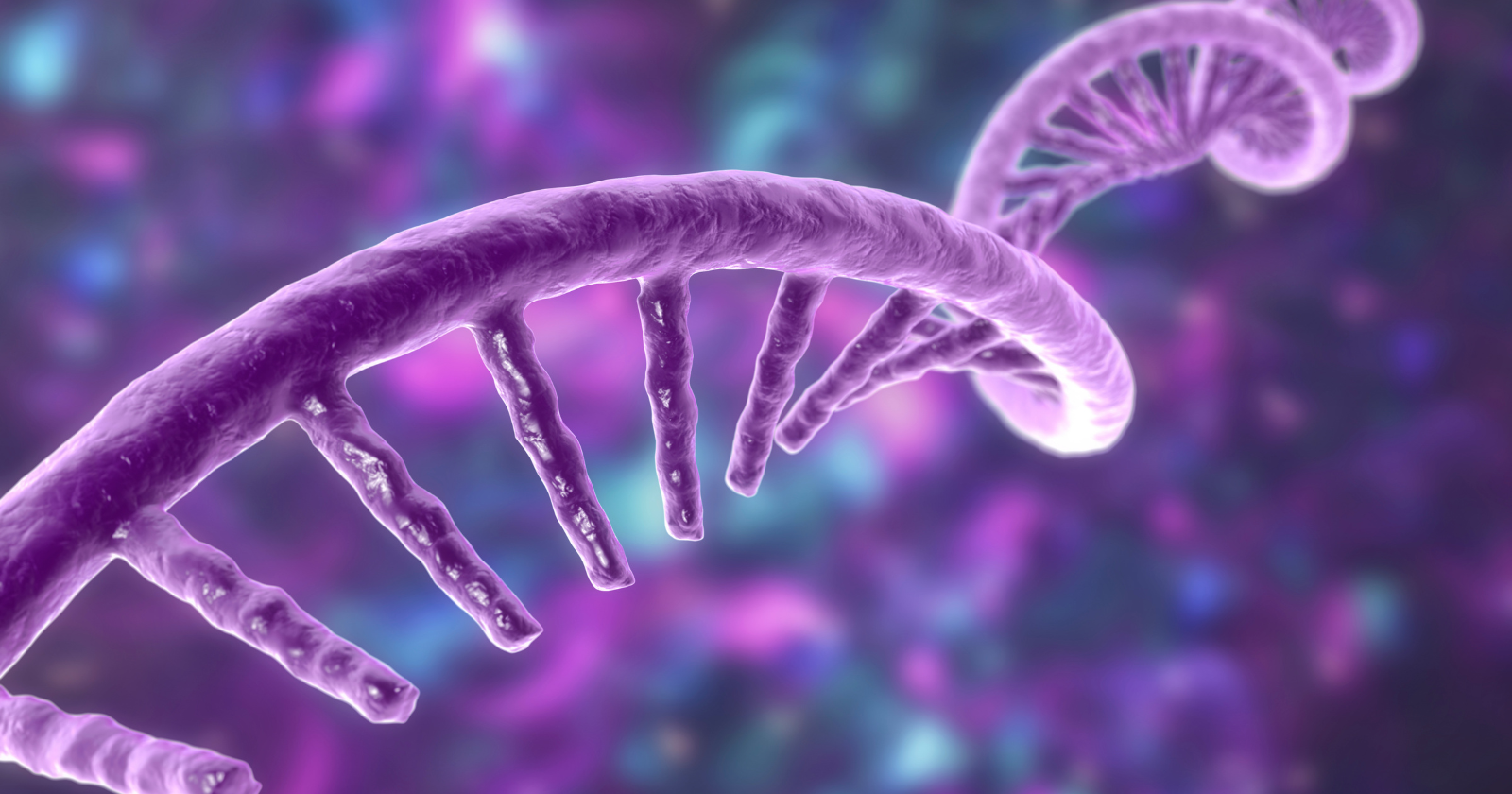
For decades, the RNA world hypothesis—the idea that RNA preceded DNA and proteins—faced a physical wall known as the strand separation problem. When an RNA molecule copies itself, it creates a complementary strand. These two strands bind together into a double helix that is incredibly stable. Think of it like molecular velcro; it zips shut faster than it can be pulled apart.
In modern biology, protein-based enzymes act as the “zipper” to separate these strands so replication can happen again. But in a world before proteins, there was nothing to break that bond. According to the Attwater-Holliger paper, this “product inhibition” meant that while scientists could copy a strand once, they couldn’t create a repeatable, exponential cycle. The system simply locked up.
How did trinucleotides and ice unlock the process?
The breakthrough came from changing the building blocks. Instead of using single-letter nucleotides, the team used trinucleotides—blocks of three RNA letters. While these don’t exist in modern biology, the researchers argue that early prebiotic chemistry was likely messier and less standardized than what we see in cells today.

To solve the separation issue, the team simulated a geothermal freshwater environment, such as a warm spring. They used a specific cycle of acid, heat, and freezing. When the solution freezes, trinucleotides concentrate in the tiny liquid channels between ice crystals. According to the study, these trinucleotides coat the RNA strands, preventing them from zipping back together and keeping them in a single-stranded state.
By alternating pH levels and temperature, the team achieved exponential replication. The process worked on random RNA sequence pools, and the researchers observed that the sequences began drifting toward what they describe as hypothesized primordial codons—the earliest precursors to the genetic code.
How does this differ from other RNA world breakthroughs?
It’s easy to confuse this result with other recent papers, but the focus is entirely different. To understand the progress, we have to look at three distinct problems: fidelity, capacity, and propagation.
- Fidelity: In 2024, Gerald Joyce’s group at the Salk Institute developed a polymerase ribozyme with much higher copying accuracy. They solved the “mistake” problem.
- Capacity: In early 2026, Holliger’s lab described the QT45 ribozyme, which can synthesize both itself and its complement. They solved the “ability to build” problem.
- Propagation: The May 2025 Nature Chemistry paper solves the “bottleneck” problem. It provides a physical mechanism to separate strands without proteins, allowing the cycle to turn over indefinitely.
What happens next for the origin of life research?
The next frontier is moving from short, controlled sequences to the self-replication of the ribozyme itself. As Dr. Philipp Holliger noted in a press release, the gap between a laboratory cycle and a self-sustaining system capable of evolution is still significant. The goal is to see if this freeze-thaw mechanism can support longer, more complex genetic memories.
Another critical trend is the shift away from “RNA-only” theories. The current consensus among researchers at UCL and the MRC, including Dr. John Sutherland and Professor Matthew Powner, is that RNA didn’t act alone. It likely co-evolved with lipids (for membranes), peptides (for stability), and simple metabolic chemistry. This paper provides one piece of a larger puzzle: how the first information-carrying molecules could have propagated in a wild, prebiotic landscape.
Researchers will now test if this mechanism holds up in different environments. Interestingly, the study found that saltwater disrupts the freezing process, ruling out the open ocean as a site for this specific type of replication. This narrows the search for the “cradle of life” to geothermal freshwater springs.
Frequently Asked Questions
Does this prove how life began?
No. According to Dr. James Attwater, the Last Universal Common Ancestor (LUCA) was a complex entity. This paper solves one specific obstacle—strand separation—but doesn’t provide a complete end-to-end account of the origin of life.

Why were trinucleotides used instead of normal nucleotides?
Trinucleotides helped prevent the RNA strands from reannealing (zipping back together) during the freeze-thaw cycles, which is essential for exponential replication.
Could this happen in the ocean?
The researchers found that saltwater prevents the necessary concentration of materials during freezing, suggesting that freshwater geothermal settings are more plausible for this mechanism.
What do you think? Could the first sparks of life have happened in a freezing spring, or is the “RNA world” still missing a key piece of the puzzle? Let us know in the comments or subscribe to our science briefing for more updates on prebiotic chemistry.