

China Launched Artificial Embryos to Orbit to Find Out If We Can Have Space Babies
Can Humanity Reproduce Among the Stars? The Science Behind Space Babies
For decades, science fiction has painted a picture of bustling lunar colonies and terraformed Martian cities. But there is a biological elephant in the room: Can humans actually reproduce in space?
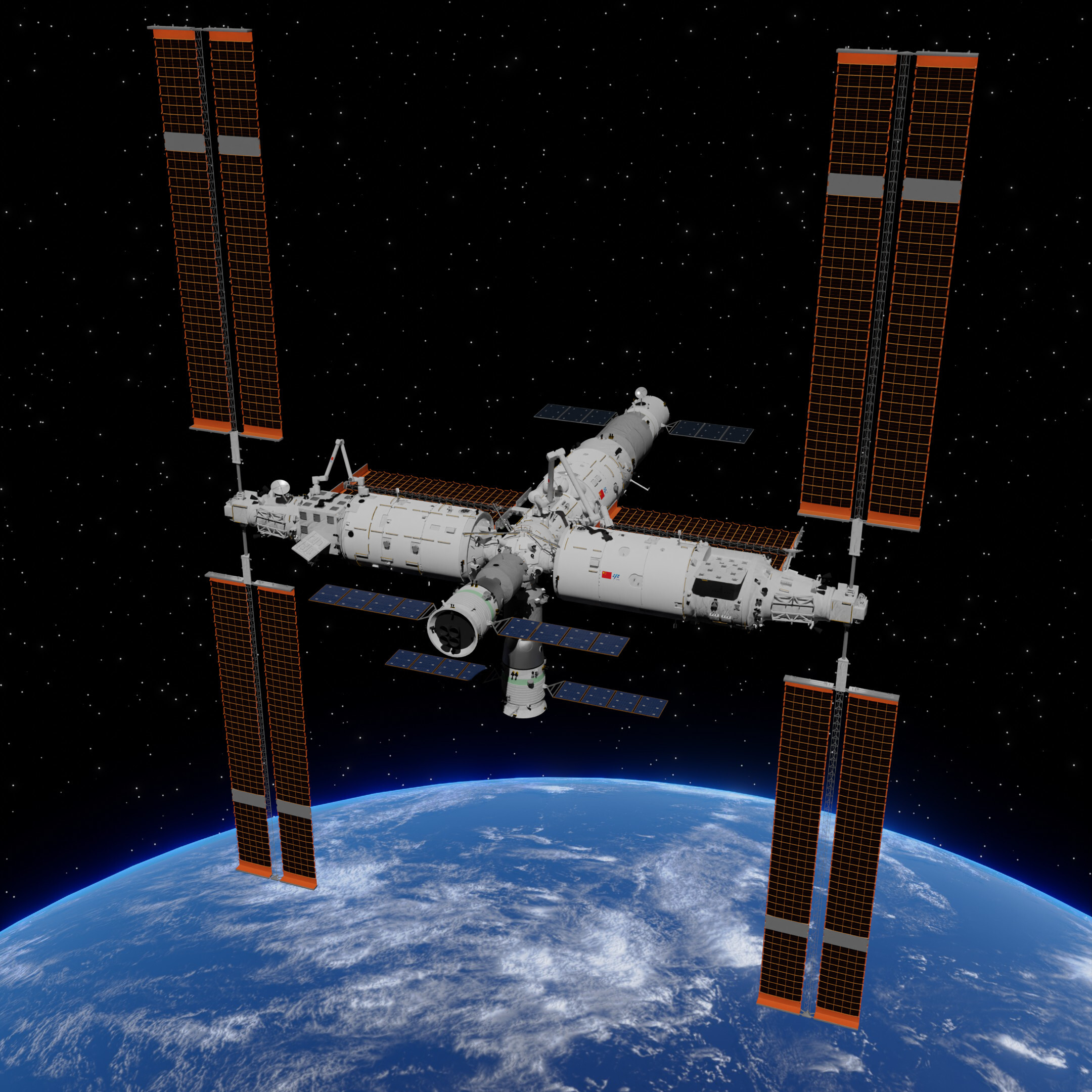
While we have mastered the art of keeping astronauts alive for months on the International Space Station, the prospect of human embryonic development in microgravity remains a massive question mark. Recently, China took a bold step toward answering this by sending artificial human embryos to the Tiangong space station. This isn’t just a scientific novelty—it is the foundational research required for our species to become multi-planetary.
The Tiangong Experiment: Mapping the Unknown
The recent mission aboard the Tianzhou-10 cargo craft marked a significant milestone. Researchers from the Chinese Academy of Sciences used stem-cell-derived models to simulate the earliest, most delicate stages of human development. By placing these “embryo-like structures” in microgravity, scientists are observing how cells reorganize without the constant pull of Earth’s gravity.

The Triple Threat: Radiation, Gravity, and Development
Why is this so difficult? When we talk about space habitation, we aren’t just talking about a change of scenery. We are talking about an environment that is fundamentally hostile to biological growth.
- Microgravity: On Earth, gravity helps guide cell signaling and tissue organization. Without it, researchers fear that cells may fail to “know” where to migrate, potentially leading to developmental errors.
- Cosmic Radiation: Beyond the protection of Earth’s magnetosphere, high-energy particles can damage DNA. For a developing embryo, this level of exposure could be catastrophic.
- Fluid Dynamics: Spaceflight changes how fluids move in the body. In a developing fetus, the distribution of nutrients and oxygen is a delicate, gravity-dependent dance.
Why This Matters for Future Space Colonies
If we intend to build permanent settlements on the Moon or Mars, we cannot rely on a constant rotation of Earth-born colonists. We need to understand if long-term habitation is biologically sustainable. This research is the first step in determining if humans can safely conceive and carry a pregnancy to term in low-gravity environments.
As NASA and private entities like SpaceX push toward long-term lunar bases, the “birds and the bees” of space travel will transition from a taboo subject to a critical medical requirement.
Frequently Asked Questions
Are these real human babies being sent to space?
No. The experiment uses artificial embryo models created from stem cells. These structures cannot develop into a human being; they are strictly used as biological models to observe cellular behavior.
Has any animal ever been born in space?
While various insects and plants have completed their life cycles in space, mammal reproduction remains largely untested in microgravity. Previous studies on mice have shown significant challenges regarding fertilization and early development.
Why is 14 to 21 days so important in development?
This period, known as gastrulation, is when cells begin to specialize and form the layers that will eventually become specific organs. It is the most vulnerable time for an embryo, as the basic body plan is being established.
Looking Ahead
The path to becoming an interstellar species is paved with biological hurdles. While we are years—perhaps decades—away from the first space-born infant, the data gathered from the Tiangong station will serve as the roadmap for future generations. As we look to the stars, we must ensure we have the science to sustain life, not just support it.
What are your thoughts on human reproduction in space? Do you think it’s a necessary step for our survival, or is it a line we shouldn’t cross? Share your thoughts in the comments below or subscribe to our newsletter for more updates on the future of space exploration.