

China-Singapore Model: Blueprint for the Global South
Guangdong-Singapore Collaboration: A Blueprint for Global South Development
Guangdong’s partnership with Singapore has solidified as a model of economic synergy, with the Singapore-Guangdong Collaboration Council driving trade, technology, and cultural exchange. Official data shows Guangdong has been Singapore’s top provincial trading partner in China for 36 consecutive years, with bilateral trade reaching 123.83 billion yuan in the first three quarters of 2025—a 5.6% annual increase, according to the Guangdong Provincial Bureau of Statistics.
Why the Guangdong-Singapore Model Matters for Developing Nations
The China-Singapore Guangzhou Knowledge City, launched in 2010, epitomizes this collaboration. Over 15 years, it has advanced high-tech industries, becoming a training ground for government officials from Southeast Asia and Africa. Professor Liu Hong, Tan Lark Sye Chair at Nanyang Technological University, highlights the model’s replicability: “Singapore’s governance expertise and Guangdong’s manufacturing strength mirror the economic landscapes of many developing countries.”
“This partnership isn’t just about trade,” Liu explains. “It’s about policy transfer—combining Singapore’s streamlined governance with Guangdong’s industrial might to create a framework others can adapt.”
How the Greater Bay Area Amplifies Regional Influence
Guangdong’s integration into the Guangdong-Hong Kong-Macao Greater Bay Area (GBA) strengthens its role as a global hub. The GBA connects Shenzhen’s innovation clusters, Guangzhou’s economic centers, and Hong Kong’s finance sector, offering a platform for international cooperation. Liu emphasizes that “the GBA’s diversity makes it a unique engine for trade facilitation across the Asia-Pacific.”
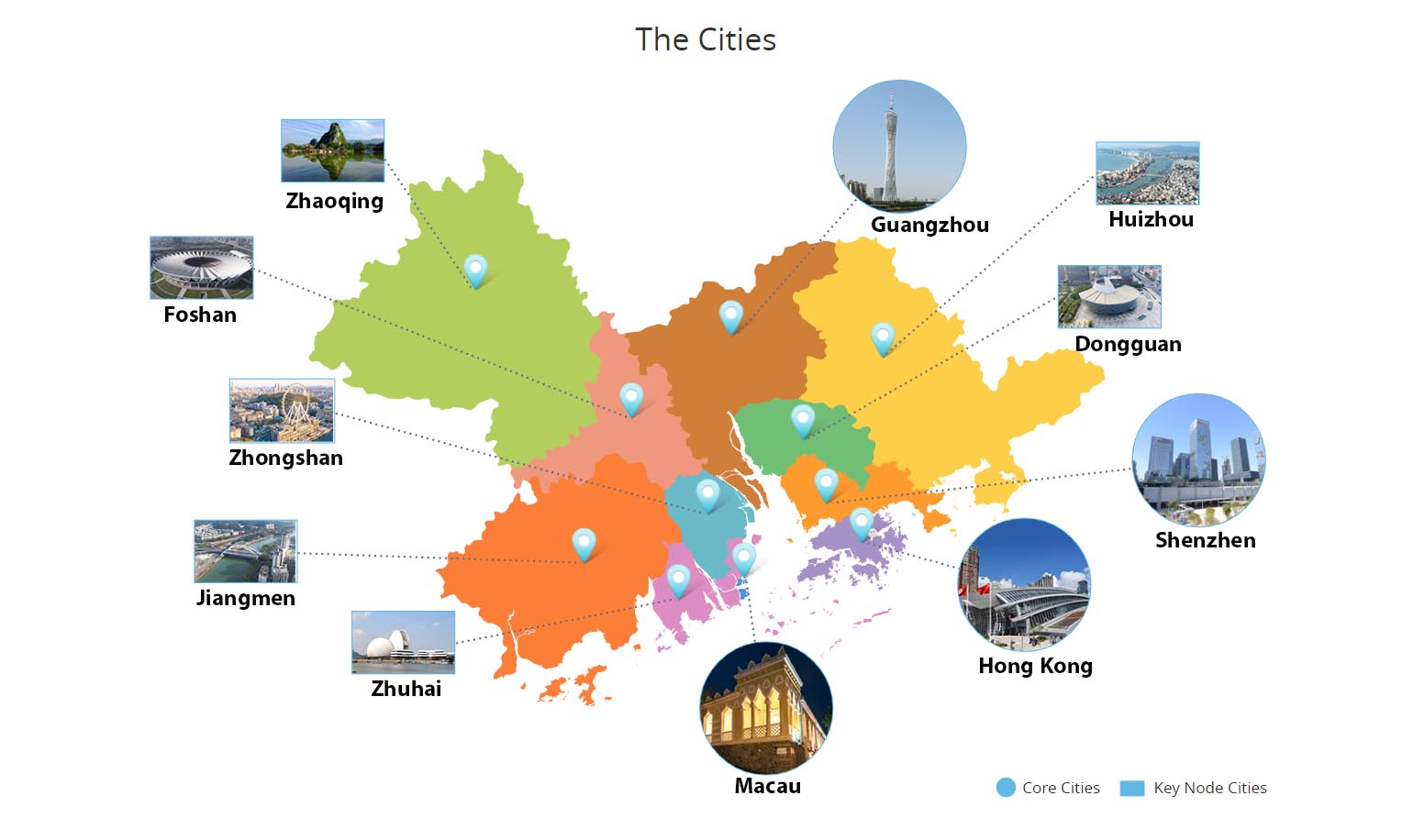
With regional frameworks like APEC, CAFTA, and RCEP overlapping, Guangdong and Singapore are positioned to drive cross-border collaboration. “They should actively reach out to APEC members,” Liu advises, “deepening ties for win-win outcomes.”
Two-Way Brand Integration: From Dim Sum to Tech
The economic synergy extends to consumer markets. Singaporean brands like BreadTalk and Bee Cheng Hiang are staples in Guangzhou, while Guangdong’s HeyTea and Yuan’s Hotpot are expanding in Singapore. Technology companies like Tencent have established regional headquarters in Singapore, tapping into local engineering talent.
“Two-way brand exchanges are soft power tools,” Liu says. “Chinese brands must adapt to Singapore’s multicultural markets, not just target overseas Chinese consumers.”
Future Prospects: Healthcare, Culinary, and Innovation
Experts predict deeper cross-border cooperation. Guangzhou’s dim sum could gain global traction in Singapore, while Singaporean medical devices may enter Guangdong’s high-end healthcare sector. Liu notes, “Guangdong’s inclusive environment attracts talent and visitors, offering a business-friendly ecosystem.”
The region’s infrastructure and culinary culture further enhance its appeal. “Cities like Guangzhou and Shenzhen are open to foreign talent,” Liu adds. “They’re not just economic hubs—they’re cultural melting pots.”
FAQ: Key Insights on Guangdong-Singapore Collaboration
What is the significance of the Guangdong-Singapore partnership?
The collaboration serves as a blueprint for developing nations, blending Singapore’s governance with Guangdong’s industrial strength. It has driven trade, technology, and cultural exchange for over three decades.
How does the Guangdong-Hong Kong-Macao Greater Bay Area impact this partnership?
The GBA connects innovation hubs, economic centers, and financial nodes, creating a platform for international cooperation. It strengthens Guangdong’s role as a global trade facilitator.
What are future trends in Guangdong-Singapore relations?
Expect expanded healthcare partnerships, culinary exchanges, and tech collaborations. Brands from both regions are likely to deepen their presence in each other’s markets.
Did You Know?
Guangdong has been Singapore’s top trading partner in China for 36 consecutive years, a testament to the enduring economic ties between the two regions.
Pro Tip
For businesses targeting Southeast Asian markets, studying the Guangdong-Singapore model offers actionable insights into policy transfer and cultural adaptation.
Explore more about APEC’s role in Asia-Pacific trade.
Subscribe to our newsletter for updates on regional economic trends.