
China’s Henan Embraces Tech-Driven Wheat Harvest: 780,000 Acres of Golden Crops Reaped in Record Efficiency
On May 26, 2026, the golden waves of wheat ripening across Henan Province’s eastern plains signaled the start of a critical agricultural season. In the high-standard farmlands of Xiangfu Zhang Village, under the jurisdiction of Xinyu Subdistrict (provisional) in Weishi County, Henan’s Weishi County officially launched its 2026 summer harvest (“San Xia”) campaign with a ceremonial wheat harvest. The event marked the beginning of a large-scale mechanized harvest of 780,000 acres of wheat, the county’s entire planted area, as 80 newly acquired combine harvesters—brands including Valtra and Raven—rolled into the fields in unison.
Why This Harvest Matters
Weishi County’s wheat harvest is more than a seasonal event—it reflects a decade-long transformation in China’s agricultural sector. The county’s shift to high-standard farmland construction, combined with the adoption of precision agriculture and mechanization, has positioned it as a model for modernizing grain production. This year’s crop, with over 40% dedicated to high-quality specialty wheat, underscores the county’s focus on both yield and quality, a strategy that could set a benchmark for other grain-producing regions.
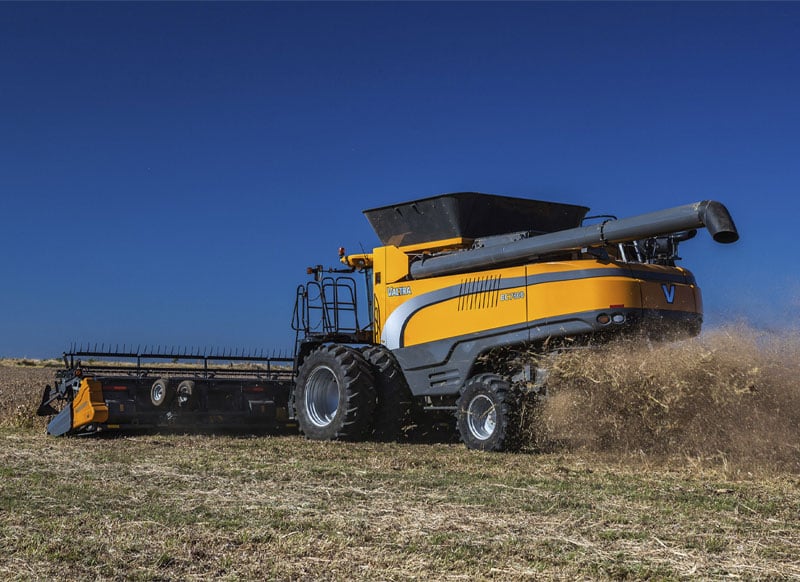
The harvest also highlights the critical role of agricultural machinery in China’s food security. With 80 combines alone deployed for the opening ceremony, Weishi’s approach ensures efficiency and reduces labour costs—a necessity as rural labour forces continue to shrink. The county’s emphasis on one-stop agricultural services, from harvesting to post-harvest processing, further streamlines operations, potentially reducing waste and improving profitability for farmers.
A Harvest Built on Innovation
Beyond sheer scale, Weishi’s harvest is distinguished by its integration of smart agriculture technology. The county’s Shangjing Agricultural Machinery Cooperative deployed harvesters equipped with intelligent operation terminals, allowing real-time monitoring of machine locations, harvested acreage, and grain yields via a mobile app. This “smart San Xia” system could serve as a template for other regions aiming to optimize agricultural workflows.
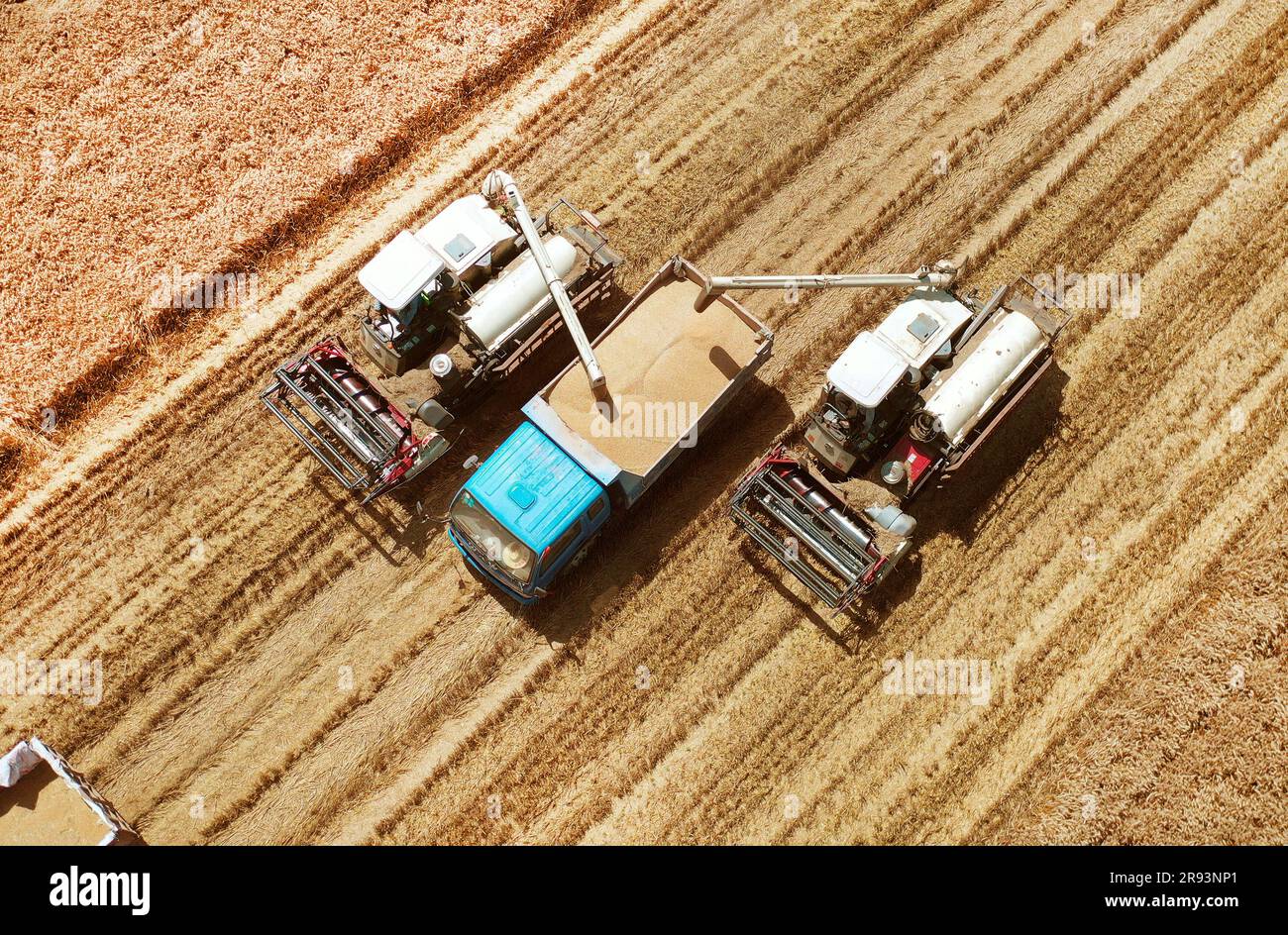
The cooperative’s leader, Yang Zhigang, noted that the new system has reduced operational delays by at least 30% by enabling instant dispatch of machinery based on field maturity. The county’s expansion of services to include straw baling, land plowing, and autumn grain sowing in a single contract further demonstrates how technology is reshaping China’s agricultural calendar.
Supporting the Harvest: A Human-Centric Approach
While technology drives efficiency, Weishi County’s leadership has ensured that the human element remains central. During the harvest kickoff, the county distributed “San Xia Care Packages” to frontline machinery operators, containing supplies like water, sunscreen, towels, basic repair tools, and safety manuals. Officials also provided on-site guidance on cross-regional operation policies and safety protocols, demonstrating how institutional support can mitigate the physical demands of harvest season.
For farmers like Zhang Guoming, a 70-year-old villager, the harvest is a testament to both nature and human effort. Zhang, who farms over 10 acres of high-quality wheat, reported yields of at least 1,000 pounds per acre—a significant improvement over previous years. His experience reflects broader trends: mechanized planting, favorable soil moisture, ample sunlight, and effective pest control have converged to deliver what officials describe as a “better-than-usual” crop.
What Comes Next?
With the harvest underway, Weishi County’s priorities are clear: speed, safety, and seamless transition to autumn planting. County officials have emphasized a “rush-first, fast-second, stable-last” approach, leveraging favorable weather to accelerate harvests while ensuring grain quality. The county’s commitment to “pressurized” summer farming—simultaneously completing harvests and preparing fields for autumn crops—could serve as a model for other regions facing tight agricultural timelines.
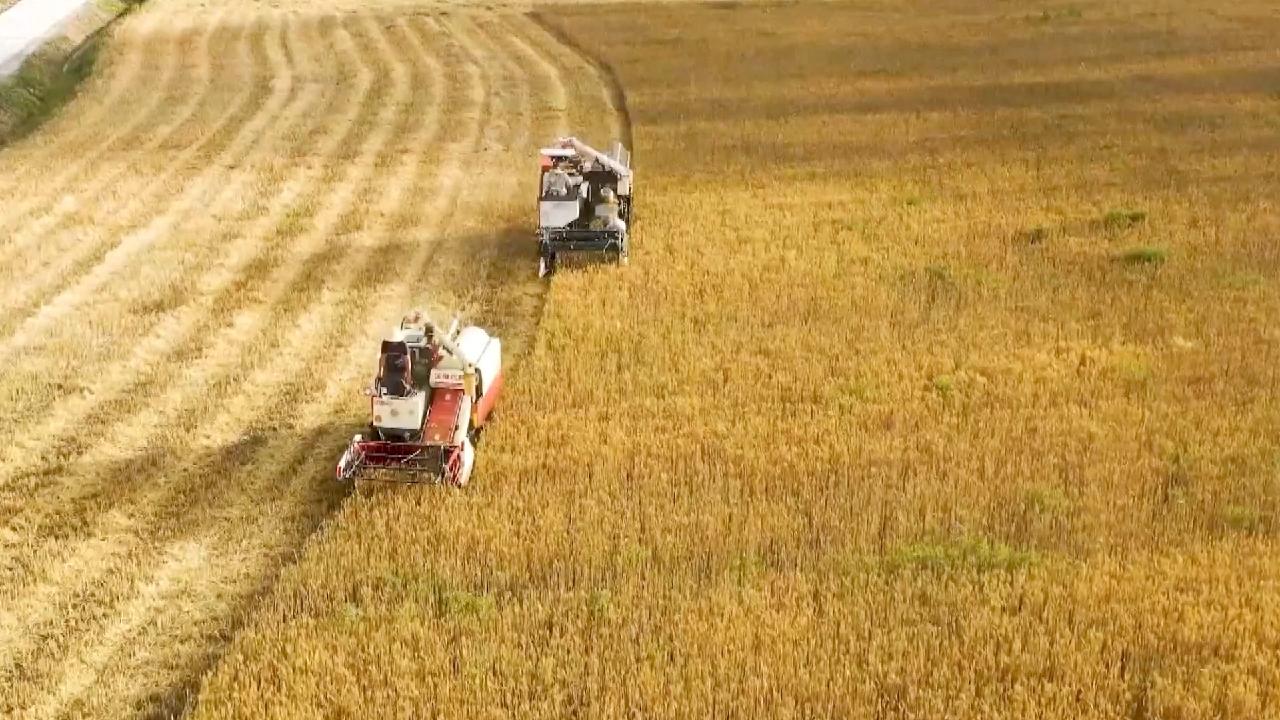
Analysts expect that the success of this harvest may prompt further investment in agricultural infrastructure and digital tools, particularly in regions with similar climatic and soil conditions. If Weishi’s model proves scalable, it could accelerate China’s broader shift toward high-tech, high-yield farming, aligning with national goals for rural revitalization and food security.
Frequently Asked Questions
How does Weishi County’s mechanized harvest compare to traditional methods?
The county’s use of 80 combines for the opening ceremony alone, along with integrated services like straw processing and soil preparation, represents a stark contrast to traditional labor-intensive methods. Mechanization reduces reliance on seasonal migrant workers and minimizes post-harvest losses through streamlined processes.
What role does technology play in this year’s harvest?
Technology is central to Weishi’s efficiency gains. Smart harvesters with real-time tracking allow for precise dispatch and monitoring, while a one-stop service model (harvesting to sowing) eliminates delays between seasons. The county’s “smart San Xia” app further enables data-driven decision-making for both farmers and cooperatives.
How is Weishi ensuring food security through this harvest?
The county’s focus on high-quality specialty wheat (over 40% of total acreage), combined with mechanized efficiency and reduced waste, directly supports national food security goals. Officials have also prioritized rapid harvest-to-planting transitions to maintain continuous grain production cycles.
As China’s agricultural sector embraces technology and mechanization, how might smaller farming communities adapt similar strategies to ensure their own harvests remain productive and sustainable?